
Andalucía
Time to dig out the clams on Andalucía's Atlantic coastline
Digging 'coquinas' (wedge clams) started again in June in western Andalucía after a two-month prohibition by law which allows the species to reproduce
Alekk M. Saanders
Huelva
The Atlantic coast of Andalucía is rich in bivalve mollusks. The ‘coquina’ clam (Donax trunculus), known in English as the wedge clam, is a highly prized species in the cuisine of the Atlantic coastal towns. Its harvesting is a hard business but it makes a significant contribution to the local economy.
'Ir a la coquina'
Clam harvesting is very visible in Huelva province. Here, you can hear the expression ‘ir a la coquina’ almost every day. This expression refers to gathering wedge clams, which are found in abundance in so-called ‘flecha litoral’.
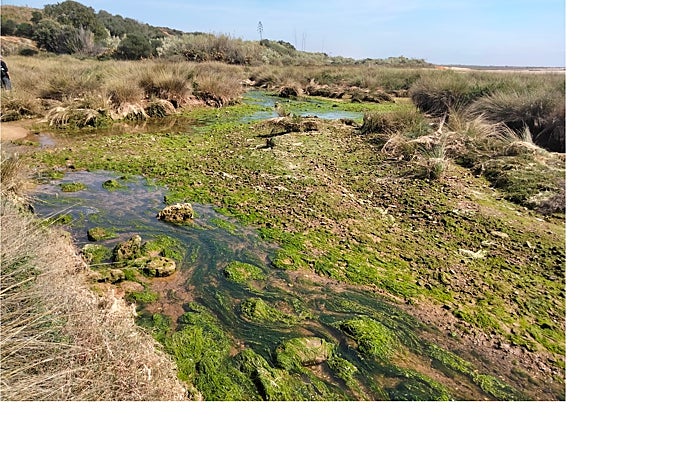
This unique landscape (protected as part of the ‘Marismas del Río Piedras’ nature reserve) has been formed thanks to river sediments, combined with the influence of the tides. It consists of a system of marshes and an unusual sandy formation stretching for about ten kilometres parallel to the coast.
Huelva's famous ‘coquinas’ are small, wedge-shaped molluscs with a thinner shell. They feed on microscopic algae or phytoplankton, filtering large volumes of water that are exceptionally rich in nutrients.
In addition, the marshy terrain gives the local clams a truly distinct, fresh-from-the-sea flavour. It’s worth noting that between late spring and the end of summer, the clams reach their maximum size and their greatest flavour.
Between late spring and the end of summer, the clams reach their maximum size and flavour
-U21324600124eHc-278x496@Diario%20Sur.jpg)
'Marine gladiators'
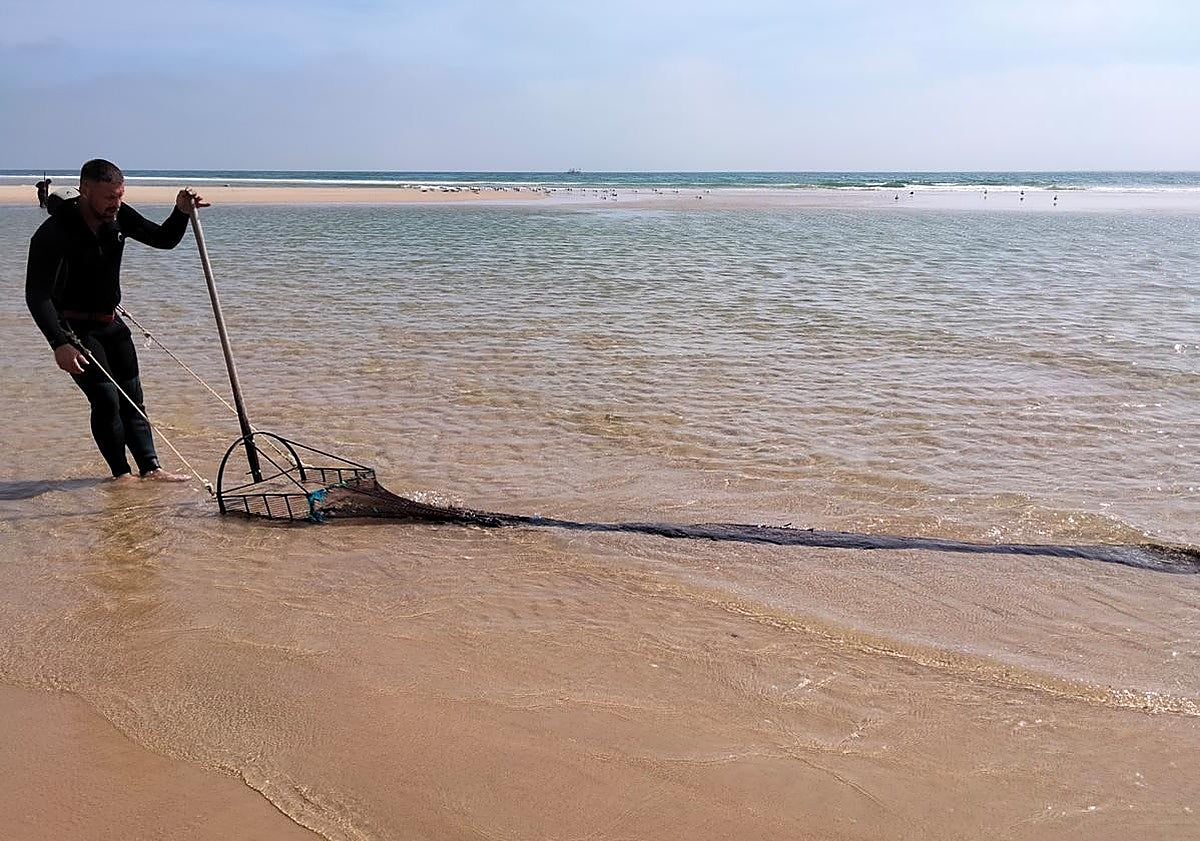
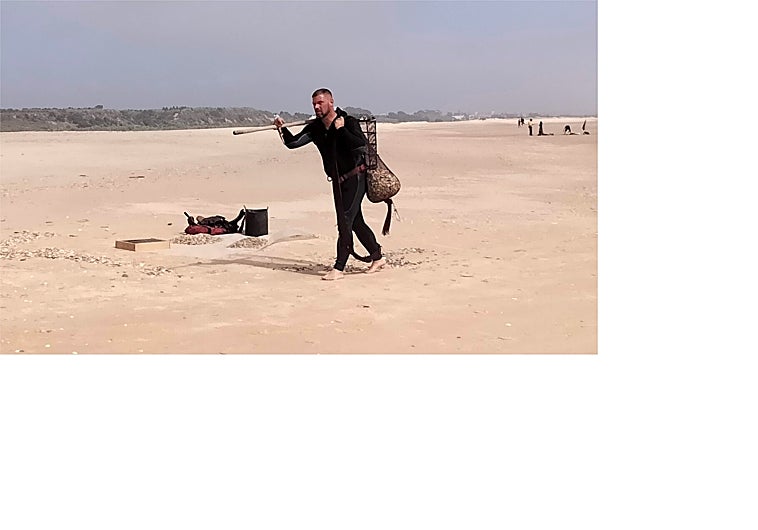
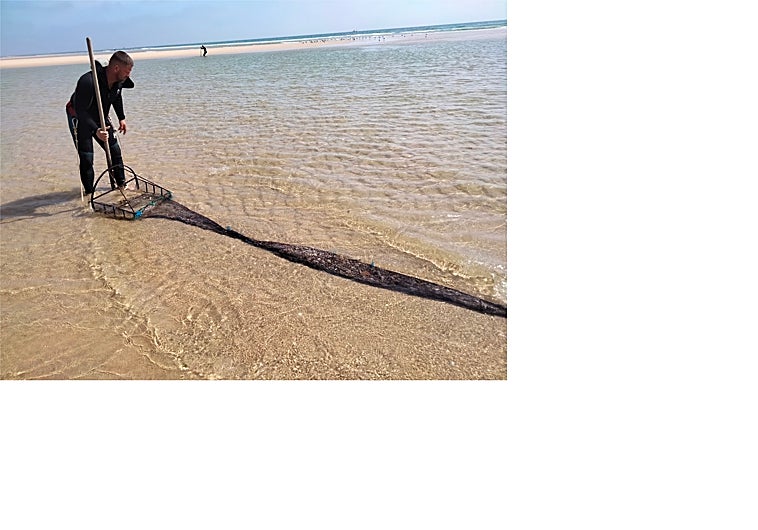
Those who harvest these shellfish professionally possess special skills. Clamming is quite hard work and depends on the tides. Clam diggers are often compared to marine gladiators, as they can rely only on the strength of their bodies.
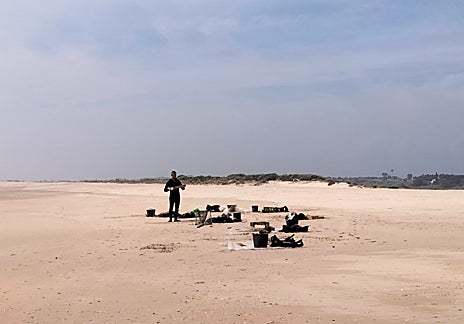
Therefore they are generally strong, athletic men, concealing their muscles beneath wetsuits. At low tide, they attach long-handled rakes to their belts and plough through the sand, digging shellfish. The bivalves are then sifted through a sieve. It is important to sift out any that are too small and return them to the water.
The coastal village of El Rompido, situated in the municipality of Cartaya, sprang up thanks to wedge clamming. In addition, many men in areas such as Lepe or Punta Umbría devote themselves entirely to this demanding craft, which is passed down from generation to generation.
One of the clam diggers, Joaquín, explained to SUR in English that the work requires constant physical exertion and that is why all clam diggers suffer from back problems. The equipment alone, comprising traditional tools, weighs almost 20 kg.
Clam diggers are often compared to marine gladiators, as they can rely only on the strength of their bodies to fight the savagery
Furthermore, the currents in the water create additional difficulties and dangers. Working hours depend on the tides and can be either during the day or at night.
However, Joaquín usually works from midday until five in the evening. He added that many times more mussels are harvested in winter than in summer. This means that clams have to be gathered in very cold water and in chilly winds.
-U22000642534JgN-464x324@Diario%20Sur.jpg)
-U02553373323fie-278x496@Diario%20Sur.jpg)
'Coquinas al Ajillo'
Huelva ‘coquinas’ are highly prized by leading international food critics and chefs for their sweet, slightly salty and tender flesh. For example, Xanty Elías, the first chef from Huelva to be awarded a Michelin star, has made it a tradition to regularly host international chefs at his restaurant.
Indeed members of Finland’s culinary community are particularly keen to visit Huelva to sample local wedge clams and local white prawns.
American celebrity chef and travel documentarian, Anthony Bourdain, brought widespread fame to the clams from Huelva, frequently praising them, especially sautéed in sherry with garlic and presenting them as one of the key components of tapas in southern Spain.
The American celebrity chef and travel documentarian, Anthony Bourdain, brought widespread fame to the clams from Huelva
So, when visiting the Atlantic coast of Huelva, don’t miss the chance to order ‘Coquinas al Ajillo’ (garlic clams), fragrant with garlic, olive oil and fresh parsley, and be sure to try another typical local dish – rice with clams and saffron.
![[]](http://static.vocstatic.com/voc26/latest/assets/images/favicon/surinenglish/apple-touch-icon-57x57.png)