
A look at the new 110-metre long footbridge at the Caminito Del Rey
The structure is set to be the longest suspension footbridge in Spain and is currently being finalised with load tests, although no opening date has been set yet

Málaga
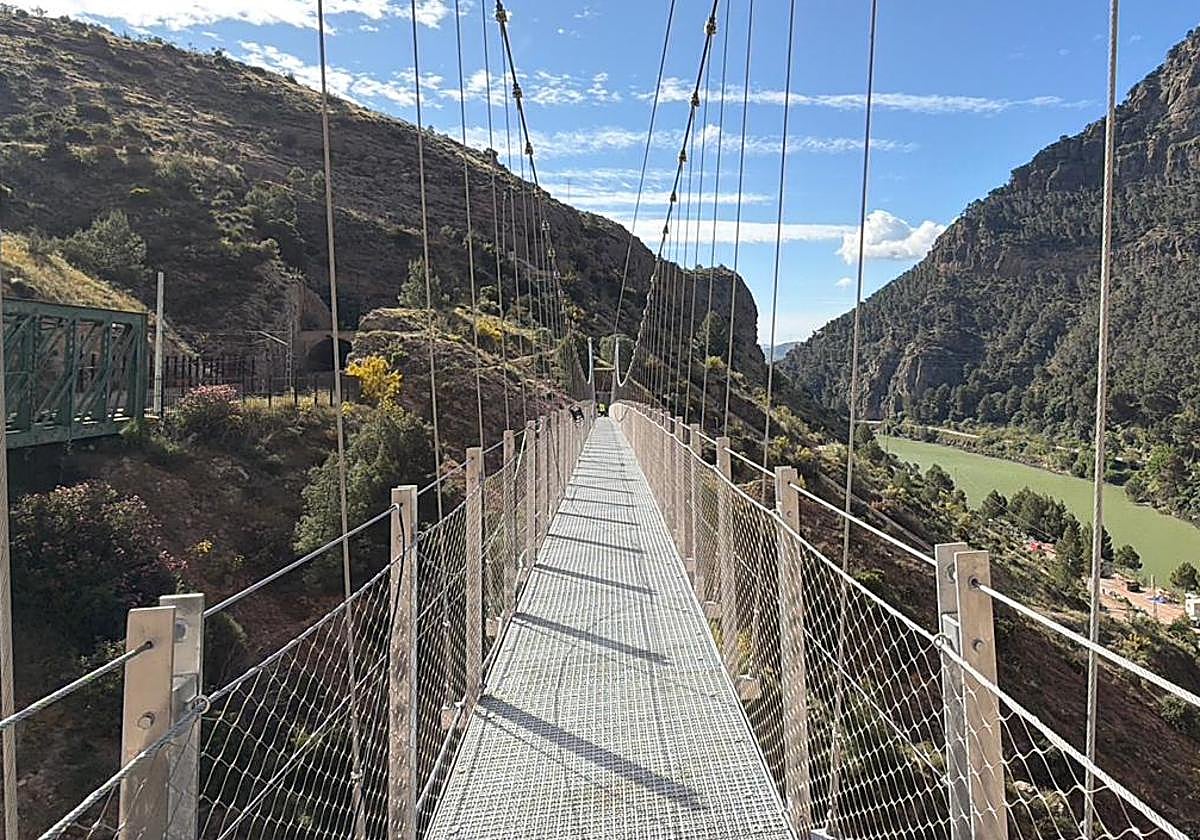
The new suspension footbridge at El Caminito del Rey is almost ready to open as hundreds of visitors have seen the progress taking place from ... the current route through the Gaitanes Gorge. The structure, which will be the longest of its kind in Spain, is currently finishing its final touches before opening to the public.
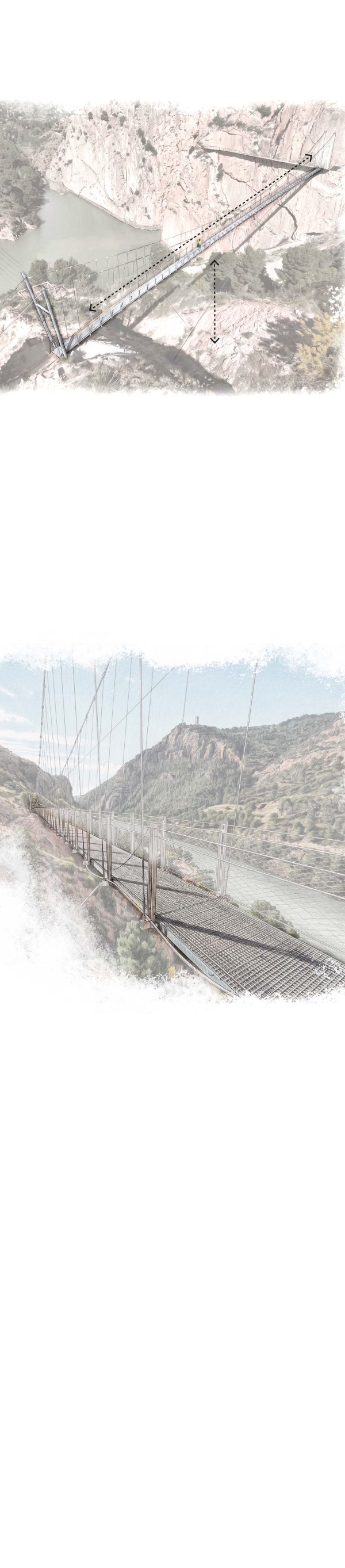
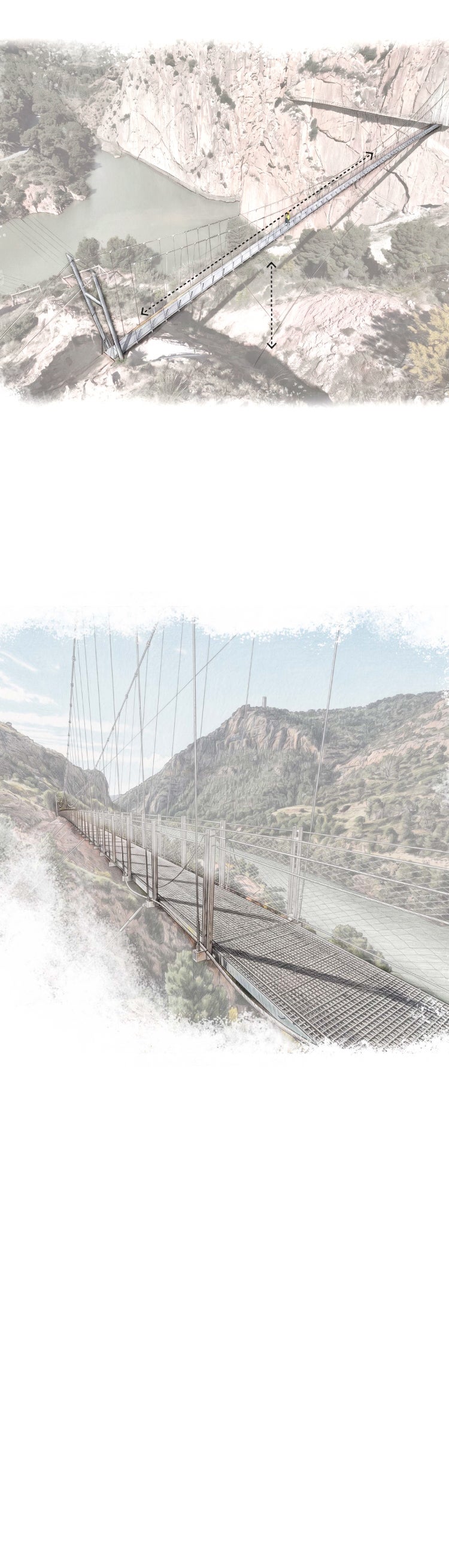
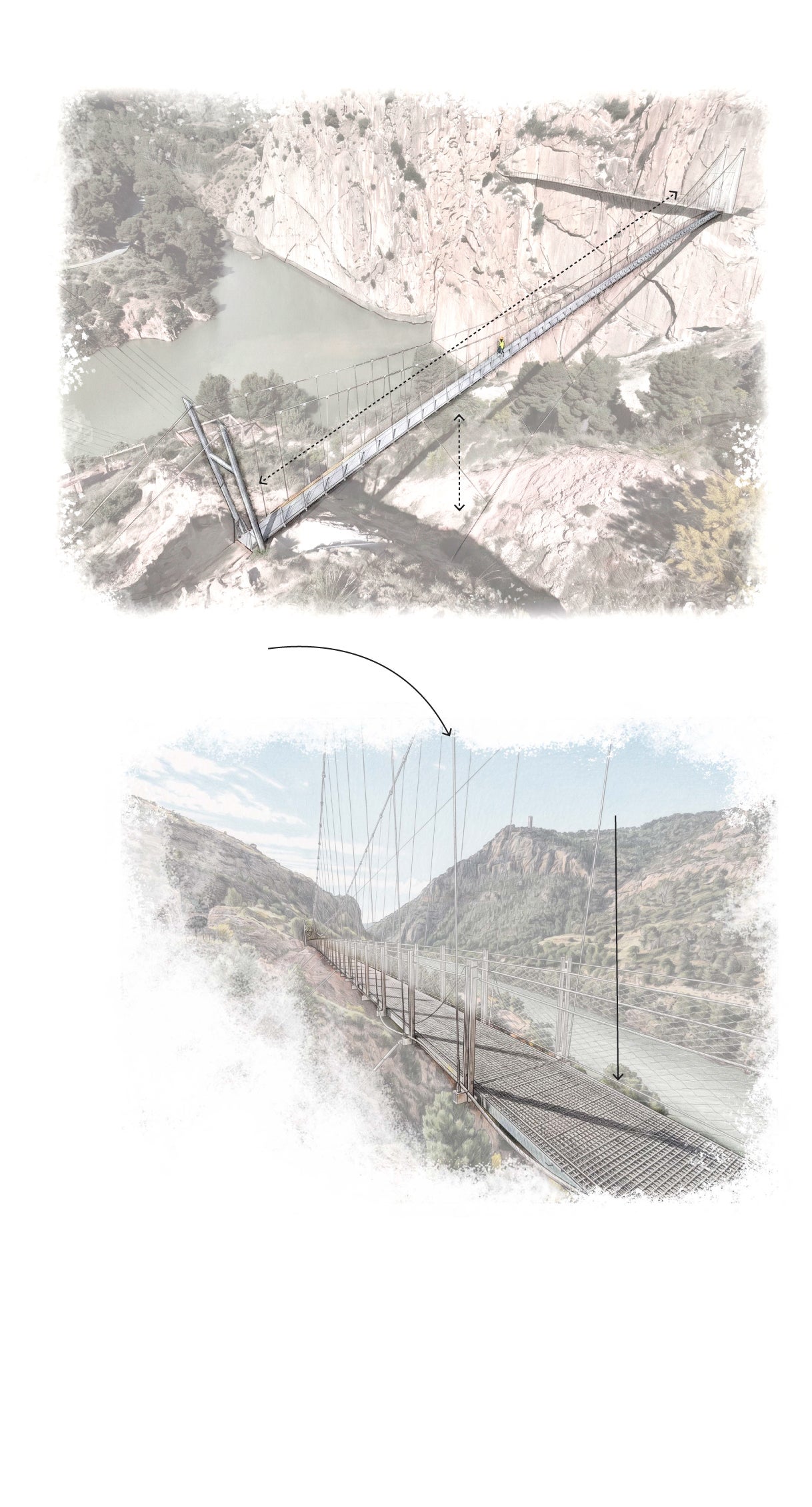
The bridge is 110 metres long, with a height of 50 metres, and is located at the end of the current tourist route. The new section runs parallel to the iron bridge over which the trains pass, before the El Chorro tunnel in Álora.
Despite high levels of execution going into the works, there is still no definitive date for the anticipated opening according to the provincial council of Malaga. However, the wait is not expected to be much longer.
50
metres
is the height of the suspension bridge over the Gaitanes Gorge, in the final section of the Caminito del Rey route, parallel to the iron viaduct over which the trains pass and the Álora tunnel.
These days the works are focusing on the load tests, which are necessary to guarantee the full safety of the visitors, as explained by technical sources of the project, which is being carried out by the Malaga-based construction company Sando. This company, together with Espectáculos Mundo and Salzillo Servicios Integrales, is part of the joint venture that manages the Caminito del Rey.
La nueva pasarela del Caminito del Rey
Length
110
metres
Height
50
metres
Type: catenary suspension bridge (the main cables support the footbridge via suspension cables).
Construction: 16 experts and up to 20 workers took part, using zip lines and helicopter assistance.
Features:a lattice-work panel offering a view of the gorge below.
Security: two staff members will direct visitor traffic at both ends, along with a security checkpoint and 12 CCTV cameras.
Visits: Limited to 30 people at a time.
Construction company: Sando.
Investment: €1.5 million
Current status: Conducting static load tests – 25,000 kg using water drums – and dynamic load tests – measuring vibrations caused by groups of people walking and running..
La nueva pasarela del Caminito del Rey
Length
110
metres
Height
50
metres
Type: catenary suspension bridge (the main cables support the footbridge via suspension cables).
Construction: 16 experts and up to 20 workers took part, using zip lines and helicopter assistance.
Features:a lattice-work panel offering a view of the gorge below.
Security: two staff members will direct visitor traffic at both ends, along with a security checkpoint and 12 CCTV cameras.
Visits: Limited to 30 people at a time.
Construction company: Sando.
Investment: €1.5 million
Current status: Conducting static load tests – 25,000 kg using water drums – and dynamic load tests – measuring vibrations caused by groups of people walking and running..
La nueva pasarela del Caminito del Rey
Length
110
metres
Height
50
metres
Type: catenary suspension bridge (the main cables support the footbridge via suspension cables).
Construction: 16 experts and up to 20 workers took part, using zip lines and helicopter assistance.
Security: two staff members will direct visitor traffic at both ends, along with a security checkpoint and 12 CCTV cameras.
Features: a lattice-work panel offering a view of the gorge below.
Visits:Limited to 30 people at a time.
Construction company: Sando.
Investment: €1.5 million
Current status: Conducting static load tests – 25,000 kg using water drums – and dynamic load tests – measuring vibrations caused by groups of people walking and running..
Static and dynamic tests
The new bridge is undergoing two types of testing: static and dynamic. In the static phase, as it is not possible to introduce lorries (as is done on viaducts intended for vehicular traffic), water drums were used, which were placed in line and weighed no less than 25,000 kilos. This made it possible to check that the deformations were within the predicted calculation, thanks to a network of sensors.
The most innovative part is the dynamic test, which measures the resistance of the bridge to the effort of people in movement. Two exercises were carried out: the first, with 16 people marching in step, "as if they were soldiers on parade", allowed the oscillations to be measured. In the second, eight people ran along the footbridge.
The new structure is a suspension-type bridge, with catenary, which means that the main cables support the whole by means of pendulums, which are the vertical braces that hold the deck (the base on which one walks), according to the same sources. It will be the longest of its kind for the time being, although there is already a project in northern Spain that will be longer than this.
25.000
kilos
In the static phase of the loading tests, as it was not possible to introduce trucks (as is done on road viaducts), water drums were used until this figure was reached.
Its design was very complex, and involved 16 experts, including six calculators from various companies, including one from Switzerland, home to the world's leading experts in this type of construction. As for the execution, up to 20 workers were involved, using zip lines and with the assistance of helicopters at two points in the operation, especially for carrying the materials.
The challenge of the diaclases
The greatest technical difficulty was the anchoring in the wall due to the diaclases in the terrain. As it is old seabed soil, the first layers of rock are not suitable for the anchorages, which have been made at a depth of eight metres. Each cable is attached to a plate with eight holes and high-strength Gewi bars, injected with cement and tensioned to compress the plate against the rock.
30
visitors
Passage across the suspension bridge will be regulated and limited to 30 people at a time (one person every three metres) to keep the flow smooth as people stop to take photos and see the sights.
In addition, it has arch-shaped stiffening cables on the sides, which intersect with the braces to stabilise the structure and prevent swaying. The 32-millimetre main cables were custom-made in Switzerland. They form the upper arch, from which 64 pairs of vertical cables or pendants hang vertically. Finally, the deck is a latticework with a tramex finish, which allows the bottom of the gorge to be seen underfoot.
Shift-passing
Passage will be regulated and limited to 30 people at a time (at a rate of one every three metres) to maintain fluidity while visitors stop to take photos and contemplate the views; although its carrying capacity is in fact much higher. Two workers will regulate traffic at both ends, and security will be complemented by a control booth and 12 video surveillance cameras.
However, for those with vertigo or others that do not wish to cross the footbridge, the old path will remain open as an alternative route. The total investment of 1.5 million euros has been covered by the own funds generated by the Caminito del Rey operation itself, which has to allocate a percentage of its income to improvements of this tourist facility, as it is established in the concession fee by the County Council of Málaga.
![[]](http://static.vocstatic.com/voc26/latest/assets/images/favicon/surinenglish/apple-touch-icon-57x57.png)