
History
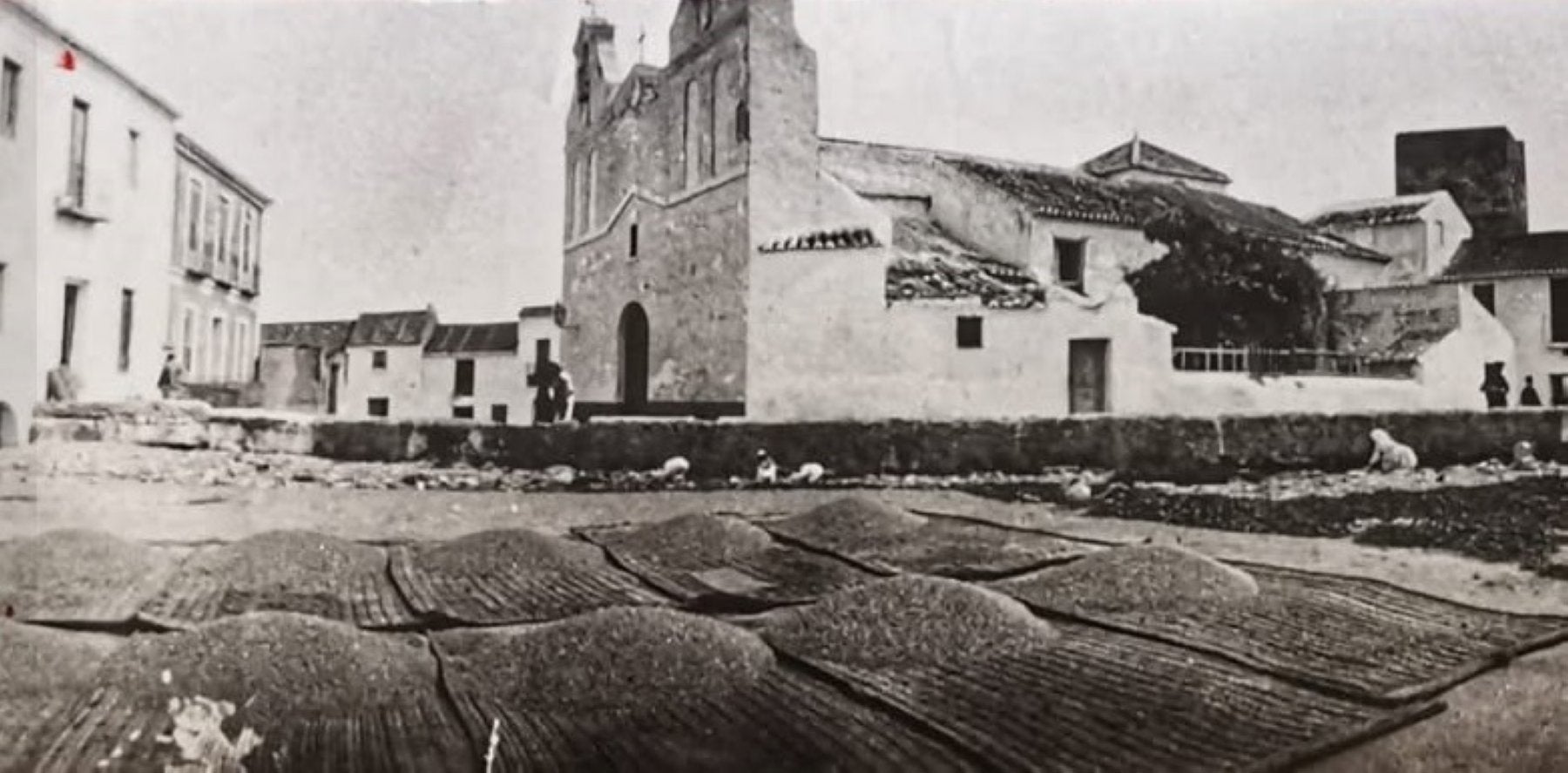
The parish church that grew out of a miller's faith in Torremolinos
San Miguel owes its origins to the need to hold Mass in a place where the congregation would not get flour on their clothes
José Rodríguez Cámara
The explanation for the name Torremolinos is simple. One simply needs to link the two most characteristic elements of its history: the mills and the watchtower, built between Calle San Miguel and Cuesta del Tajo, on the road leading to Bajondillo beach. The watchtower was constructed as a defensive structure, given the town's vulnerability to raids from the sea.
The history of some of Torremolinos's mills still manages to capture our attention, given their importance in the subsequent development of the local character.
One such milestone is brought to light by the town's chronicler, Carlos Blanco. He recalls an episode linked to one of the mills, which was the beginnings of the church dedicated to San Miguel, the patron saint of this Costa del Sol town, despite having been “all but forgotten and badly placed”.
Works
The main significance of this building lies in the fact that, as Blanco points out, “it will enable us to date the construction of the San Miguel chapel to within a few years”.
It all began on 15 June 1705, when Malaga city council granted Bartolomé del Castillo permission to build one of these properties. Fifteen years later, in 1720, Mass was being held there.
Similarly, in the early 18th century, the miller Diego Pizarro, moved by his faith, submitted a petition to the authorities to build, at his own expense, a chapel “in the spot that seemed most suitable and appropriate in that area”.
Although the request was granted, it was not carried out immediately. A priest, Diego Cárdenas, then entered the scene. He had been administering the sacrament in Torremolinos, with the bishop's permission, in a room at a mill, given the local people's interest, even though it was a “cramped” space where both he and the congregation could “get covered in flour dust”.
The priest, whose parish was in Alhaurín de la Torre, explained the importance of his ministry by noting that “more than 200 people live in the district of Torremolinos”, which he regularly travelled to. He therefore requested funding to continue the work on the church, which, as he described it, “only lacks the timber needed for the roof”.
He did so in a document dated 8 August 1720, which includes the technical assessment by the master builder, Juan de Santos, who put the budget for this work at 1,500 reales, as recorded by Blanco in his study 'History of the Catholic Church in Torremolinos'.
The developers already had 500 reales contributed by local residents, but they were still short of another 1,000, although they only received about half of the funding from those responsible for the public purse.
Doubts
In the end, the project was completed, although the exact date remains unclear. The location of the mill beside the chapel, however, is a different matter. As Blanco notes, a document dating from 1758 sheds light on this point. It refers to the appointment of a new priest who was authorised to celebrate two Masses on feast days. The document states: “Gathered at the mill known as Castillo, adjoining the chapel of San Miguel.”
As it was impossible to do so using the minutes of town council meetings dating from after 1720, Blanco sought an answer as to when the chapel was completed in the map preserved in the general archive of Simancas. Dated 22 September 1739, it records a chapel erected in honour of Saint Michael. The chapel bordered the old Castillo mill to the north and, behind it, the Rosario mill, the Pimentel tower and the nearby battery of cannons - a feature, as Blanco points out, that was “strategic in the defence of the Malaga coastline”.
This find, Blanco declares, “leads us to the only possible conclusion: the chapel - barring any last-minute documents that might correct this information - was completed between 1720 and 1739.”
![[]](http://static.vocstatic.com/voc26/latest/assets/images/favicon/surinenglish/apple-touch-icon-57x57.png)