
50 years without Cecilia
The most legendary bilingual Spanish singer and songwriter
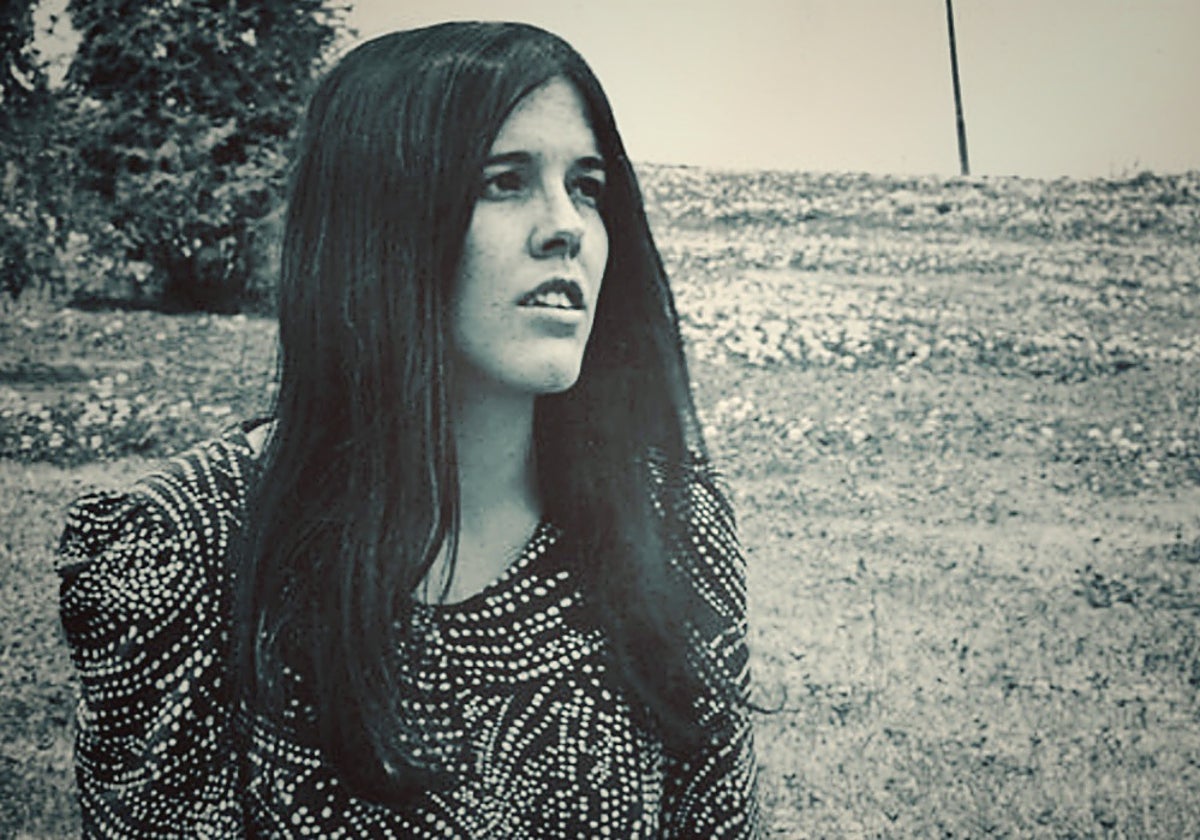
Cecilia sang in Spanish and English. The daughter of diplomats, she spent her childhood in several countries, including the UK, Jordan and the US. Her tragic death in 1976 left an indelible mark on Spanish popular music
Alekk M. Saanders
Evangelina Sobredo Galanes was born on 11 October 1948 in Madrid into a family of diplomats. Her father worked at the Spanish consulates in Southampton and Philadelphia, amongst others. The girl was brought up by an American nun, which is why she spoke English fluently from an early age. Evangelina obtained a bachelor’s degree in law in Spain before deciding to devote herself to music and composition.
Singing in English
She wrote songs and sang in English, and took her first steps in music as a member of the band ‘Expresión’, which released just one single in 1970. In 1971, Evangelina signed a contract as a solo artist with the label CBS-Spain.
The girl was brought up by an American nun, which is why she spoke English fluently from an early age
The singer wanted to perform under the stage name ‘Eva’, but that name was already taken. As luck would have it, the CBS-Spain label had just released the hit ‘Cecilia’ by the American musical duo ‘Simon and Garfunkel’, and Evangelina adopted this stage name. With her delicate voice, Cecilia performed ironic and lyrical songs. Through some of her so-called ‘protest songs’, she contributed to the existentialist and feminist movements that emerged in Spain in the 1960s and 1970s. Like many other artists in the country, Cecilia faced censorship from General Franco’s government. Some song lyrics and photographs from her albums had to be slightly altered or even removed in order to gain approval.
Cecilia wrote around 70 songs and released three LPs and nine singles, all of which were very well received by the Spanish public. Furthermore, Cecilia enjoyed success in Latin America as well. Her recordings were released in most Spanish-speaking countries, where she also gave successful concerts. Cecilia’s popularity was recognised with numerous awards.
'My beloved Spain'
In 1975, Cecilia expressed her deep love and complex connection with Spain in her iconic song ‘Mi Querida España’ (My beloved Spain). With pain though tenderness, and much hope, the singer portrayed the controversial reality of her homeland.
Cecilia was influenced by The Beatles, Bob Dylan, Paul Simon, and Joan Baez
It is worth noting that in the 1970s, Spanish singer-songwriters were largely influenced by French music. However, Cecilia introduced a new style, incorporating into her music and blending her experiences gained in America and the Middle East. In interviews with the press, Cecilia repeatedly mentioned that she had been influenced by The Beatles, Bob Dylan, Paul Simon, and Joan Baez. She performed and recorded songs by these artists. Incidentally, her first single, entitled ‘Cecilia’, included the song ‘Reuníos’, in which she called on The Beatles to reunite as a band. Furthermore, Cecilia also drew on Spanish folk traditions and literature, continuing performing in English as well.
Plans for the USA
In the mid-1970s, Cecilia was working on several creative projects. As well as music, she was involved in poetry, painting and pottery, and was already working as a music producer. Cecilia wrote and recorded her own compositions in her studio. She also wrote several songs for other Spanish artists. One of them was Julio Iglesias, who in 1996 took part in the recording of a special version of the classic song ‘Un Ramito de Violetas’ as a virtual duet with Cecilia.
In 1976, the singer was preparing to launch her musical career in the USA, but on 2 August, Cecilia died at the age of 27 in a car accident in Zamora province. She was buried at the Almudena Cemetery in Madrid.
![[]](http://static.vocstatic.com/voc26/latest/assets/images/favicon/surinenglish/apple-touch-icon-57x57.png)