
Lifestyle
The apples of their eyes
Three blind couples in Malaga province defend parenthood as an exercise in responsibility. The challenge is to break down social prejudices
Susana Zamora
Malaga
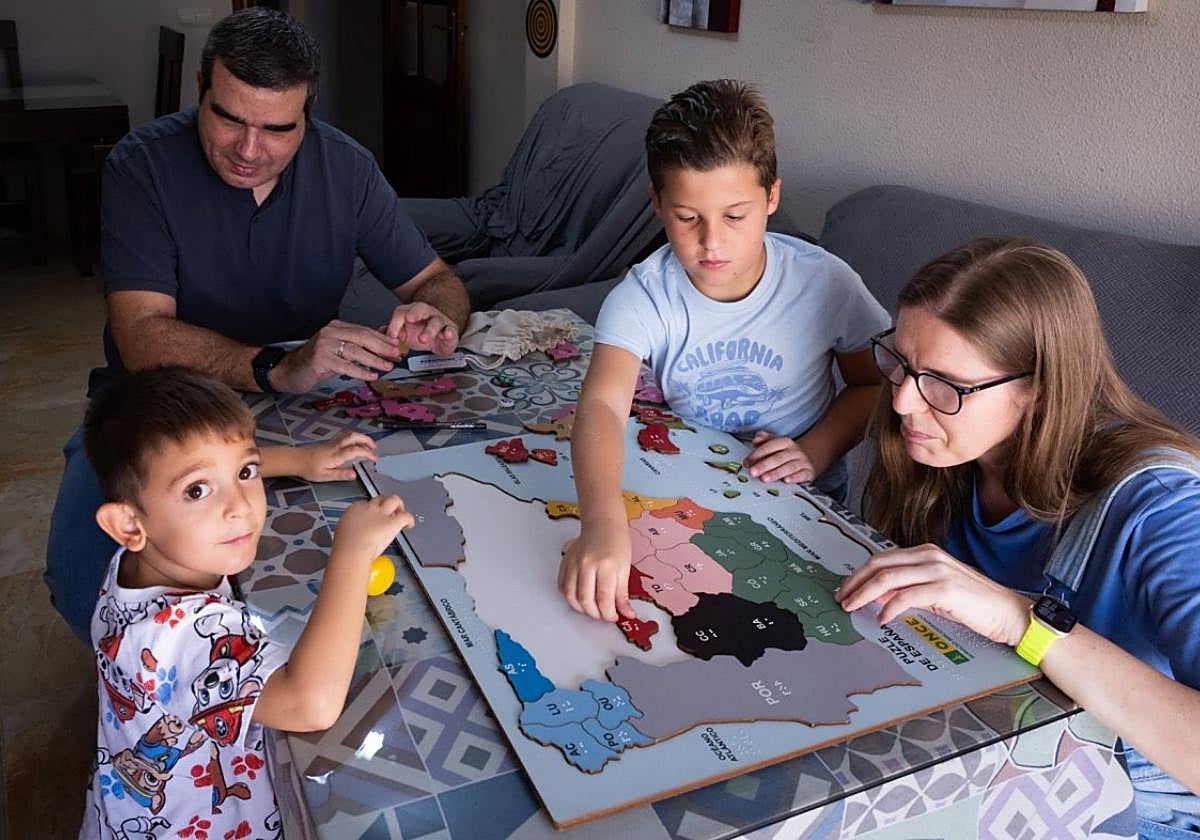
Parenthood is no easy task, neither is it for blind couples. Beyond changing nappies, sleepless nights and the usual fear of not doing it right, they have to overcome a more difficult obstacle: social prejudices. "How are you going to take care of a baby if you can't see it? It is a recurring question that has come to undermine their confidence. They defend parenthood as an exercise in responsibility, not without difficulties, but not as a heroic act or a rarity worthy of wonder. Sometimes their greatest difficulty is not parenting, but other people. Suspicion or exaggerated amazement at everyday tasks ("How brave!"), doubts about the safety of children or the tendency to intervene without being asked to do so, persist. This report gives a voice to mothers and fathers who face a double challenge: raising children and, at the same time, proving that they can raise them.
Barriers
Sandra Jurado was born premature, weighing barely one kilo, and the doctors told her parents that she would not make it. She did, but the months in the incubator took their toll. "They didn't protect my eyes and they burnt my retina."
But her blindness has never been a barrier for her. She has always been the 'walking stick' of José Andrés Sánchez, blind from birth as a result of a microphthalmia caused by a viral infection suffered by his mother in her first months of pregnancy.

He was in the second year of his degree when little "Sandrita", now ten years old, was born. When she was three, her little brother arrived. "I had always wanted to be a father and studies took a back seat," he said. It was then that Sandra took the reins of the family: she abandoned her degree in social education to devote herself to her partner and children. Today, José Andrés is a teacher in the Once educational team in Malaga. Sandra is now resuming her career after being selected as a Braille promoter in Granada to teach it to people with and without disabilities.
In their case, they always wanted to be parents and blindness was never an obstacle. Their children were born when they were still in the middle of their studies, and what they experienced with great excitement was met with fear for the family. She had a wonderful pregnancy, but the insecurity of the environment took its toll. They lived an "emotional roller coaster", between the excitement and the worries that the environment instilled in them: what if the child chokes, or if it turns yellow, or if it falls?
They admit that they have had to learn to be creative, for example, by making marks on syringe plungers so as not to make mistakes with syrup doses or by using "talking" thermometers to check their children's temperature. They have managed to keep track of their little ones in the park by putting bells on their shoes or to read bedtime stories in Braille.
Touch and intuition
Touch, hearing and the intuition that they have gained from parenthood have helped them when they did not have a support network: "When we asked for help, the other person who accompanied us ended up doing it themselves because it was quicker; they took on our role," Sandra regrets. "There was a doctor who, when I explained my children's situation to her, she said: 'Wow, she talks and everything!'"
With condescension, paternalism or pity. This is how society usually treats them, whether out of ignorance or fear. And in this, their children have the upper hand. "They don't see disability as a problem and ours shouldn't affect them. We don't want to give them responsibilities that are not theirs; it is we, as parents, who have to take care of them."
Mari Ángeles García is a physiotherapist at a day centre for the disabled in Malaga and works fulltime. Although her husband, Jorge García, worked as a journalist after finishing his degree, when his children were born, they agreed that he would stay at home to look after Pablo, who is now eight, and Leo, who is four.
Blind from birth due to a vitreous malformation, Jorge met his wife on the internet. Almost totally blind from birth due to glaucoma and cataracts, neither marriage nor motherhood was ever on her agenda, "but my twin sister, also blind, had a daughter with her blind partner" and Mari Ángeles said to herself: why not? "I started to look for information, to join forums and to see that there were other couples who, with their visual disability, had become parents." In Jorge she found all the support she needed.
Constantly observed
Mari Ángeles recognises that she feels constantly observed: "Society thinks that we are not prepared for parenting and feel entitled to make comments that are sometimes disrespectful or out of place to the point of absurdity. They have even threatened to call social services for carrying the child in a baby carrier because, being blind, we could walk into a wall and crush the child," she says.
These parents are aware of the difficulty in carrying out certain activities, but they overcome it with creativity and humour, like the day Jorge wiped the nose of another child in the park thinking it was his son and was told off by the boy's father. Although they can be counted on one hand, they have had to renounce things such as going alone to a festive parade or to a fair, which they always do with the family, or signing their children up for certain extracurricular activities, such as football, which take place outside Malaga.
Juanjo Montiel always wanted to have children and his blindness was not going to be an obstacle to him being a father. His parents taught him to be independent and his passion for the technology sector led him to Microsoft, where he currently works at the Irish headquarters as a web developer.
He moved there four years ago with his wife Nuria Azanza, who has also been totally blind since the age of six after being born with microphthalmia, and their son Eric, who was born in 2014. "The genetic tests ruled out the possibility of him being born blind; if there had been, we would have ruled it out," says Nuria.
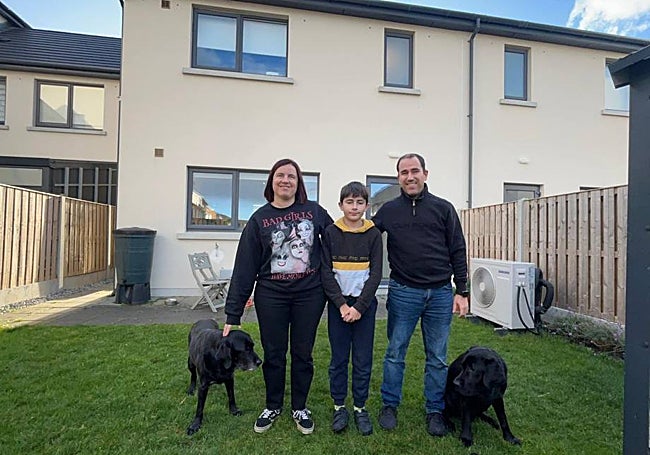
Both recall the moment they knew they were "pregnant". "We bought a pregnancy test and we took the result to my brother, who lived next door, so he could tell us. It was an explosion of joy, but we would have liked to do it in privacy; depending on others meant we couldn't manage the timing. In this case, accessibility "was conspicuous by its absence", says Nuria. Today would have been different thanks to applications such as Be My Eyes, which connects blind or low vision users with volunteers to assist them through live video and artificial intelligence.
Although the joy was widespread, the family did show some concern about how they would cope in situations hitherto unknown to them, such as managing the baby's pushchair and the two guide dogs at the same time. "In this respect, we were helped by Once, which was running a pioneering childcare programme in Barcelona. There they taught us how to change nappies, prepare bottles..," says Nuria.
Technological resources were always part of Eric's upbringing, and they used to put an AirTag on their son when they went to the park so that it would beep when they wanted to locate him. "I am thankful for the way Eric is, a very good and responsible child, who has made it very easy for us," Juanjo and Nuria describe proudly and in unison. They do not deny that because he is a child he also gets frustrated when he wants them to play a video game with him and they cannot.
Like other parents, they have sometimes suffered society's prejudices, such as when they were outside with their little Eric and told: "What a shame!" Or when waiting for the bus, they urged the child to look after his parents; or when they asked a person for directions and he answered them by talking to the guide dog, "as if he understood", they laugh.
![[]](http://static.vocstatic.com/voc26/latest/assets/images/favicon/surinenglish/apple-touch-icon-57x57.png)