
El Caminito del Rey: a success story with over three million visitors
In a decade, El Caminito has become one of the main attractions for inland tourism in the province of Malaga

Málaga
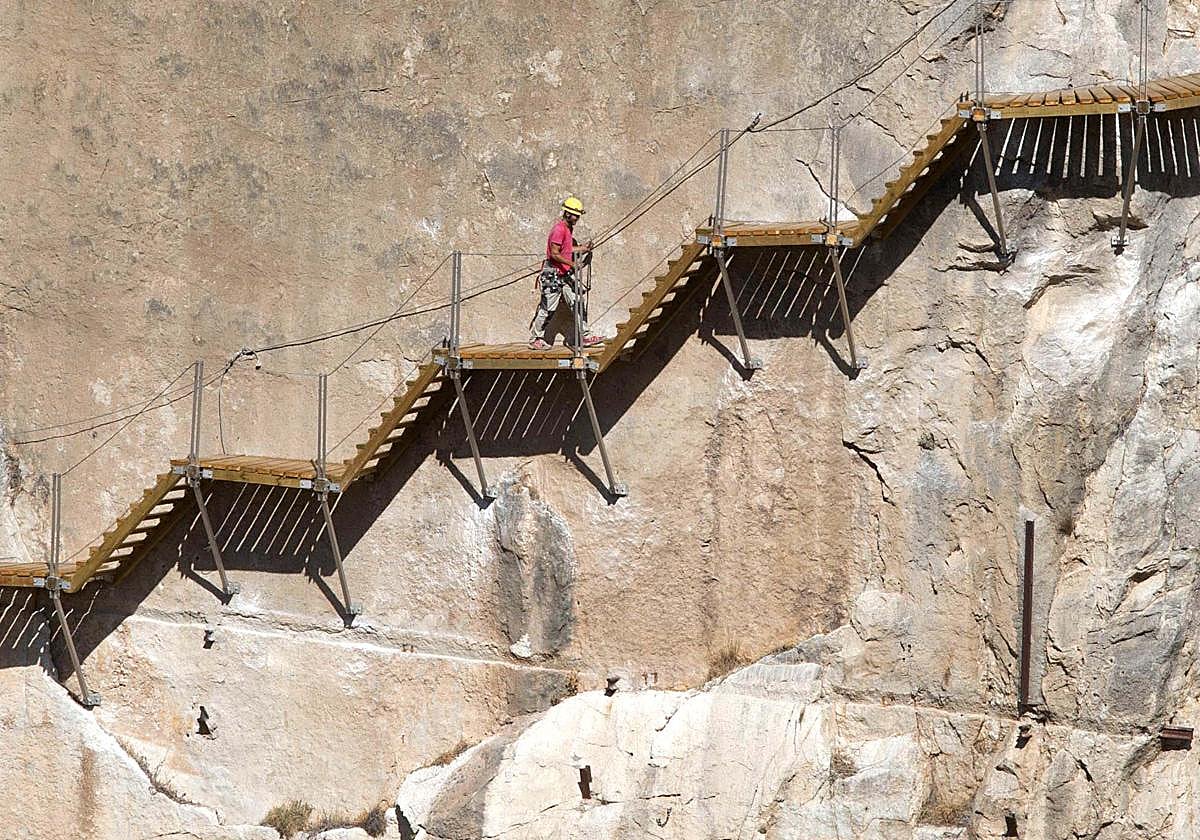
Several generations of Malagueños walked at least the first stretches of the old and dangerous Caminito, which today is only preserved as industrial archaeology, underneath ... the new path.
Then came many years of debate about the model that the new walkway should have, with a succession of proposals and infographics that came to nothing. For many years, it proved impossible to balance tourism with the safety of visitors and the wildlife inhabiting the Gaitanes Gorge.
Finally, at the beginning of 2014, the work began, which lasted a year. This was possible thanks to the impulse of the then president of the provincial council of Malaga, Elías Bendodo; with the consensus of all the administrations and municipalities located in its surroundings, and under the project of the architect Luis Machuca.
2015
Reopening year
28 March 2015 was the historic day when the new Caminito del Rey opened to the public, after an investment of 5.5 million euros by the supramunicipal body.
28 March 2015 was the historic day when the new Caminito del Rey opened to the public, after an investment of 5.5 million euros by the supraminicipal body, of which 2.3 million euros went to the construction of the new footbridge and the rest to the improvement of access and facilities in the surroundings.
Ardales
Álora
Malaga
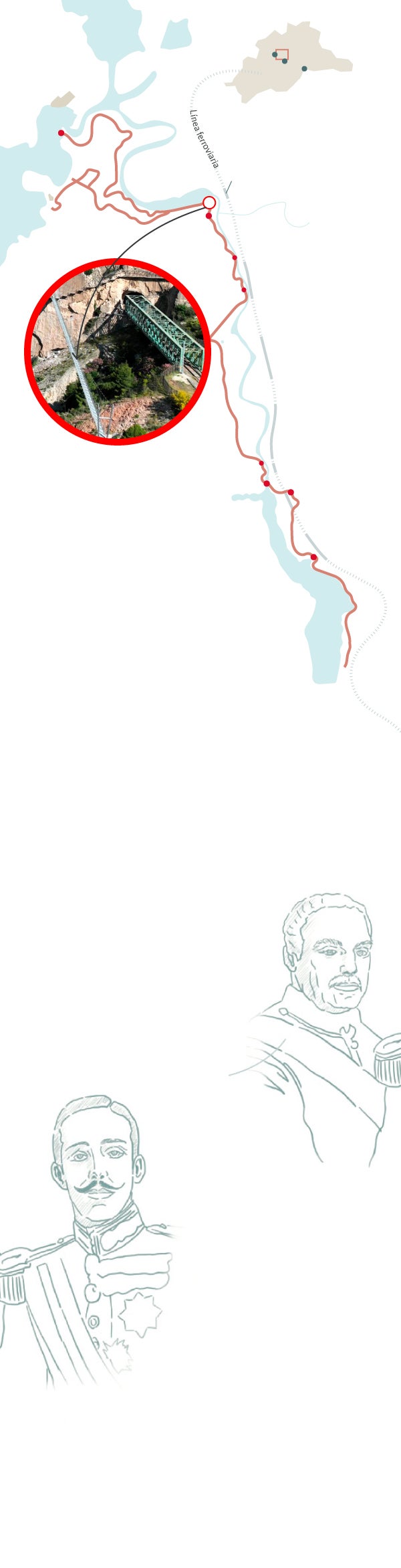
The King's Throne
Conde del Guadalhorce Reservoir
Tunnel
North access
Las Cambutas Viewpoint
King's Bridge
Glass Balcony
Acceso Sur
Suspension bridge
Control booth
Tajo de la Encantada Reservoir
history
1866
Construction of the Málaga–Córdoba
railway line has been completed; thanks to tunnels, viaducts and bridges, it winds its way through the gorges and stops at El Chorro
1906
The El Chorro hydroelectric power station,
developed by Francisco Silvela, José Loring Heredia and, above all, Rafael Benjumea, Count of Gualdalhorce, begins operations
1921
King Alfonso XIII, inaugurated the new El Chorro dam.
He alighted from the train in front of the Puente del Rey bridge, crossed it, and walked a stretch of the road that would henceforth bear his name.
2014
Following significant deterioration
due to lack of use,
renovation work began
and it reopened in 2015
(E.H.)
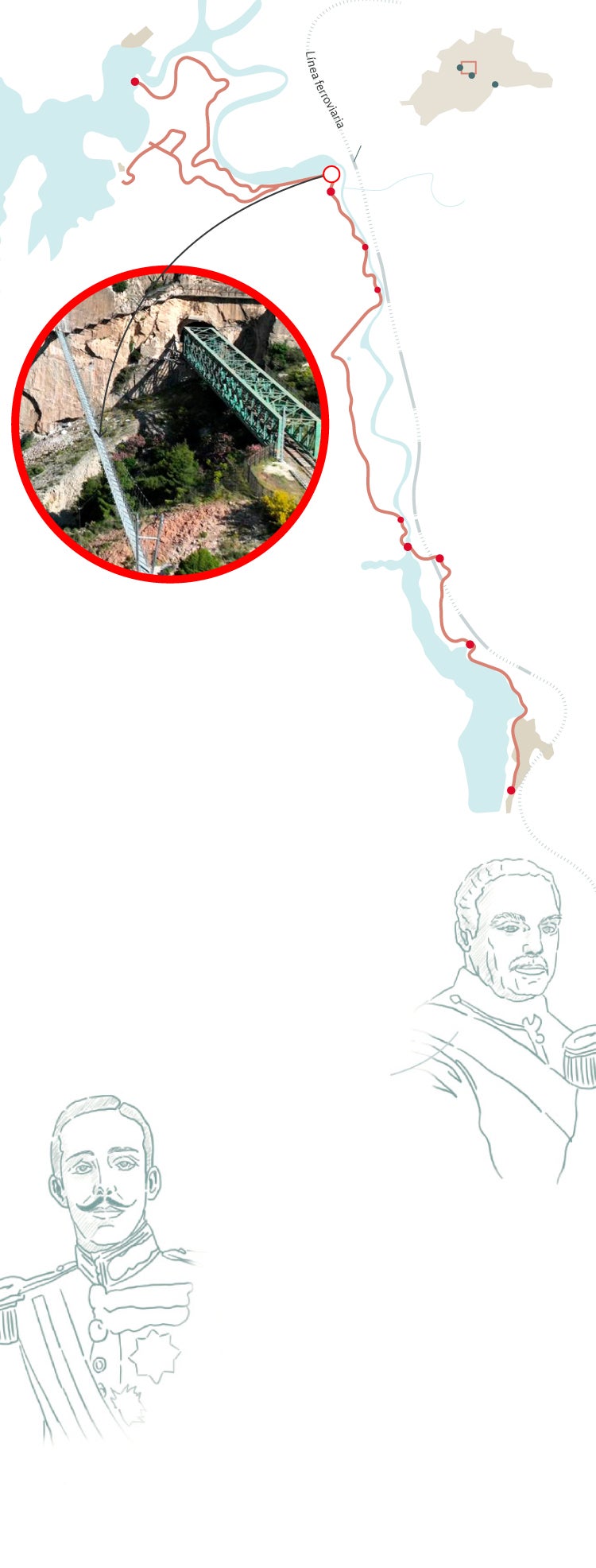
The King's Throne
Ardales
Álora
Malaga
Conde del Guadalhorce Reservoir
Tunnel
North access
Las Cambutas Viewpoint
Puente del Rey
Glass Balcony
Acceso Sur
Suspension bridge
Control booth
history
Tajo de la Encantada Reservoir
1866
Construction of the Málaga–Córdoba
railway line has been completed; thanks to tunnels, viaducts and bridges, it winds its way through the gorges and stops at El Chorro
El Chorro Station
1906
The El Chorro hydroelectric power station,
developed by Francisco Silvela, José Loring Heredia and, above all, Rafael Benjumea, Count of Gualdalhorce, begins operations
1921
King Alfonso XIII, inaugurated the new El Chorro dam.
He alighted from the train in front of the Puente del Rey bridge, crossed it, and walked a stretch of the road that would henceforth bear his name.
2014
Following significant deterioration
due to lack of use,
renovation work began
and it reopened in 2015.
(E.H.)
location
Ardales
Álora
Malaga
Hotel
Tunnel
First gorge:
Gaitanejo gorge
Bar
New bridge
Gaitanejo Reservoir
The King's Throne
North access
Las Cambutas Viewpoint
Almorchon mountains
Puente del Rey
Second gorge:
Tajo de las Palomas
Conde del Guadalhorce Reservoir
Gaitanes Gorge Nature Reserve
Tajos de Almorchón
Valle del Hoyo
Third gorge: Gaitanes Gorge
South access
Glass Balcony
Suspension bridge
Control booth
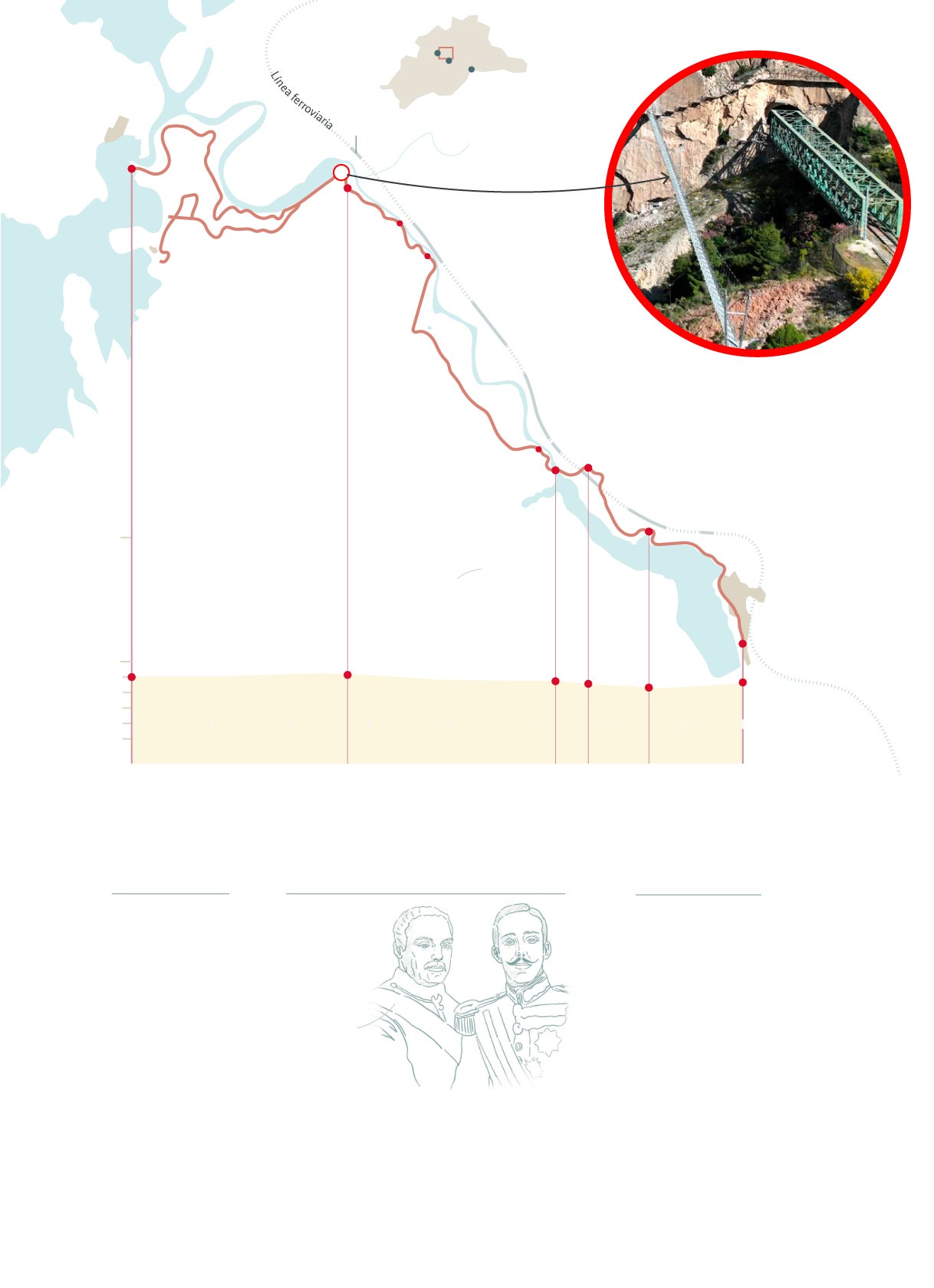
route elevation profile
700 m
The Gaitanes Gorge
rises to a height
of 700m
Accommodation
Tajo de la Encantada Reservoir
El Chorro Station
Bar
300 m
250 m
El Chorro Station
North access
The King's Throne
Suspension bridge
200 m
South Access
Control booth
150 m
100 m
1 km
2 km
3 km
4 km
5 km
6 km
7 km
7,7 km
50 m
Fuente: caminitodelrey.info
history
1921
King Alfonso XIII, inaugurated the new El Chorro dam.
He alighted from the train in front of the Puente del Rey bridge, crossed it, and walked a stretch of the road that would henceforth bear his name.
2014
Tras un
deterioro
notable por
la falta de uso,
se inician las
obras de rehabilitación
y se reabre
en 2015
1906
The El Chorro hydroelectric power station,
developed by Francisco Silvela, José Loring Heredia and, above all, Rafael Benjumea, Count of Gualdalhorce, begins operations
1866
Construction of the Málaga–Córdoba
railway line has been completed; thanks to tunnels, viaducts and bridges, it winds its way through the gorges and stops at El Chorro
(E.H.)
The project set an example in terms of respect for the environment of this protected natural area and sustainable tourism development, and has received several awards for that reason. Furthermore, access is limited to a maximum of 1,100 people per day, to prevent overcrowding and ensure safety and harmony with the native flora and fauna.
Given these factors, it is no surprise that the cliff-side footpath has, over the past decade, become one of the province’s major attractions and defining features, with its own tourism brand, attracting visitors from all over the world. These tourists have provided an economic and social boost to the surrounding municipalities and to rural tourism in the Upper Guadalhorce region.
Tourist success
Since it opened, more than three million people have walked along its footbridges; whilst a further 140,000 have visited the area around the Guadalhorce reservoirs, off the trail. Furthermore, visitor numbers to the towns within its catchment area have soared: Álora, Antequera, Ardales, Campillos, Carratraca and Valle de Abdalajís.
893
accommodation in the area
In many of these municipalities there has been a growth in the number of accommodations, which has quadrupled in the last ten years, from 210 to 893.
In many of these municipalities there has been an increase in the number of accommodation facilities (hotels, flats, rural houses and campsites), which have quadrupled in the last ten years, from 210 to 893.
In turn, the number of beds has doubled, rising from 4,204 in 2015 to the current 8,160, according to figures from Malaga Provincial Council. As regards domestic tourism in the province, the accommodation on offer in the Caminito area accounts for 11% of establishments and 12.4% of beds.
22% of visitors to El Caminito (almost one in four) are tourists staying overnight in neighbouring towns, and more than half of visitors are foreign nationals (52%). Of the international tourists, the vast majority come from three countries: the United Kingdom, France and Germany.
As for domestic visitors, one in four are Spaniards from outside Andalusia, whilst those from Malaga account for just 14%. The average stay for tourists from the region is three days, and the average daily spend stands at 91 euros. The average age of visitors is 45, and 59% visit as a couple, whilst 21% go with friends and 19% with family.
Since the Caminito opened to the public, at least 685 jobs linked to it have been created, both directly and indirectly, and its economic impact has grown year on year. In 2024, the most recent year for which figures are available, this amounted to 64.1 million euros.
Furthermore, the supramunicipal body takes into account other indirect socioeconomic indicators of its impact on the surrounding municipalities over the past ten years. As a result, the population has grown by 1.2%; the number of businesses has increased by 24% and Social Security registrations by 15.6%; whilst the unemployment rate has fallen by 11%.
Now, the new suspension footbridge, which is due to open shortly, will be a new attraction both for those who have never yet experienced the ‘Caminito experience’ and for those who have been before and are now keen to return to experience the adrenaline rush of the sensation of walking almost in the sky.
![[]](http://static.vocstatic.com/voc26/latest/assets/images/favicon/surinenglish/apple-touch-icon-57x57.png)