
Literature
Spain marks birthday of famous bohemian poet
Born in Seville in 1875, Antonio Machado Ruiz was the youngest member of the 'generation of '98' literary group
Tony Bryant
Malaga
This Saturday (26 July) marks the 150th anniversary of the birth of one of Spain's most celebrated poets and playwrights, Antonio Machado Ruiz, the youngest representative of the group known as the 'generation of '98'. Between 1903 and his death in 1939, Machado wrote numerous poetry collections, along with several plays, on which he collaborated with his elder brother, Manuel Machado.
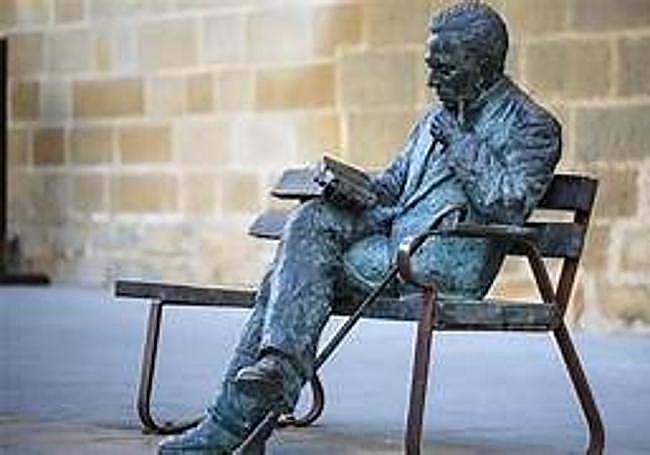
Antonio Machado, the second of eight children, was born in one of the rented apartments in the Palacio de las Dueñas in 1875, a sprawling palatial home in Seville owned by the Duchy of Alba. His early years at the palace are reflected in many of his works, one of which, El Limonero, is commemorated with a small plaque on a lemon tree in the gardens of the palace. This is just one of many plaques, busts and monuments erected throughout Spain in honour of the poet and his work.
His father, Antonio Machado y Álvarez, was a prominent folklorist, a key figure in the modern study of popular culture in Spain who became internationally known under the pseudonym of 'Demófilo'. Hence, Machado grew up within the confines of a culturally educated family that would ignite his passion for art.
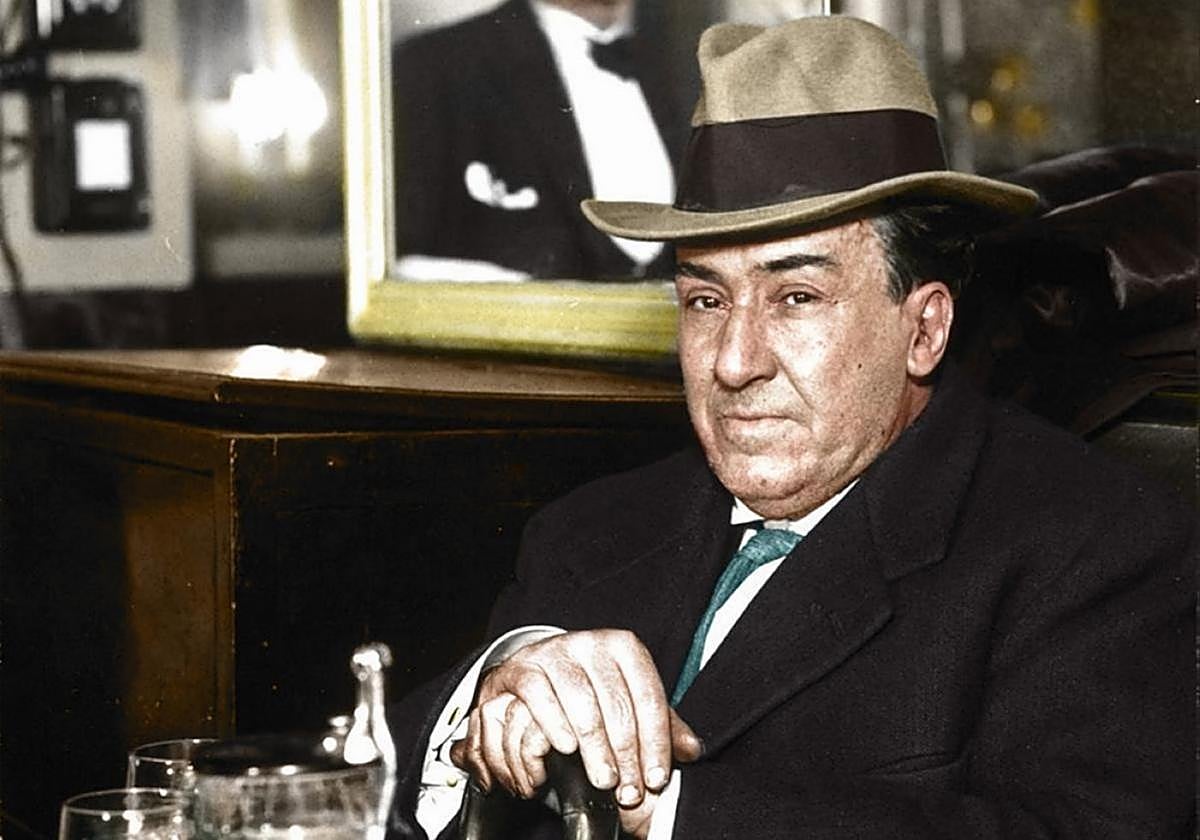
His family moved to Madrid when he was eight years old, where he studied at Instituto San Isidro and Instituto Cisneros. After completing his studies, he travelled to Paris in 1899 with his brother Manuel. There, he met several intellectuals, such as Oscar Wilde and the modernist poet Rubén Darío, who had a significant influence on his writing. Upon returning to Madrid, he frequented the literary scene, where he was considered something of a bohemian.
He became an active member of the generation of '98 after Spain lost colonial possessions during the Cuban War of Independence (1895-98), which ended almost four hundred years of Spanish rule in the Americas, the Pacific and Asia. This embarrassment instigated a philosophical and artistic revaluation of Spanish society, spearheaded by the generation of '98, a modernist collection of writers, poets and philosophers committed to the renewal of cultural and aesthetic values. Machado was one of the most outspoken of the group, voicing his opinions on the urgent need to find a non-political solution to rescue Spain from its catatonic state.
The Machado brothers, by this time inseparable, devoted themselves to the bohemian life of Madrid, becoming regulars at artistic cafés, flamenco tablaos, bullfights and literary gatherings.
Machado's early work was deeply influenced by the modernist aesthetic that prevailed at the time: in 1903, he published his first book of poems, Soledades.
In 1907, he obtained a French teaching position at a high school in Soria, located on the Duero river in Castilla y León, where he met 13-year-old Leonor Izquierdo, whom he married in 1909. The following year, he received a scholarship that allowed him to study philosophy in Paris.
After the death of his wife in 1912 of tuberculosis, Machado devoted himself to teaching French in the city of Baeza until 1919. He also studied philosophy and literature, earning his doctorate at the University of Madrid.
Between 1919 and 1931, Machado was Professor of French at the Mariano Quintanilla school in Segovia, a position he took to be nearer to Madrid, where his brother lived.
An artist in exile
The Republican government granted him a French chair in Madrid in 1931. The outbreak of the Civil War in 1936 forced him to take refuge in Valencia until 1938. During the conflict, he participated in Republican publications and attended the international congress of writers for the defence of culture. Due to his political stance, he opted for exile, first heading to Barcelona, from where he crossed the Pyrenees to the French town of Collioure, where he died shortly after.
The characteristics of Machado's poetic style was evident from his first publication in 1903 and this style would mark all of his future works. He found his own voice and personality, which was nostalgic and melancholic. Although this intimacy never disappeared from his works, he would explore new avenues with Campos de Castilla (1912), poems that revolve around the Castilian lands that surrounded him.
During his final years, Machado did not write much poetry, preferring to spend time writing prose. He published his last book, La Guerra (the war), in 1937. This book contained an elegy dedicated to Federico García Lorca, the Granada poet executed by Nationalist supporters at the start of the Spanish Civil War.
Events are being held to mark the 150th anniversary of Machado's birth this weekend in Madrid, Soria, Seville and other locations throughout Spain.
![[]](http://static.vocstatic.com/voc26/latest/assets/images/favicon/surinenglish/apple-touch-icon-57x57.png)