
Culture
Should Spain return to Eurovision following the new rules of the contest? Here's what experts have to say
One of the main changes is that winning the festival no longer guarantees the right to host it the following year
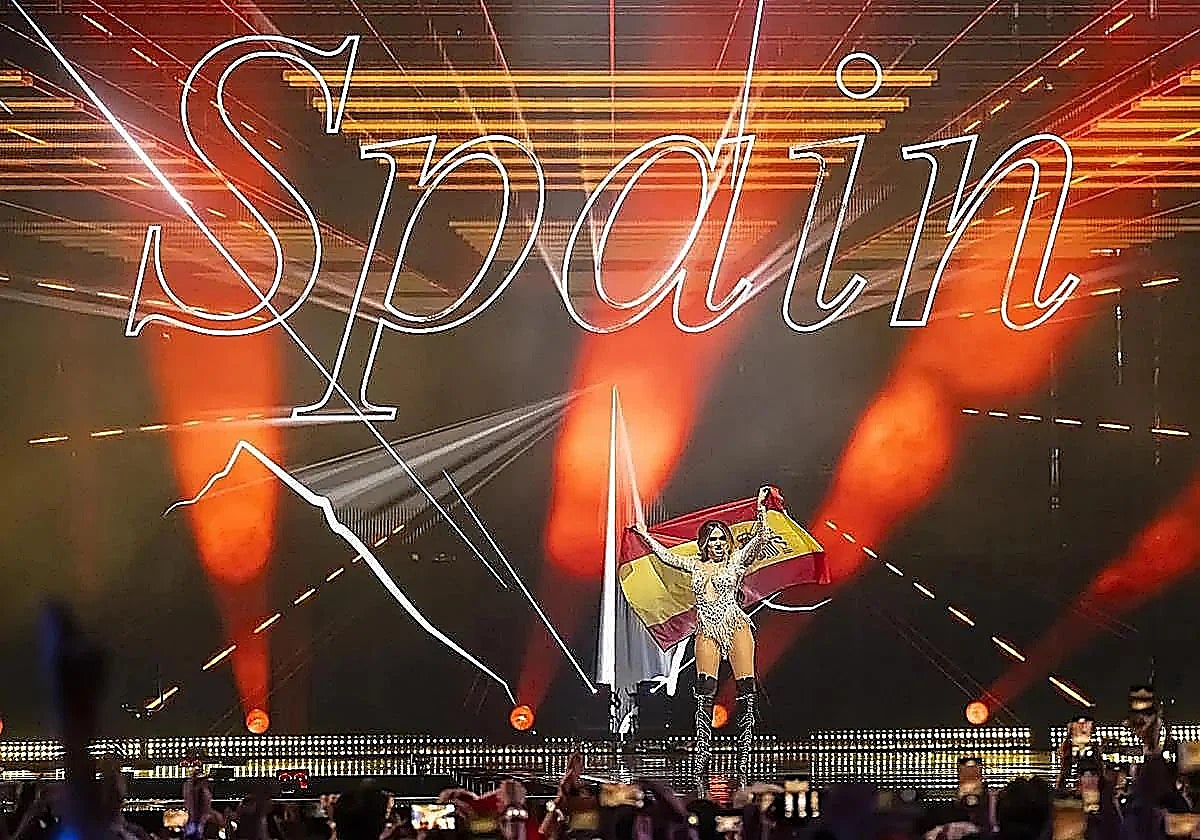

The shadow of controversy has been hanging over Eurovision since the turbulent 2026 contest, from which five countries (Spain, Ireland, Slovenia, the Netherlands and Iceland) ... decided to withdraw due to Israel's participation.
Public broadcasters stated that the European Broadcasting Union (EBU) had shown a lack of consistency and applied double standards when compared to sanctions imposed in other conflicts. The EBU is now implementing changes to encourage these countries to return to the contest.
There is, however, a particular focus on Spain for economic and stability reasons, as Spain is one of the contest's major funders and a key member of the 'Big Five'. "I think that, however much they've tried to cover it up, it's clear that this year's contest suffered a considerable drop in viewing figures and its reputation was severely damaged. They've had a taste of their own medicine, which is why they want to backtrack," Eurovision journalist Álvaro Onieva said.
Related story
Another expert on the subject, Juanma Fernández, said that the songs have lost listeners and, above all, that Eurovision is going through a "reputation crisis unlike any in its history". In addition, Fernández said that the contest had suffered an "economic impact" due to the departure of countries such as Spain.
One of the main changes this year is that winning the contest no longer guarantees the right to host it the following year: if the winning country is involved in an armed conflict or a "sensitive geopolitical situation" that jeopardises security, the EBU will withdraw its right to organise the event. The result will remain the same, but the venue will be moved to another country.
Furthermore, the new organising country will not do so "on behalf of" the winning delegation, but will sever ties with the country in conflict. "It strikes me as an attempt to bring back the countries that have protested, but it is clearly insufficient in light of the demands regarding the contest that are currently on the table," PhD journalist Dr Natalia Meléndez Malavé said.
Translator and writer Juan Naranjo went a step further and described these measures as "cowardly and merely cosmetic". "They are merely stopgap measures to make it look as though they are doing something, but they still fail to tackle the real problem: the participation of a country which, according to the UN, is committing genocide," he stated.
Fernández views these measures "positively", but also believes they "are insufficient". "I think they're cosmetic measures designed to try to convince and break up the alliance of five countries that don't want to take part in Eurovision if Israel is there," he said.
Eurovision has also severed relations with its main sponsor: Israeli haircare brand Moroccanoil. The company will not renew its sponsorship for the 2027 contest in Burgas. This departure brings an end to a six-year partnership that has been linked to recent political tensions.
"The end of Moroccanoil's sponsorship may also offer some hope, but the situation is still far from clear," Meléndez Malavé said.
Avrotos, one of the channels comprising the Dutch public broadcasting network, has already announced that it will not be returning due to Israel's participation. However, a new channel within the group could potentially take over.
Onieva mentioned another new change that could be key to steering the contest in a different direction to the one it has taken in recent years, although this is still merely a rumour. "It is said that they are going to end up sacking Martin Green as director of Eurovision, which would be very positive, as he has defended Israel tooth and nail in the contest," he said.
Green has made excuses for Israel every time it has breached the contest's rules. Onieva, however, is less optimistic about a change to the voting system. "Will countries stop trying to win at all costs or will they respect 'fair play', when Eurovision returns to being a music festival where people can have fun, rather than a weapon of soft power and a vehicle for international image-building?" he asked.
Fernández agrees with Onieva: "It is quite possible that, in the coming weeks, the departure of the Eurovision director, Martin Green, will be announced."
However, he stated that there should be a change to the voting system. "It should be one person, one vote, so that the results cannot be rigged, as Israel has done in recent years." He also believes that the main priority is to ensure that countries that "start wars" are barred from taking part in Eurovision and that sanctions are imposed on those who have been proven to have "rigged the voting".
Are further changes needed?
For Dr Natalia Meléndez Malavé, the problem is not that a country at war is organising the contest, but rather the ban on its participation. "We are calling for consistency between the cases of Israel and Russia," she said.
Russia was excluded from the contest when it launched its attack on Ukraine. "I think they're going round in circles to avoid expelling Israel, which is the request several broadcasters, such as RTVE, have made," Fernández said.
The four experts agree that Spain should not return to Eurovision whilst Israel is taking part. "That is why we left and that should be the condition for our return,” Onieva stated.
However, Naranjo believes that, due to the organisation's "lukewarm response and cowardice", they have already lost "thousands of long-standing 'Eurofans'".
"We've moved on. We don't want to be part of a contest that allows something like this to happen. We're no longer interested. The only way to recover (and that would be in the long term, not imminently) is to remove the country that has been boycotting the contest for years, committing atrocities against the civilian population and using Eurovision as an opportunity to whitewash its international image," he stated.
The words of Meléndez Malavé, another long-standing 'Eurofan', back up her statements: "I, of course, with all the pain in my heart as a Eurofan, will continue to ignore the contest."
"RTVE has been one of the television broadcasters most opposed to Israel's participation and it would now be very difficult to see RTVE taking part in an event in which Israel is also participating," Fernández said. Naranjo "has faith in José Pablo", president of the Spanish radio and television corporation.
"Although I would also like to say one thing: I hope this radical isolation of Israel does not happen only at Eurovision but extends to other international competitions as well. We 'Eurofans' have already done our bit: we've left behind the contest we loved so deeply. Let's see if other sectors finally take this on board," he said.
![[]](http://static.vocstatic.com/voc26/latest/assets/images/favicon/surinenglish/apple-touch-icon-57x57.png)