
History
Picasso, arrested and charged with stealing the Mona Lisa
The genius from Malaga has the distinction of having been the prime suspect in the most famous art heist of all time
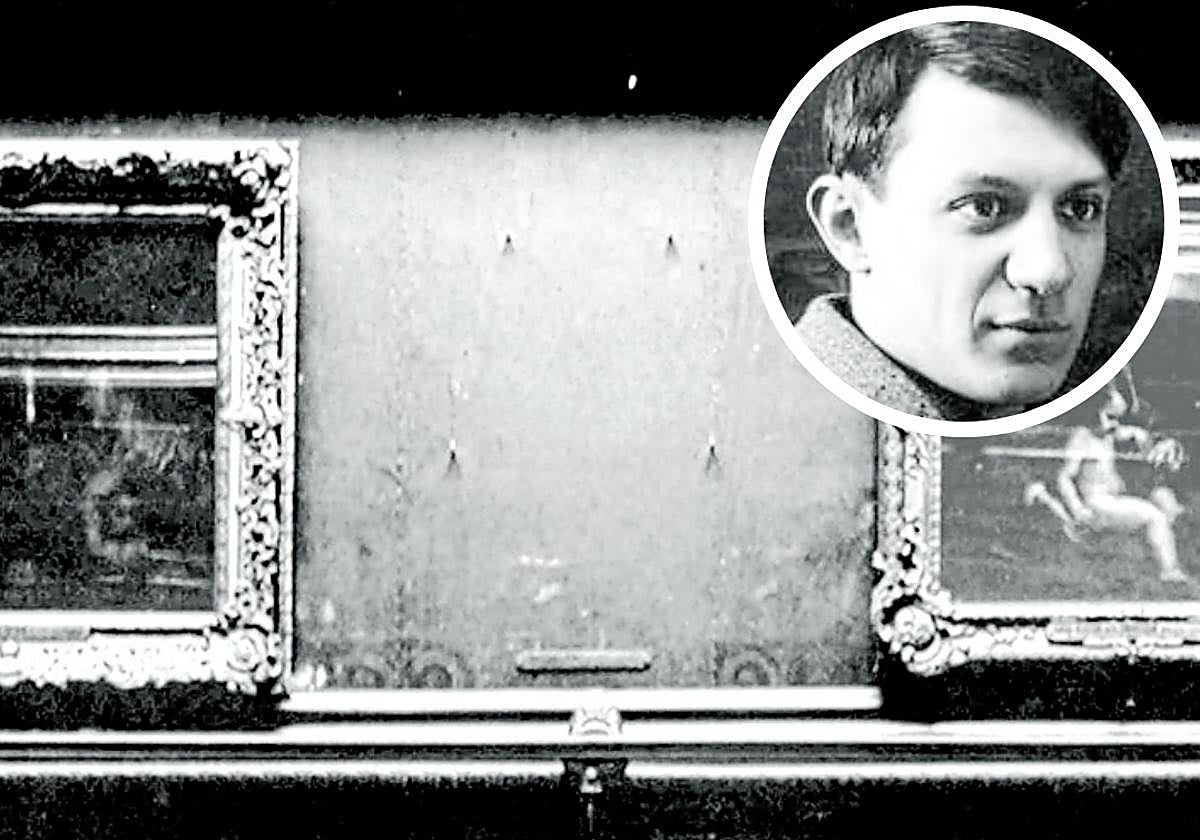

I’m sure our readers will remember the high-profile theft, last October, of Queen Marie Antoinette’s jewellery from the Louvre Museum. The eight ... pieces stolen by the thieves were valued at 88 million euros, although many art historians insisted that their value was incalculable. But on 21 August 1911, another heist of the century took place at the same art gallery, the 115th anniversary of which we are marking these days.
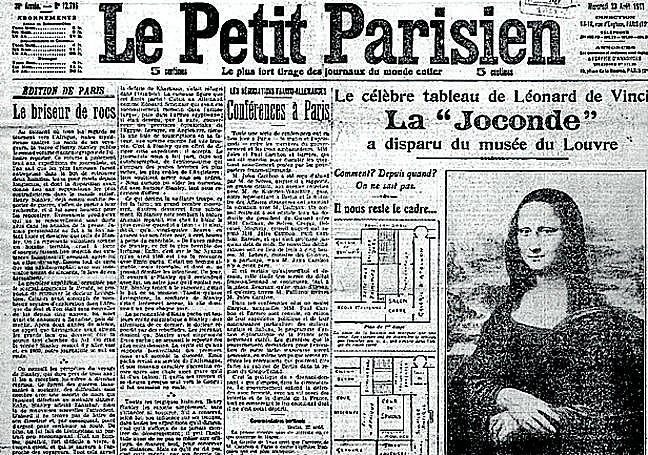
The following day, Paris and the whole of France awoke in shock: the Mona Lisa had disappeared from the Louvre. The news made the headlines in newspapers across the globe and caused understandable consternation in the art world.
Related story
-
Andalusian influencers around the world
Jennie Rhodes
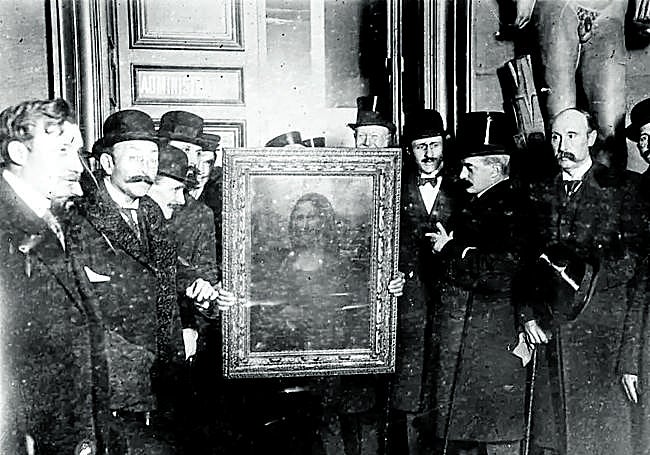
An employee realised the painting was missing and thought it might be in the photography studio or the museum curator’s office. The frame of the Mona Lisa was found intact beneath a stepladder in one of the Louvre’s inner rooms. The art gallery remained closed for a week. When it reopened, it broke its visitor record. Everyone wanted to see the gap left on the wall by the Mona Lisa, which at the time did not occupy a prominent position, but was hung amongst other works by Leonardo.
The magazine La Illustration Française offered ten thousand francs to anyone who could provide information leading to the recovery of the artwork. It should be added that the painting was hanging on the wall without any other security measures in place. And that a few months earlier, a journalist had spent the night hidden in a sarcophagus to expose the appalling security arrangements at France’s most important art gallery.
That was the state of affairs when, a few days after the theft, Joseph Géry Pieret, the poet Apollinaire’s secretary, wrote a letter to the Paris-Journal boasting that he himself had stolen other works from the Louvre and that the only reason he had not taken the Mona Lisa was because someone else had beaten him to it. The police arrested the braggart, who stated that in 1907, taking advantage of lax security measures, he had stolen two Iberian statuettes which he sold to Picasso for 50 francs.
The painter was aware of their illicit provenance, if indeed he had not commissioned the theft, as some believe. In those years, Picasso was fascinated by ancient and primitive art, and was putting the finishing touches to his famous painting Les Demoiselles d’Avignon, a precursor to Cubism.
Following the theft of the Mona Lisa, Picasso panicked. At the time, he was living with his lover Fernande Olivier, his first great muse, who had inspired many of the Malaga-born artist’s works in the years leading up to Cubism.
The lovers were afraid of being deported and tried to get rid of the statuettes by throwing them into the Seine, but Apollinaire dissuaded them, offering to sell them or return them to the museum.
Picasso and Apollinaire were two bohemians who had arrived in Paris at the turn of the century. Following Pieret’s statements, they became the two main suspects in the theft, particularly as it was common knowledge that they espoused Marinetti’s Futurist ideas: to burn down museums and destroy their works of art to make way for a new form of art.
On 7 September 1911, Guillaume Apollinaire was arrested, questioned and imprisoned. Miguel Calvo Santos recounts that his close friend, Pablo Picasso, was at home, scared out of his wits, and did not stop trembling the whole way to the police station. During the interrogation, accused of belonging to an international gang of art traffickers, he began to weep like a child. When Apollinaire entered, he said he had never seen him before. Almost half a century after this scene, Picasso recalled: "As I said this, I saw Guillaume’s expression change. The colour drained from his face. I am still ashamed.”
Due to a lack of evidence, they were released, but their friendship came to an end. The painter from Malaga believed he was being followed everywhere he went. Two years later, it was discovered that the real culprit behind the theft was a certain Vicenzo Peruggio, a former Louvre employee who had smuggled the Mona Lisa out hidden beneath his clothing (it measures just 77 by 53 centimetres).
Peruggio had hidden it in a cupboard in his home. He harboured the mistaken belief that the Mona Lisa had been stolen by Napoleon and thought that it rightfully belonged to Italy. He was unaware that Da Vinci himself had taken it to France in 1516 and that, following his death, it had been purchased by King Francis I, who had been his patron.
When Vicenzo Peruggio offered it to the director of the Uffizi Gallery in Florence, he was discovered and sentenced to one year and fifteen days in prison. And the Mona Lisa became the most famous work of art in the world.
Apollinaire, Picasso’s close friend
Picasso and Apollinaire were two bohemian artists trying to make their way in early 20th-century Paris, known as La Belle Époque. Apollinaire was born in Italy, although he was of Belarusian and Polish descent. Alongside Picasso, he is regarded as one of the pillars of modern art. He brought Cubism to literature with his famous calligrams, which my students find both delightful and surprising because of their playful typographical arrangement. Apollinaire was a transgressive and provocative writer. One of his most striking books is entitled Les Onze Mille Verges. It is an erotic and satirical novel that tells the story of a Romanian aristocrat who travels to Paris in search of pleasures (what we would today call sex tourism). We know of some extravagant anecdotes about the artist, such as the time he couldn’t get a tie out of the bottle he’d put it in to prevent it from creasing: he solved the problem by drawing a tie on his neck with charcoal. He died in 1918, a victim of the flu pandemic. It is said that his funeral procession wound its way through the streets of Paris amidst the shouts of the people, who were happy and jubilant because Kaiser Wilhelm I had just abdicated.
![[]](http://static.vocstatic.com/voc26/latest/assets/images/favicon/surinenglish/apple-touch-icon-57x57.png)