
History
Photographs of the suffering hidden by the dictatorship in Spain
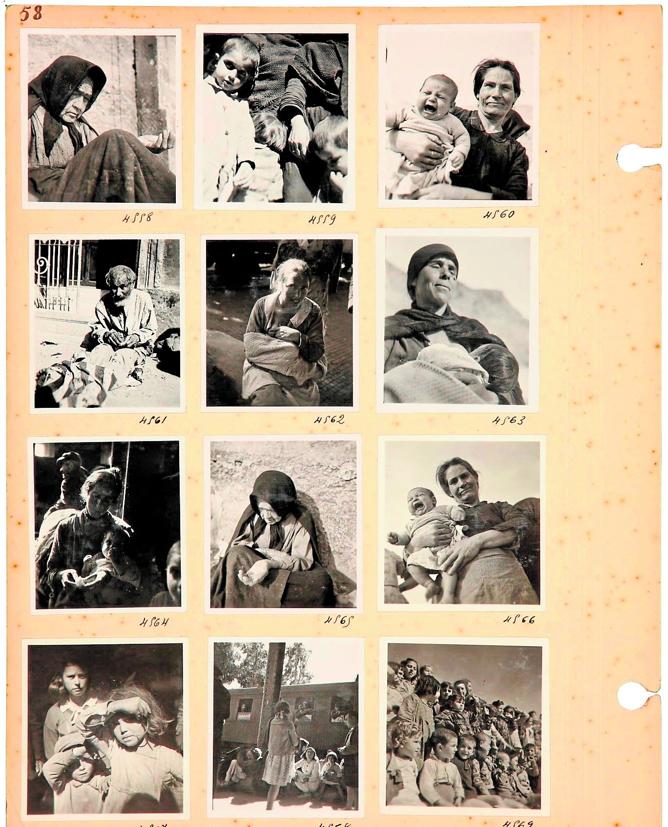
After decades in storage, research has revealed a couple of dozen images recovered by the National Library showing the flight from Malaga during the Spanish Civil War - the ‘Desbandá’
Paco Griñán
Malaga
For decades the archives of different Spanish ministries and public bodies hid images of the Civil War, of suffering and hardship, buried during the dictatorship. With the arrival of democracy, all this graphic material was brought together in the National Library of Spain (BNE).
Among this material, 86 negatives were found that were attributed to the German photographers Hans Namuth and Georg Reisner, who had published images of different episodes of the conflict, such as the flight of civilians in Cerro Muriano (Cordoba) in September 1936. However it was later discovered that an unpublished set of images of the horror of the war, until then associated with the Cordoba photographs, were really taken at a later date. They were from February 1937, the time of the Desbandá, when thousands fled from Malaga to Almeria after Franco's troops entered the city.
"In the negatives there are many refugees, but on seeing them up close we realised that they were not the same as the ones from Cerro Muriano," said researcher Carlos Vega Hidalgo who, together with Laura García Fernández, is the author of a study based on the collection.
A simple visual examination of the old photos revealed differences: the refugees in September in Cordoba had short sleeves and light clothing, while the people in the new negatives wore coats and hats.
The black and white images portray the civilian population, women, the elderly and children, carried in arms or on shoulders.
A couple of images from the same collection hold the key to the mystery. "One negative shows a crossroads with a sign for Almeria, so many of these photos correspond to refugees from Malaga somewhere along the Andalusian coast," explained Vega Hidalgo.
Other photos confirm this: sailors on the battleship Jaime I and the cruiser Méndez Núñez, assigned to the Malaga-Almeria-Cartagena route in February 1937.
Reisner and Namuth became war reporters by chance. Both had left Germany in 1933, fleeing the rise of Hitler. They met in Paris, opened a photography studio in Mallorca in the summer of 1935 and in July the following year they arrived in Barcelona to cover the People's Olympiad for the French magazine Vu. But the event was never held; on the opening day gunfire replaced fireworks. The Civil War had broken out and the Germans did not hesitate to take to the streets with their cameras.
From Catalonia they travelled through Valencia, Extremadura and Andalucía in pursuit of the news and images of the war, even coinciding in the same places as better-known photographers such as Robert Capa and Gerda Taro. They also crossed paths in Valencia with the journalist and spy Arthur Koestler on his way to Malaga, a further clue that points to the presence of German reporters in the Desbandá.
The epilogue to this sad story was Hans and Georg's return to Paris to save their lives, unaware that the war and the Nazis from whom they had fled would eventually catch up with them. Both were arrested by the French authorities in 1939 for being German, regardless of their Jewish origin and anti-fascist militancy. Namuth enlisted in the Foreign Legion and later emigrated to the US where he became a popular photographer of artists and intellectuals. Reiner was arrested again in 1940 and, fearing he would be handed over to the Germans, took his own life in Les Milles concentration camp in France.
![[]](http://static.vocstatic.com/voc26/latest/assets/images/favicon/surinenglish/apple-touch-icon-57x57.png)