
Community
‘This is our madness’: the women who take to the streets to help the homeless
Eight local women and one of their first ‘clients’ have been going out every Wednesday for the past four years to hand out food to rough sleepers
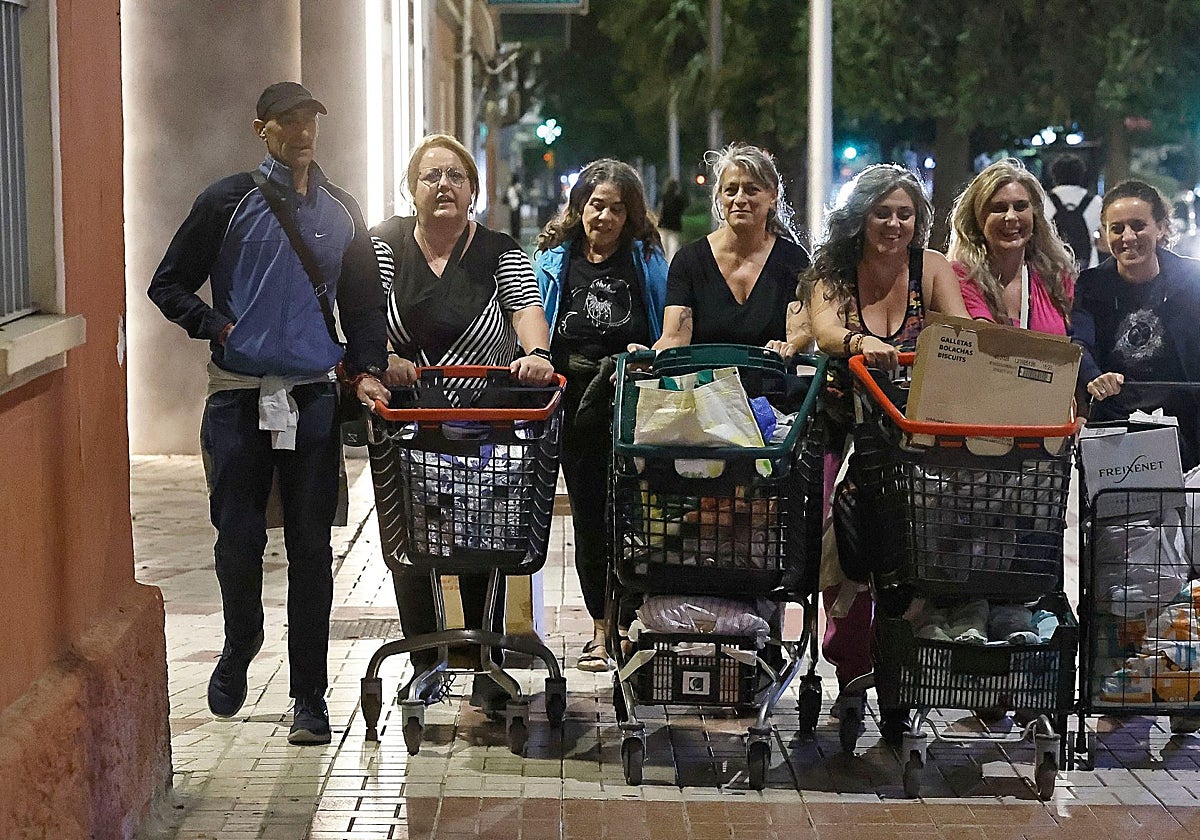

They haven’t missed a single Wednesday in the last four years. Ever since the day, after the pandemic, when Encarni saw a television report ... telling the story of a father and daughter who went out onto the streets to hand out food to homeless people.
She had always wanted to do something to help people, and what she saw on TV moved her and gave her the idea. She mentioned it to her friend Cinti, and the two of them went out one evening with half a dozen sandwiches to hand out to the homeless people sleeping on the porch of the church at the Cruz del Humilladero roundabout in Malaga city.
From then on, they decided to involve more friends in the initiative so they could help more people, and soon Encarni’s sister, Mariví joined them; later Patricia came along, followed by María Jesús, Cristina, Dori and Luli. The group, named Cien por Cien (after Cintia and Encarni), has its own logo designed by the women themselves.
The only man in the group, José Antonio, ‘Chami’, was one of the first homeless people they reached out to, and he has long been one of their volunteers and a friend: “I know what it’s like to be on the streets. It’s really tough. That’s why I help,” he says. The women, who aren’t the least bit shy, give him an affectionate wink: “He acts as our guide and is our guardian.”
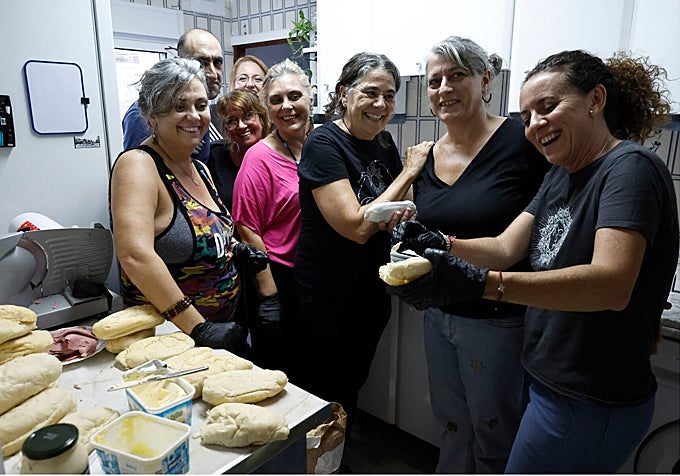
It’s a Wednesday afternoon in October and in the living room of a small flat on Avenida de Juan XXIII, ‘Chami’ sandwiches together biscuits with chocolate spread and then wraps them up into little parcels.
“They call us ‘the biscuit ladies’. They tell us it reminds them of the snacks they used to have as children,” explains María Jesús.
Meanwhile, in the kitchen, other women are preparing the sandwiches - which started out at just half a dozen and now number 150 - as well as coffee and hot Cola Cao.
They buy the food they distribute with their own funds, with help from people who know them and are aware of their work, as well as small local businesses.
Sometimes they also provide clothes and, above all, blankets. And if a homeless person tells them of a need one week, they try to meet it the following week: some socks, some long trousers for the winter, some shoes…
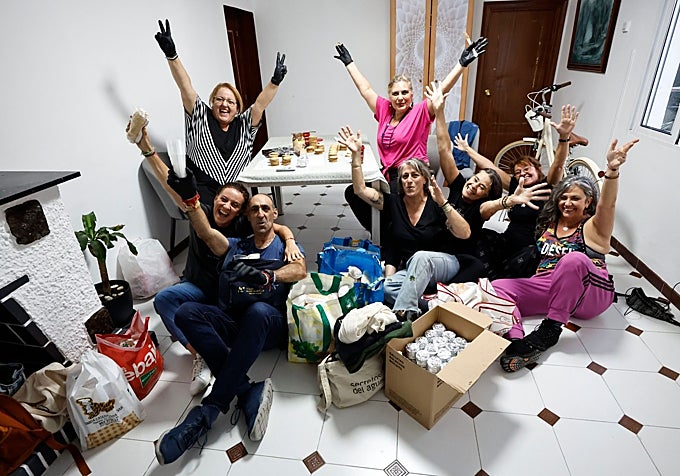
To expand this initiative, which they describe as “good neighbourliness”, they have organised a lunch for 14 November to raise funds. Christmas is just round the corner and they prepare special sandwiches as well as gifts for the festive season: last year, the Three Kings left scarves for the people they help. “There were some who didn’t dare open the parcel. They hadn’t received a present for years. So now, when we find out it’s someone’s birthday, we bring them a little something - a pastry to mark the occasion - and we all sing ‘Happy Birthday’ to them,” they explain.
“When we started out, I wanted to feed the whole of Malaga. Then I realised there was something more important than food: staying to talk to them, touching them, giving them a hug, calling them by their name”
“When we started out, I wanted to feed the whole of Malaga. Then I realised there was something more important than food: staying to talk to them, touching them, giving them a hug, calling them by their name,” explains Cinti, one of the group’s pioneers.
“We nourish both body and soul. More than the sandwiches, it’s the hugs that matter. I’d never been hugged like that before,” says María Jesús.
As they prepare sandwiches, drinks, biscuits and blankets, there’s a real sense of joy. Their enthusiasm is overwhelming.
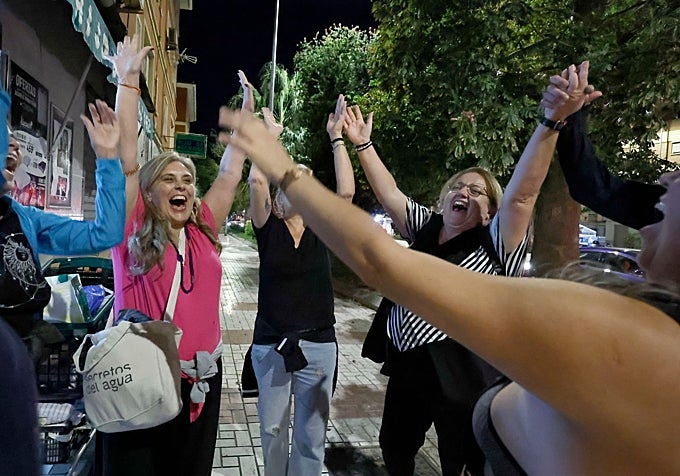
They fill bags. They take them down to the entrance of the block, where several shopping trolleys are tied up; they fill these and then wheel them out onto the street. Before setting off, they perform a ritual: they bless their efforts, give thanks for being able to take the full trolleys, and pray that they do not lose hope and that their initiative continues to grow until it is no longer needed because there are no longer any homeless people - their most cherished goal.
Cinti says they were unsure whether to grant this interview to SUR when the newspaper first learned of their initiative: “We don’t want any medals. We do it because it comes from the heart. We went a whole year without telling our families.”
To keep that commitment to go out every Wednesday for four years you do indeed need a big heart, but also a great deal of determination. “It doesn’t matter if it’s hot, cold or raining. On the day even El Corte Inglés had to close because of the rain, we went out too. We asked ourselves: ‘Are we really going to go out like this?’ Well, yes, that’s exactly what we did - in the pouring rain. Because while we, after our walk, go home, have a hot shower and then get into a comfortable bed, the homeless are still out on the streets,” explains Encarni.
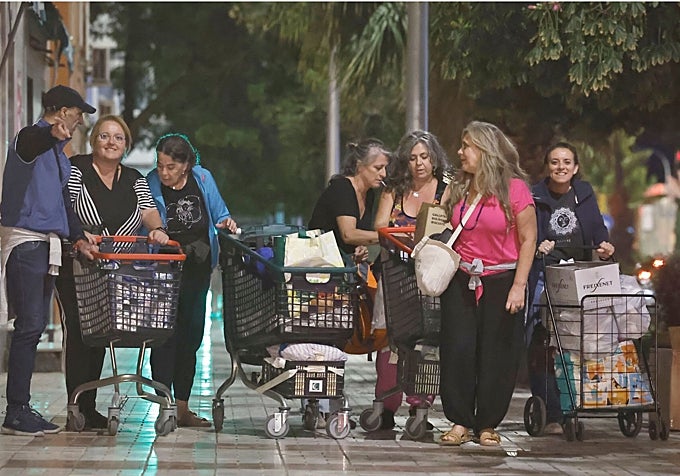
‘It doesn’t matter whether it’s hot, cold or raining. Whilst we, after our walk, go home and have a hot shower, homeless people are still out on the streets’
The fact is that, for them, helping others is an experience that gives them so much: "I’m a widow, I have two children, and doing all this takes my mind off my problems. It fills my soul with such happiness to know that I’m showing them love too," says María Jesús.
“It gives me great satisfaction to see their faces, to hug them, to hear them tell me about their problems, their worries, and also their progress. I come home with a smile from ear to ear,” adds Patricia. “I tell my friends and my sister to come along. But it’s true that it involves a huge confrontation with a very harsh reality that you have to be prepared for,” she adds.
Helping others and giving gifts also brings something to the person offering support and giving the present. Even so, in an increasingly individualistic society where everyone is so focused on themselves, on a Wednesday evening they might be better off watching telly, having a drink, going shopping or sleeping after a long day’s work, on top of the family responsibilities they have to deal with.
So why do they do it? “There comes a day when you feel a realisation.” Encarni sums up everyone’s reasons: “We feel that we’re all equal. We’ve met a man who used to be a prosecutor and is now living on the streets. Tomorrow it could be me. Tomorrow it could be anyone.”
"We feel that we are all equal. Tomorrow it could be me. Tomorrow it could be anyone"
Linking these words to the harsh reality of the experience, Luli, who has been helping to distribute food to homeless people since this summer, explains what has struck her most: “You always think there are a lot of marginalised people among the homeless, but what you actually find are ordinary, well-dressed people - people you wouldn’t think were living on the streets. There are also very young people, even teenagers, and when you’re a mother, that really breaks your heart.”
Among the homeless people they look after, there are those with mental health issues, addictions and many other problems, they acknowledge, but they talk about the approach they take when engaging with them: “They are people who are unwell; we don’t criticise them, we don’t judge them, we keep them company, we have a chat with them, we call them by their name.”
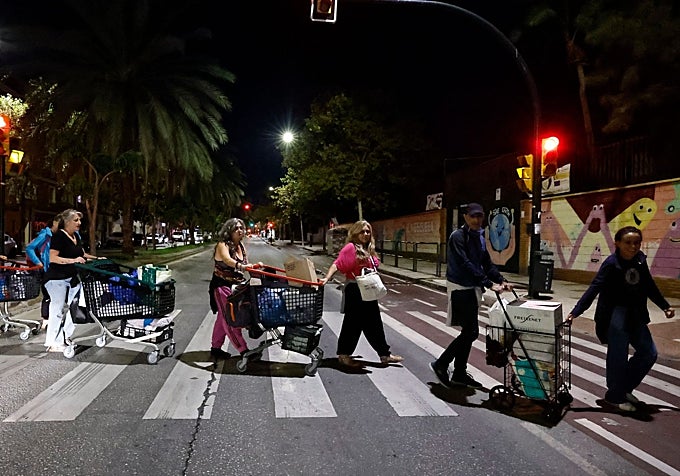
At the Asunción church, there’s a small group of people waiting. Before food, greetings, hugs, “How are you, José Luis, Salvador, Guille, Susi…”
You can also hear foreign accents - European ones, from France, Albania and the Netherlands. The conversations overlap and become jumbled, just like any other day, on any street, at the market, among neighbours catching up on their news.
“I’ve been living on the streets for four years. These women are priceless. They’re diamonds,” says José Luis.
“Is there a man at home?” asks the Albanian: “It’s just that I need some shoes and a pair of long trousers,” he says, pointing to his flip-flops and shorts, before confessing that he stops at María Zambrano station every day because there’s free wi-fi and that way he can keep in touch with the family he left behind in his country.
“Politics in Albania is in a terrible state at the moment,” he adds.
“There’s nothing good on the streets. During the day it’s all right, but at night… that’s when the wolves come out,” says Salvador.
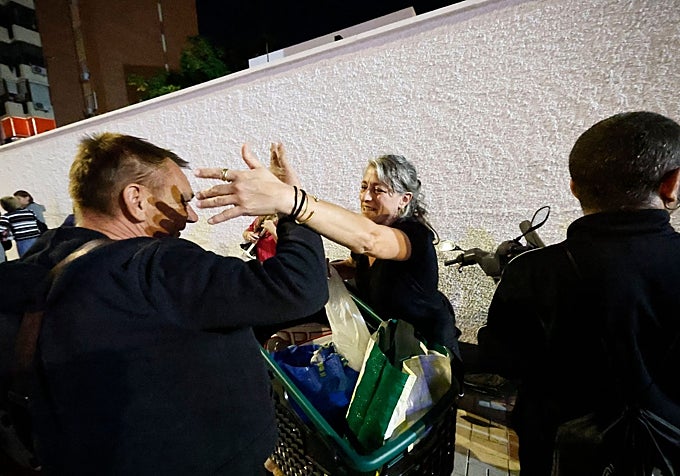
Patric, a Frenchman from Bordeaux, explains that Malaga blood runs through his veins because his mother was from Santa Rosalía, and he then begins to go over the geography of the area with Encarni: “What wonderful summers I spent here as a child!” he recalls.
Susi, a lively woman, in turn, speaking of Encarni and her friends, says: “They’re my friends, my sisters, my confidantes. I’m their little girl. They top up my mobile, they help me with everything. I’m currently living in a garage with a partner. My children don’t know I’m living on the streets. But now I can see the progress I’m making. I hope they’ll give me the basic living wage soon. But even though I’m in a right mess, I never lose my smile. I want you to tell my story when I get off the streets.”
“I’m their little girl. They help me with everything. I’m currently living in a garage with a partner. My children don’t know I’m living on the streets”
The next stop is on Calle de la Unión. “I’m here because that’s where I ended up. I’ve lost my job. Everything’s so expensive that I can’t afford to rent anywhere. I’m looking for work, I’m not sitting still, but it’s really tough,” explains a well-groomed, middle-aged man whom you’d never guess sleeps rough. Next to him is a young man who admits he’s on the streets because of drugs: “I’ve had good jobs at big companies in Malaga, but I’d blow my wages on drugs. I stopped working because I was going to die.”
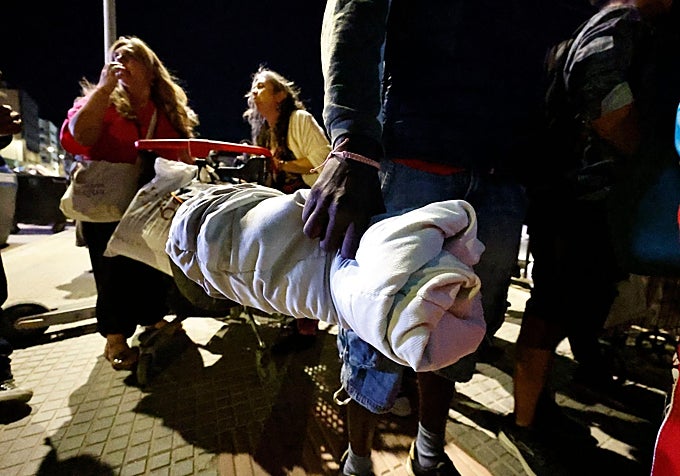
“Pedro, you look really well now; your legs are much better,” says Encarni, greeting another man, who explains that he has been living on the streets for ten years, alongside his wife, Reme. “Living on the streets is awful. That’s what caused this wound,” he says, showing a photo of his leg, which had become raw and sore. He’s been a professional shoe-shiner all his life. So Encarni reaffirms her theory: “Any one of us could end up on the streets tomorrow.” She explains that one Wednesday she bumped into an acquaintance who seemed ashamed to see her, and she reassured him empathetically: “Today I’ll give you a sandwich, but who knows - another time you might have to give one to me.”
Before leaving Calle de la Unión to reach the final stop on the mission - which is running a little late because SUR is keeping them occupied for longer than expected - a woman, Isabel, starts singing and dancing. Encarni, Patricia, Luli, Cinti… their warmth and support are the reason for the little flamenco celebration that breaks out, to everyone’s delight.
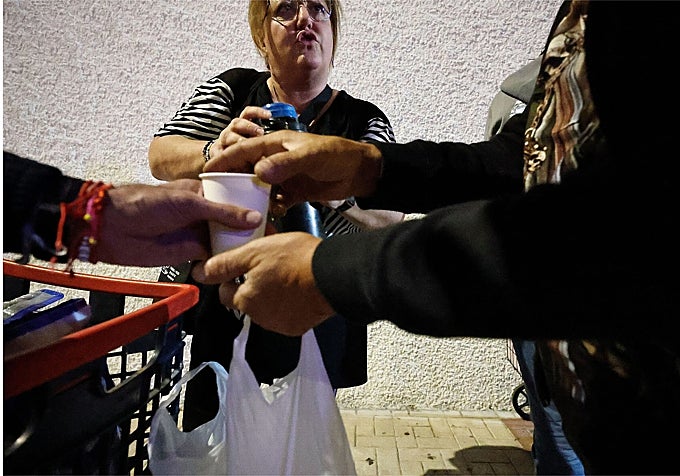
‘My socks were dirty and someone gave me a new pair. I’ll change them straight away. When you’re living on the streets, you often can’t keep yourself clean and you end up smelling bad’
Near the coach station, the last of the 150 sandwiches are devoured by Bakary and Gaoussou, young friends from The Gambia and Guinea-Conakry. The rejection of their asylum applications leaves many people out on the streets. But that doesn’t mean they’re giving up. Both are making an effort and speak Spanish fluently. They’re very friendly. And neither the memory of the harrowing experience of crossing the sea in a small boat to reach Europe nor the fear that accompanied them on the journey can wipe the smile from their faces.
"What a lovely cap you’re wearing, Gaoussou," someone says to him. "I’ll give it to you." "No, it’s yours and it suits you very well; keep it for yourself." "But giving it to you would be a gift to my heart." And he’s also grateful for the help he receives from Patricia, Encarni, Cinti, María Jesús, Mariví…: “My socks were dirty and they’ve given me a new pair. I’m going to change them right now. When you’re living on the streets, you often can’t keep clean and you smell bad,” explains one of the lads, who, even whilst sleeping rough, dreams of a better future: “I’ve got a lot on my mind, but for a start I want a job to improve my life.”
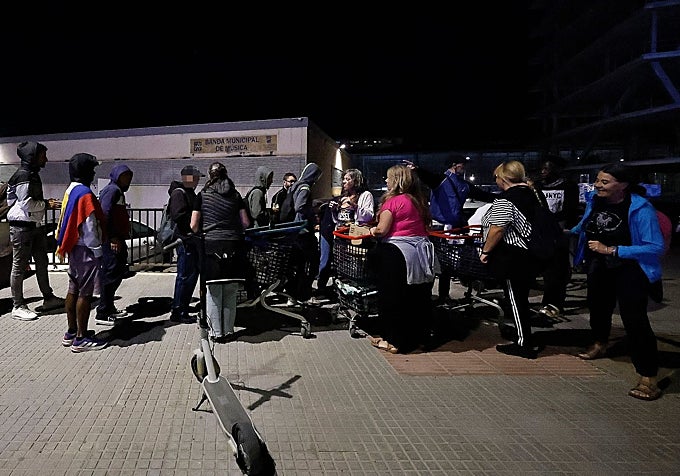
A young Moroccan man does not yet speak Spanish very well. With the help of his mobile phone’s translation app, he tells the story of his fifteen-year-old brother: "He was in Melilla and then travelled illegally to Malaga in a van. Now I’m trying to get help to go with him to Barcelona, because I’ll be staying there and he needs to be close to me. At the moment, we’re sleeping together on the streets.”
The route ends. They head home with empty trolleys and happy hearts. These women, every Wednesday, all year round, keep the homeless in their thoughts and in their actions. “We all have our little crazy schemes, and this is ours,” laughs Encarni.
