
Dance
The international ballet star signed by Antonio Banderas: 'I dance better now than I did when I was 20'
Lucía Lacarra, considered one of the best dancers in the world, is in Malaga to direct the Soho CaixaBank theatre dance festival
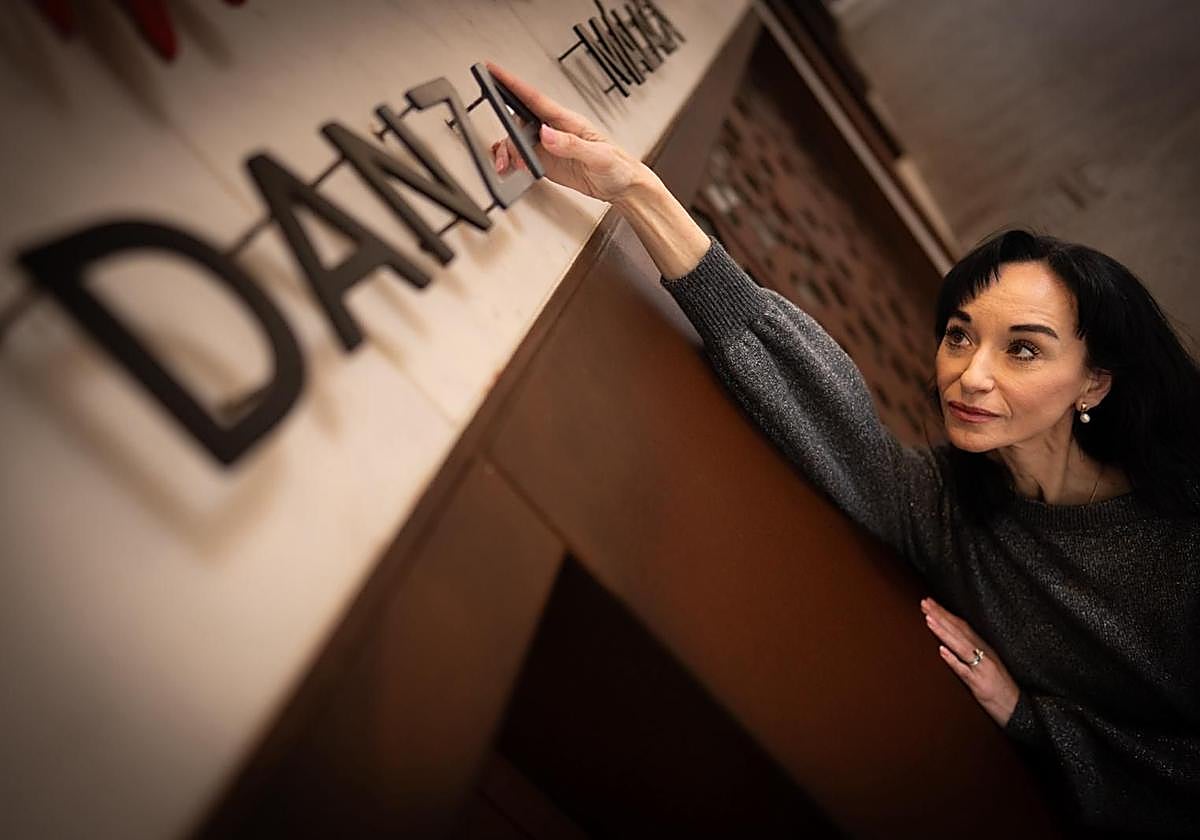

She was the first Spanish dancer to be invited to take part in the New Year's Concert in Vienna; recognised as Dancer of the Decade at the Kremlin Palace; winner of a cascade of awards such as the Nijinsky, the Benois de la Danse, the Max and Premio Nacional; leading figure in companies such as Marseille, San Francisco, Munich and Dortmund. But Lucía Lacarra only aspired to be "the last in line".
She was not destined to become a star: she was born in a small town in Gipuzkoa in 1975 and lost her father at an early age. You had to be "very hungry" to climb up to the world's main stages.
But that little girl who was mesmerised by her mother's jewellery box, where a figure twirled to the music of Swan Lake, now has a place among the best dancers in the world.
Now she has arrived in Malaga as the director of the Soho CaixaBank Theatre dance festival, the latest venture of Antonio Banderas, which promises to turn the city into the epicentre of Spanish dance in April.
-You debuted very close to here.
-Yes, at the Teatro Falla, in Cadiz. I was 15 years old and it was my first show as a professional. It's one of those moments you never forget. I remember it with great affection.
Tiptoe dance festival
-
-
Dates 11 to 19 April.
-
Venue Soho Caixabank theatre, Calle Córdoba, Malaga.
-
11-12 April Les Saisons, Malandain Ballet Biarritz.
-
14 April Bavarian Junior Ballet.
-
16-17 April Folia. French company Käfig.
-
18 April Fordlandia. Lucía Lacarra Ballet.
-
19 April Lost Letters. Lucía Lacarra Ballet.
-
Tickets teatrodelsoho.com
-
-Did that young girl ever imagine that she would become one of the best dancers in the world and have her own company?
-Far from it. When I was eleven, I had seen a video of Swan Lake starring Natalia Makarova. My dance teacher in San Sebastián gave it to me: it was a VHS tape. And I remember calling my mother during the second act, when all the swans appear, and saying to her: "Mum, I want to be one of them."
And I only aspired to be in the back row, to make a living out of this. I never imagined being first in line. But I think I would have been just as happy being last. I just wanted to live on the stage, that my job was to go to the theatre and dance.
-Pure vocation.
-Exactly. For me dance has been a vocation, a way of life. I've never treated it as a job, even though I've devoted everything to it, body and soul.
-And has it paid off?
-It has given me satisfaction I never expected. I didn't think I would even get halfway to what I have achieved.
- It's odd: your talent has gone further than your ambition. It's usually the other way around.
-When I was three years old, I was already saying I was going to be a ballet dancer, but nobody knows where that wish came from. Nobody at home had ever been involved in dance. It wasn't even something you saw on television; we know that it's not a highly valued discipline in Spain, much less at that time. My mother had a jewellery box with the typical ballerina that turned to music and she remembers that, when I was a baby, I would spend hours looking at it. But, apart from that, it's a mystery where I got this vocation from.
-What did they think at home?
-It was extremely difficult for my mother. My father died in a car accident when I was two years old and she was left alone with two girls. I'm the youngest, so they didn't take me very seriously when I started saying I wanted to be a dancer. And I'm from Zumaya, a town that had 8,000 inhabitants at the time. Dance didn't even exist there. But when I turned nine, they opened a small school and the teacher told my mother: "The girl has talent, we have to help her."
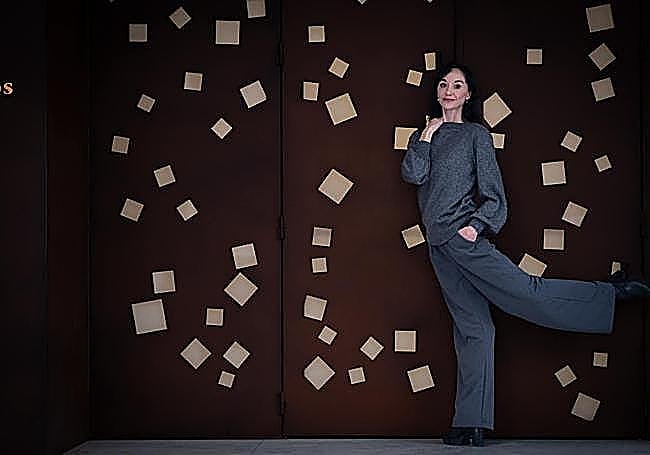
-And did they help you?
-My mother was very realistic. She was afraid I would fail. She knew where we came from, that we were in a small town.... She was afraid that they would put ideas in my head, so she took me to a summer course in Tarragona where there were very good teachers like Rosella Hightower, with the intention of making me realise that dance is a complicated world and that I should see it as a hobby. But the effect was the opposite: the teachers threw themselves into helping me, they raised my hopes even higher and my mother was very upset because she didn't expect that at all.
-And what made her change her mind?
-At first the teachers wanted to take me to the Liceo in Barcelona, to Brussels, to Cannes... and she always said no. Until an opportunity came up to train in San Sebastián, which is half an hour from Zumaya, and she accepted. And from then on everything went very quickly.
"On stage I am so focused that I forget even the pain"
-Is the dance world as harsh as it seems? Sometimes it even conveys a certain sense of cruelty.
-It's a lot of sacrifice, but I haven't experienced it as a punishment, but as a gift. It is the way of life I have chosen, the one I have wanted since I was a child.
-You didn't even see it as a sacrifice when the injuries, the tough times, came along?
-Not even one day; I've never wanted to do anything but dance. Does it require discipline? Yes, and hard work.
-And physical effort.
-I was lucky enough to be born with a body that was made for dancing. I think this has meant that I haven't had to torture it as much as other people have. The positions, the lines, I do them naturally. Maybe that's why I've had such a long career.
-Many of your fellow dancers have already retired at your age.
-When they get to 30 they start to think about pointing their career in another direction. I am lucky that my body, for the moment, supports me and doesn't complain.
-But you have also suffered injuries, some of them quite serious.
-I haven't had constant, chronic injuries, which are the most psychologically damaging, but I have suffered very bad injuries. In The Tempest, for example, I played Ariel and I tore my cruciate ligaments on stage after a jump.
-What happened?
-I jumped and, as I landed, my knee cracked and I found myself kissing the ground. I knew something had broken. It was a tough operation. My leg was purple, they had to remove fluid four times a week. Nobody, not even the doctors, thought I was going to dance again. The only one who didn't doubt it for a second was me. And after six months I was dancing again.
-Another time you danced for months with a broken toe.
-I dislocated my toe because a dance partner put me down a bit harder than normal. They were very small bones, so they did x-rays but they couldn't find the problem. I kept dancing until I couldn't bear the pain any longer. I had to have two operations.
-Not even pain can stop you.
-It's not that I like to suffer, I don't like pain, but on stage I'm so concentrated that I forget everything. For example, since I had my daughter I suffer from migraines because of three cervical hernias, but on stage I don't feel them. As soon as I go back to the dressing room they attack me like a hammer blow to the head, but when I'm on stage I don't feel that pain.
-That's training too, I guess.
-We focus our mind so much on what we are doing... But I have a good pain thermometer. I know which are the ordinary ones, the ones that come from long training for example, those good pains as I call them, and also which are dangerous. I have learned to listen to my body.
"I've learned not to judge myself so much... Emotions flow and that makes you imperfect"
-Is there much difference between dancing in your 20s and in your 40s?
-A lot, but not always negative. Nobody is the same person at 20 as at 40. We don't have the same tastes or the same concerns. Personalities and needs change. I've seen dancers in their forties who try to make people think they're 20 or 30. I prefer to embrace change, evolution. And there are things that are better left at the level when you've done them, but in other cases I dance much better than when I was 20 because I have more experience, another way of seeing things.
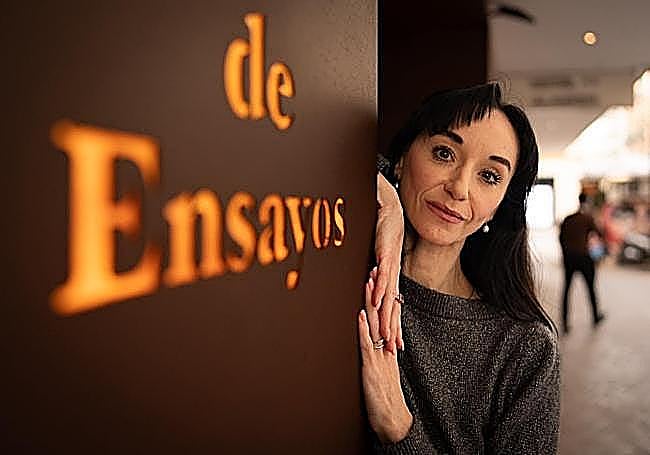
-Really?
-Yes, we were talking about the injury earlier. I remember being in the ambulance and staying absolutely cool, calm. I learned that I had spent years worrying about things, details, that didn't matter: problems with the music, the wardrobe... And that day I realised that what was really important was to finish the show. Because I couldn't finish it, of course. I had to be taken to hospital and the curtain came down. That changed the way I see this job a lot. Now I enjoy every second on stage, even if I'm standing still waiting to do a solo. And I'm grateful to finish every show and greet the audience.
- Did your pride hurt more than your knee?
-I don't have a particularly strong ego. We are artists, we shouldn't take it so seriously. I don't think it was pride, but rather a demand on myself. I've learned not to judge myself so much, to let myself go and not try to control every movement. We are artists, not gymnasts. On stage emotions flow and that makes you imperfect.
-Is that something you've learned over the years?
-Totally. People have always been surprised when I've changed companies when I was the leading figure, but I think it's part of the evolution we need to keep learning. Changing countries, even continents, and starting from scratch.
"My body, for the moment, supports me and doesn't complain. I dance better now than when I was 20"
-And when did you become interested in management? -
-Early, in my 20s, I started to be my own manager. Before accepting any proposal I wanted to know who I would be working with, how things were organised... Having my own company came naturally. It allows me to make decisions and that means that the shows have taken on another dimension for me. Now I wouldn't go back to being just another member of a company.
- How does directing a festival like this fit in at this point in your career?
-It seems to me a golden opportunity, a way to bring something more to this world of dance. One way or another I will always be on stage.
-And what did you think when you received the call from Antonio Banderas?
-Antonio is a movie star. The fact that he has opened his own theatre in his home city is impressive news to me. Because theatre is the least lucrative business there is. It was magical for me to hear what he had done. And from then on I wanted to dance for him, on his stage, but the opportunity didn't arise. Then we met at the awards of the Royal Academy of Performing Arts, of which I was made an honorary member the same year he received the award. The conversation came up immediately. He told me that he wanted to do something with dance and he had an idea in his head and, coincidentally, I had already drawn up a project for a festival. I think there are things that are destined to happen.
-But you have to give them a push sometimes: you already had that project, for example.
-Yes, I always say that it is better to have 20 per cent talent and 80 per cent discipline and hard work than the other way round. I come from a town of eight thousand inhabitants and I started at a time when dance barely existed in Spain. To achieve this you need to really want to.
-Are you ready to say goodbye to the stage?
-When I was in San Francisco I saw several farewell shows, which is something they like to do a lot there, and I thought I would never be able to do something like that. Because I'm not going to put an end date on my life on stage, to say: "One day I'll do my last show." Now I enjoy other facets of this job like producing or directing this festival, for example, and I know that there will come a time when I will naturally stop dancing. But I won't be able to put a date on it.
![[]](http://static.vocstatic.com/voc26/latest/assets/images/favicon/surinenglish/apple-touch-icon-57x57.png)