
People
Why are so many Americans moving to Spain?
They’re no longer looking for beaches, sunshine and paella. American families are moving to Spain in search of a quieter, more affordable and fulfilling life… and to get away from Trump


They had six criteria for choosing their destination: it had to have a moderate climate, neither too hot nor too cold; it had to be ... medium-sized so they didn’t need a car to get about; there had to be no tourists; it had to have plenty of green spaces, a good healthcare system and be welcoming to a gay couple like themselves. And based on all that, ChatGPT gave them the answer: Vitoria, the capital of the Basque Country, with a population of 260,000.
Lorraine and Terry arrived in the city last October. “It was raining, a dreadful day,” they say with a laugh as they stroll through the city with their little dog, Penny. In December, they found a flat in a central area, experienced an earthquake and a snowfall (which everyone assured them were unusual), and some neighbours invited them round for dinner on New Year’s Eve. Eight months on, they’ve made friends, travelled to the Canary Islands and Alicante, want to learn Spanish, have a butcher’s they trust, and are absolutely certain of one thing: “We want to stay in Vitoria for the rest of our lives. The people are friendly and we walk everywhere. Life here is wonderful.”
Lorraine and Terry are not an isolated case but rather indicative of a growing migration trend: an increasing number of American families are settling in Spain with the intention of staying permanently and, often, without any previous connection to this country. We are not talking about students, nor about people in their twenties seeking a life experience, but about young families with children, as well as recent retirees looking for a quieter and more affordable life. According to figures from the INE, almost 70,000 US citizens reside in Spain, a figure that has risen by 48 per cent since 2018 and which increased by 30 per cent in the period between 2021 and 2024 alone.

For this retired couple, who live on their American pension and have private health insurance, everything changed the day Trump won his second election. They lived in Fairfax County, Virginia, about 20 minutes from Washington DC, their home for almost 30 years. They hardly had any friends left in the city and were looking for a place to spend their retirement. They didn’t want to go to Florida (“too conservative”) or to Canada (“too cold”).
“When Kamala lost, we knew what was going to happen. We went to the first anti-Trump protest and there weren’t many people there. So we decided we had to leave. What were we supposed to do? Buy a gun and learn to shoot? We were going to become second-class citizens. We knew we wouldn’t be accepted,” says Lorraine. ChatGPT did the rest.
There are now 70,000 US citizens living in Spain, 48 per cent more than in 2018
Eric and Jessica Smith arrived in Logroño in 2021 after having lived in Kansas all their lives. He was a chef; she was a serial entrepreneur. They had a big house with a garden, two cars and wanted to start a family. But something wasn’t quite right. “We were like two ships in the night: we were always working and hardly ever saw each other. We needed a ‘reset’.”
And then the pandemic hit. That’s how they began to seriously consider an idea that had always appealed to Eric: moving to Spain through a programme for native English teachers. And, while they were at it, staying here to live.
Just as the move was already under way and the decision had been made, as luck would have it, Jessica fell pregnant. Everyone around them assumed they would cancel plans that had previously seemed completely mad to them.
Only their gynaecologist encouraged them: “Babies are born everywhere.” And indeed, their son Quentin was born in Logroño two months after the couple had settled in La Rioja. “In the public health system,” she says proudly.
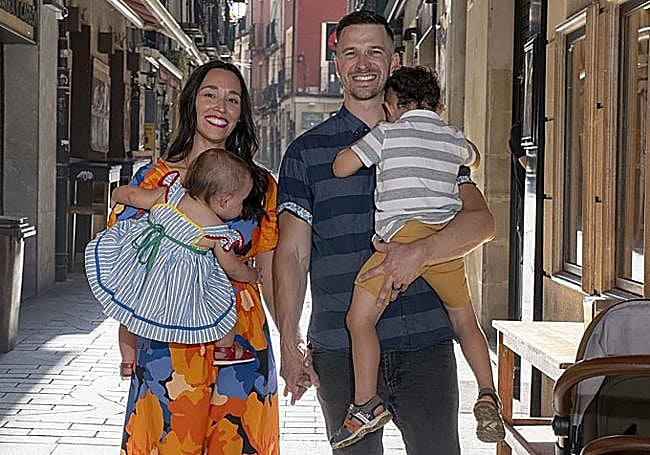
The Smiths didn’t choose Logroño at random either: they wanted a small town (“I’m from Kansas, I don’t like big places,” she points out), in the north, where the local dialect didn’t have a strong accent.
“We didn’t know anyone, either in Logroño or in Spain. ‘The first year was tough. It was difficult even just to go to the supermarket,’ Eric recalls. Four years on, they’re fully settled in the city, have made friends, have another child born in La Rioja’s public healthcare system, and run an Instagram account (@smithsinspain) that has turned them into ‘influencers’ more or less by accident. They’re in love with the villages and regional festivals, but above all with the way of life.
In search of a good quality of life
"How much time do we have?" she says with a laugh when asked how her daily life has changed. They talk, quite literally, about everything: knowing the butcher, the baker and the chemist by their first names; being just a 20-minute walk from anywhere; about being able to walk around the town at night without fear; about shops closing in the middle of the day and how, in August, everything slows down until it almost comes to a complete standstill; about how adults’ plans always include the children and how they see their friends up to four times a week.
"In the United States, you can feel very isolated. There’s a lot of talk about community, but you don’t understand what it means until you move here," says Jessica.
Their Instagram profile, which has over 100,000 followers, was one of the first of its kind, but four years on, the number of Americans living in Spain who are documenting their new lives (and those of their children) on the social media platform is surprisingly high. There are families living in Andalucía, Madrid or the Balearic Islands who talk about schools, healthcare, rents, food, administrative procedures…
The Smiths began receiving dozens of enquiries from other Americans keen to understand what the process entailed.
“Above all, people wanted to know how to make it work in the long term,” explains Jessica, who, seeing the interest, ended up launching Mr Amigo, a platform with its own app that connects families who have taken the plunge, but also offers resources such as legal advice on visas, taxes and health insurance, and which has already attracted around a hundred members since its launch at the start of the year.
Most arrive on digital nomad visas or non-profit visas, in the case of American pensioners
"Most of them are families with young children or young retirees. They often look for cities that may not be so well known to Americans, such as Zaragoza or Santander. They come in search of a better quality of life for their children, a more relaxed pace of life, as well as some financial breathing space and a general sense of security,” says Jessica.
Is the political situation in the United States an additional motivation? “No, not exactly. It’s perhaps the final push for those who, for example, are concerned about their children’s safety at school,” explains Eric.
Alison and Steven Benítez had always dreamed of moving to Europe. They lived in Arizona, but had long since stopped feeling at home there. Their daughter was born in 2019 and, after the pandemic, they sold everything they owned and set off travelling across the United States with their baby. But after travelling through 38 states, they hadn’t found what they were looking for.
“We started looking into moving to Europe and came across the digital nomad visas in Spain,” she explains from Valencia, where they moved, with the help of the Smiths, in February 2025. There was one specific incident that marked a turning point in their decision.
“One day, our five-year-old daughter came home from school and told us she’d crawled under her desk to hide from some bad guys,” they explain, referring to an incident involving weapons that took place in the neighbourhood around the school.
The Trump factor
Most of these American expats arrive in Spain on non-lucrative visas, which prevent them from working but do allow them to receive income from investments, pensions or property in the United States. This is usually the case for retirees.
Others opt for the digital nomad visa, which has restrictions on the companies they can work for. The Smiths arrived on a student visa and now hold a self-employed visa. “There’s a misconception that most people come here on an American salary, but that’s not usually the case,” explains Jessica, who also points out that, once settled, some people spot a business opportunity and decide to set something up.
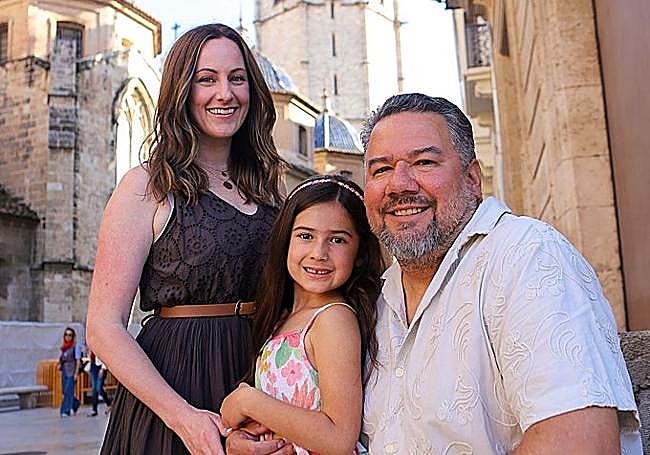
Although access to universal public healthcare may be an attraction for those settling permanently in Spain, it is not usually the main motivation. “It’s not anyone’s number one reason, but it’s a bonus and something incredible coming from where we come from,” explain the Smiths.
The Benítez family’s experiences of life in Valencia sound very similar to life in Logroño: they don’t own a car (“it’s very liberating”); they appreciate having access to “good, affordable” healthcare, but also being part of a culture where “work isn’t your identity”...
And Trump? Did he have anything to do with the decision to move to Spain? “It wasn’t a factor at the time, because his second term hadn’t started yet, but now we know it was the right decision. Nothing has improved for Americans: neither the cost of the weekly shop or petrol, nor healthcare, nor the lack of safety, nor the violence in schools,” Steven lists.
For Alison, there was another compelling reason. “One of the things that worried me about an administration like this was women’s rights. There’s been a huge step backwards on issues such as the right to abortion. Some men have even gone so far as to tell me they’d never vote for a female president – even if they agreed with what she stood for. That’s really frightening.”
Families with young children particularly value safety and the absence of weapons
The case of Maryanna Estornes, who has been living in San Sebastián since 2021, is different because her husband is Basque. After thirteen years living together in New York State, where they met and where their two children were born, they decided in 2021 to take the plunge and settle in Donosti.
“I love the laid-back pace and how sociable life is here. After school, for example, we go to the park – that would never happen over there. And the quality of the food is so much better. In the US, everything made me feel unwell and I used to get migraines. There are people who have food intolerances there but no longer do here,” says Estornes, touching on a point on which all the families interviewed for this feature agree. The young woman, who runs an Instagram account (girlsgone_donostia) that organises get-togethers between expats and locals, explains that the political situation wasn’t a reason for leaving, but it is now a reason not to consider returning.
“Seeing Trump from a distance has certainly cemented the reason why we never want to go back.”
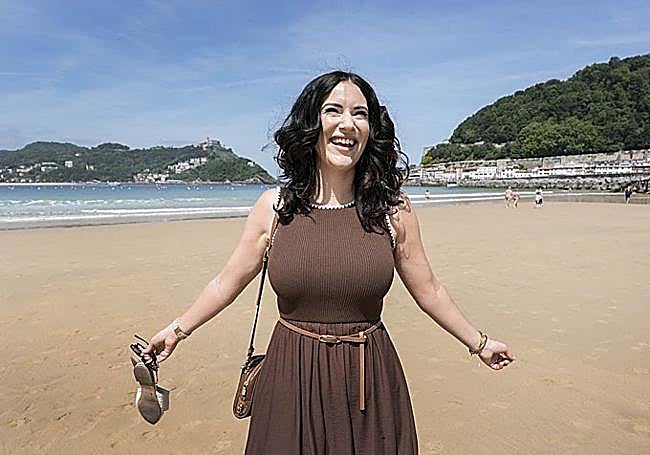
The Smiths miss their families and friends, but not their country. “I can’t imagine raising my children in the United States,” says Eric. And they’re in no doubt that Spain is where they want to live. Nor do they miss the big house or the garden.
“I hated having to look after all that grass. I love renting and not having a car,” says Jessica. “In a big house, everyone goes about their own business. I like bringing up my children in a flat because we spend more time together,” agrees her husband.
The Benítezs miss the NFL, baseball and spicy sauce. Little else. Alison is in no doubt: “We haven’t regretted it once. We want to live here forever. I firmly believe that the European dream is the new American dream. And for us, that means Spain.”
The American Dream no longer holds appeal for Spaniards
Obtaining a visa – let alone a green card or citizenship – to live and work in the United States has never been an easy task. But since the start of Trump’s second term, the obstacles have increased considerably, while the political climate in the country has become increasingly tense. As a result, interest among Spaniards - and particularly among younger people - in studying and working in the United States is no longer what it used to be.
On the one hand, families are increasingly less likely to send their teenage children to spend a school year in the country. According to a report by the Council on Standards for International Educational Travel (CSIET), since 2023 this option has fallen by 16 per cent, and many of these students are choosing other destinations, such as Canada, the United Kingdom or Ireland, to complete that academic year. On the other hand, the revocation of visas for undergraduate and postgraduate students has led to an increasing number of researchers ruling out the American route, which until recently was essential for anyone aspiring to a research career at the highest level. All this is happening while many scientists who have been based in the United States for years, or even decades, are returning, supported by ‘brain-gain’ campaigns such as the Ministry of Science’s ATRAE programme, VISI-ON-BRAIN and Talent Bridge, run by the Government of Catalonia.
Even tourists are finding it increasingly difficult to travel to the country. In March, the United States announced that, although Spanish nationals will still be able to travel visa-free to visit the country, the conditions for ESTA – the mandatory authorisation required to cross the border – have been tightened. Among other things, the authorities can review travellers’ social media activity; travellers must also provide the telephone numbers they have used over the last five years and the email addresses they have used over the last decade.
Since Trump’s return to the White House last year, the United States has become less attractive to travellers, as noted by the Spanish Confederation of Travel Agencies (CEAV), among others. On top of bureaucratic hurdles, there is a perception of insecurity and hostility fuelled not only by episodes of political violence, but also by raids carried out by ICE, Trump’s immigration enforcement agency.
![[]](http://static.vocstatic.com/voc26/latest/assets/images/favicon/surinenglish/apple-touch-icon-57x57.png)