
People
Malaga graphic designer creates symbol of Spain's fight for affordable housing
Álvaro Fernández, known as 'unbuentipo', releases open-source 'fist-key' image that has spread from Madrid anti-eviction protests to New York tenant rallies
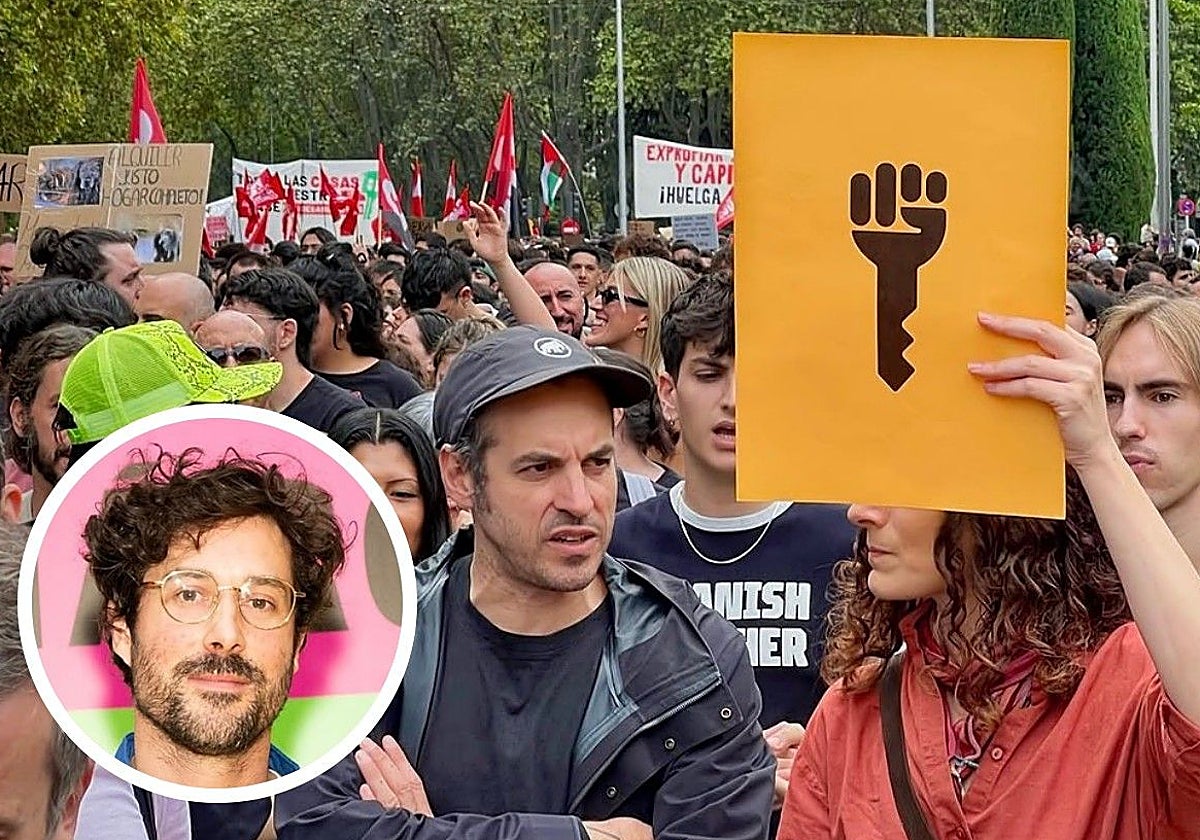
A key ending in a clenched fist has emerged as a symbol of the protests over the housing crisis in Spain. It features on ... banners, T-shirts and posters and has even reached New York, where the Big Apple residents have used it in demonstrations in support of tenants.
Behind the design is Álvaro Fernández from Malaga, known professionally as 'unbuentipo'. Fernández is a graphic designer, lecturer and one of the founders of the Canela Party. He, however, does not want the symbol to be his: "I'm really pleased it's been so successful, but it isn't mine. It belongs to everyone."
The image emerged in Madrid during the demonstrations against Maricarmen's eviction, but it was not commissioned by the tenants' union nor was it part of any organised campaign. Fernández has long been creating designs related to the housing crisis, which he himself has suffered, and sharing them on social media whenever a protest is called.
"I'd always create a design on my own to do my bit. There are already official channels, but I wanted to use the power of visual rhetoric to encourage people to take to the streets," he says.
This time he came up with a particularly simple yet effective image: a raised fist that extends to form the teeth of a key: "It's not the first design I've done, but this one came about just as Maricarmen's eviction arose. That was the spark that ignited the issue and got people out onto the streets in such an inspiring way."
Fernández has been a member of the Madrid tenants' union since early 2025. He learnt about the union's work through his friends in the band Biznaga and a few weeks ago decided to get more involved. He attended a welcome meeting, offered to help out with the communications group and is still hoping to become part of their working dynamic. Things, he says, have been moving far too quickly.
Their first meeting coincided with the days leading up to Maricarmen's eviction. On Monday, he attended the second one, organised by the union's central branch, held at the CSO La Rosa. "It was packed," he says. "The turnout has increased dramatically over these two weeks."
Fernández also wants to make it clear that behind the designs lies a collective effort that goes back a long way. "If there hadn't been an organisation like this, raising awareness of this issue since 2017, we wouldn't have done it. It's important that people know about it."
"I don't agree with the hackneyed saying that a picture is worth a thousand words. These designs wouldn't be understood and wouldn't even exist without the work of all the people who have provided context and put into words the housing problem," the artists says.
Fernández says that housing "is a cross-cutting issue" he is personally familiar with. "I'm 41 years old, I work as a freelance designer, I teach and I have other professional commitments." Even so, he still can't make ends meet. He moved to Madrid in 2019 and, seven years on, he is still sharing a flat with a friend.
"I'm not a vulnerable person. I earn a decent wage, but even so, I'm facing this problem. Living on my own here is impossible," he says. He cannot even think of buying a home.
"I don't own a property and I can't even afford the deposit on a flat. It seems that the only thing you can hope for these days is to buy something small and then sell it later on," the Malaga artist says.
Visual rhetoric
Fernández often speaks of "visual rhetoric": taking recognisable images, linking them together and creating new meaning. This is precisely the subject of a workshop he is soon hosting in Malaga as part of the Moments Festival.
There, he will answer some of the questions that even he himself asks. What, then, is the purpose of an image? "Art, in its various forms, serves to accompany, complement and offer content that is easier to disseminate and engage with."
Upon seeing the impact his fist-key had, Fernández decided to upload the open-source files to the internet so that anyone could use them. He does not require permission, nor does he insist that his name be credited. "It belongs as much to you as it does to me," he wrote when he began receiving messages from people who wanted to print it out.
The only condition he has set is that the design must serve its intended purpose and not become a commercial product. "I made it freely available so that anyone could use it, provided it serves these purposes: to put an end to rent-seeking and vulture funds."
Several people have asked him if they could print T-shirts. "I've given permission provided the proceeds go towards supporting tenants in whichever city it is." In Madrid, for example, Klondike Lavapiés has already printed them to raise funds.
The image has also taken on a life of its own that its creator had not anticipated. Fernández has been compiling some of the adaptations it has inspired: T-shirts, banners, screen prints and even a linocut. The fist-key has also appeared in the US alongside messages such as: "This home is not for sale" and "Tenants of the world unite!"
Fernández is delighted. Over the last few days he has had to repeat this on his social media to those who keep writing to him to ask for permission. "There's no need to ask, or to tag me, or to credit me, or anything."
![[]](http://static.vocstatic.com/voc26/latest/assets/images/favicon/surinenglish/apple-touch-icon-57x57.png)