
History
Mysteries of the Casa del Conde, the mansion overlooking El Chorro
With over a century of history behind it, the residence built by the engineer Rafael Benjumea has stood the test of time, even though it is no longer in use

Malaga
The area around El Chorro and the Desfiladero de los Gaitanes welcomes hundreds of thousands of tourists every year, drawn mainly by the famous Caminito ... del Rey, but also by a natural landscape that has been looking resplendent this year following a very wet winter.
Visitors’ mobile phones and cameras are sure to capture a panoramic view of the El Chorro dam – now officially known as the Conde del Guadalhorce – in the municipality of Ardales. In the background, on the opposite bank, on a small peninsula jutting out into the water, the silhouette of a stately home stands out, with a small pavilion and a jetty that catch everyone’s eye. It is a somewhat mysterious building, which is rarely seen open and can only be reached by water or via a small dirt track that is currently closed.
What is that house, who does it belong to and what is it used for? It is known as the Casa del Ingeniero or Casa del Conde and is probably one of the least well-known historic buildings in Malaga. It is managed by the public sector and is not open to the general public; visits must be for professional reasons and authorised by the regional agriculture ministery. “It is currently used for institutional purposes and is opened for meetings or technical visits,” explains the spokesperson for the Junta de Andalucía.
The main hall has been used for institutional meetings
(Ñito Salas)Dolores Fernández, a technical adviser at the Guadalhorce Dams Operations System, is acting as a guide for this newspaper during the visit to the property. The grounds are accessible, but only with prior authorisation from the authorities and well in advance. Its gazebo and jetties are in high demand as backdrops for weddings and first communion photos. However, the house is almost always closed and sees little use. And no, it cannot be hired for a summer holiday, although more than one tourist has enquired about it.
The building has a history stretching back over a hundred years, but it is in excellent condition. It forms part of the industrial heritage linked to the Conde del Guadalhorce reservoir, a masterpiece by the engineer Rafael Benjumea y Burín. The hydraulic infrastructure was built between 1914 and 1921, and the Seville-born engineer designed the Casa del Ingeniero - or Casa del Conde, as it later came to be known - as the administrative headquarters for the works and also as an occasional residence for the professionals in charge of the facilities.
“Nowadays, its original purpose no longer makes sense because transport links are better, but in the past the engineers did have to spend the night in the house if they needed to visit the facilities,” says Fernández.
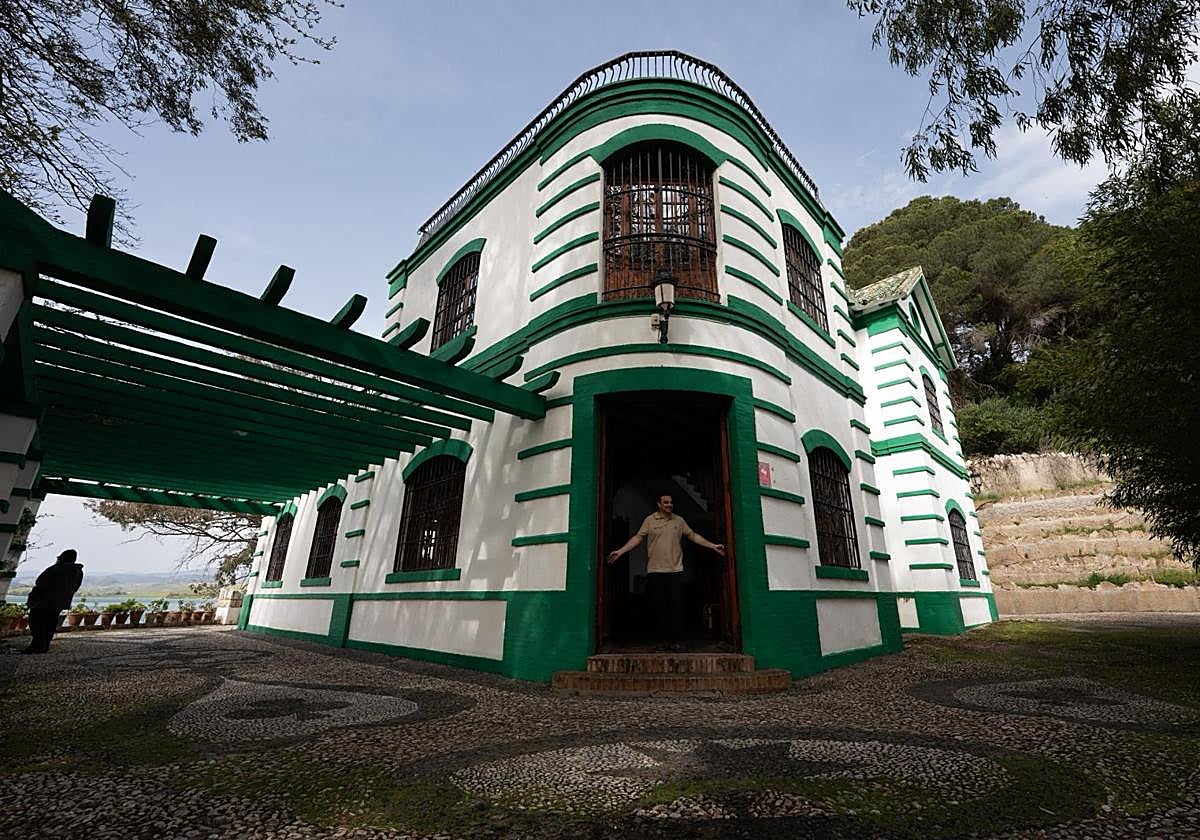
The house’s white façade with green detailing blends perfectly into the landscape. All around, there is nothing but greenery and the sound of water, which you can almost reach out and touch. A long outdoor walkway leads to the much-photographed arbour or gazebo and to one of the three jetties - two of which are mainly used for recreational purposes, while the third is regularly used by technicians carrying out their work on the dam. Next to the Casa del Conde stands a second, smaller building in a poorer state of repair, which was once the home of the housekeeper responsible for maintaining the main property.
Although the Casa del Conde is not currently equipped for use as a residence, the building retains all the charm of a stately home. The main entrance leads into an impressive hall, with a huge, long table in the centre and a second room next to the fireplace. On the walls hang old photographs of the dam’s construction and the Caminito del Rey. The ground floor also houses the kitchen and one of the house’s five bathrooms. Soaring ceilings and large windows, offering views of the water from practically every part of the residence, accentuate the feeling of being in a mansion. Upstairs, there are four bedrooms, each with its own bathroom. “The house is designed so that four engineers and their families could stay here with a degree of independence,” Fernández explains.
Under that roof, Rafael Benjumea showed King Alfonso XIII the plans for the ambitious hydroelectric project he had designed on the Guadalhorce. "The King and the engineer smile, and together they enter the Administration building. There, the great engineer describes to the monarch, showing him the plans, the marvellous project before him.” (Illustrated chronicle of King Alfonso XIII’s visit to Malaga 21 and 22 May 1921). A truly magnificent residence, of incalculable value and a testament to the province’s history, which would be perfect for use as a museum or educational centre in an area that is attracting an ever-increasing number of visitors.
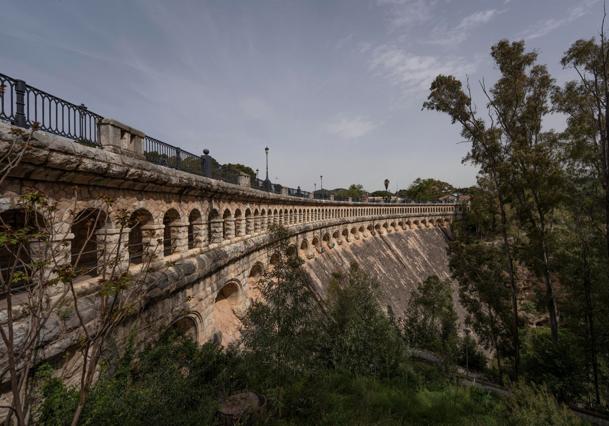
Conde del Guadalhorce, an engineering marvel and the oldest dam in Malaga
La Casa del Conde, like the Conde del Guadalhorce reservoir, takes its name from Rafael Benjumea Burín, who was made a count and was a key figure in Malaga’s industrial development, as well as the engineer who oversaw the construction of Malaga’s first dam. This was a fundamental piece of infrastructure for the supply of water and hydroelectric power, which, in addition to its functionality, stands out for its refined aesthetics and its seamless integration into the landscape. Its significance at the time was such that King Alfonso XIII wished to recognise it as a masterpiece by paying a visit in May 1921 to sign the certificate of completion. For that visit, an open-air ‘office’ was built, consisting of two benches, an armchair and a table, all made of stone, carved from the same limestone that covers the entire structure. The so-called Sillón del Rey (King’s Armchair) is situated next to the dam, overlooking the Casa del Conde, and is currently one of the most iconic features of this site.
![[]](http://static.vocstatic.com/voc26/latest/assets/images/favicon/surinenglish/apple-touch-icon-57x57.png)