
Hobbies
Looking up: how birdwatching is captivating a new generation
Young people around the world are embracing birdwatching as an antidote to screen time and everyday stress. Social media and the Covid-19 pandemic have helped transform a hobby with an "old man image" into one of Gen Z's fastest-growing pastimes
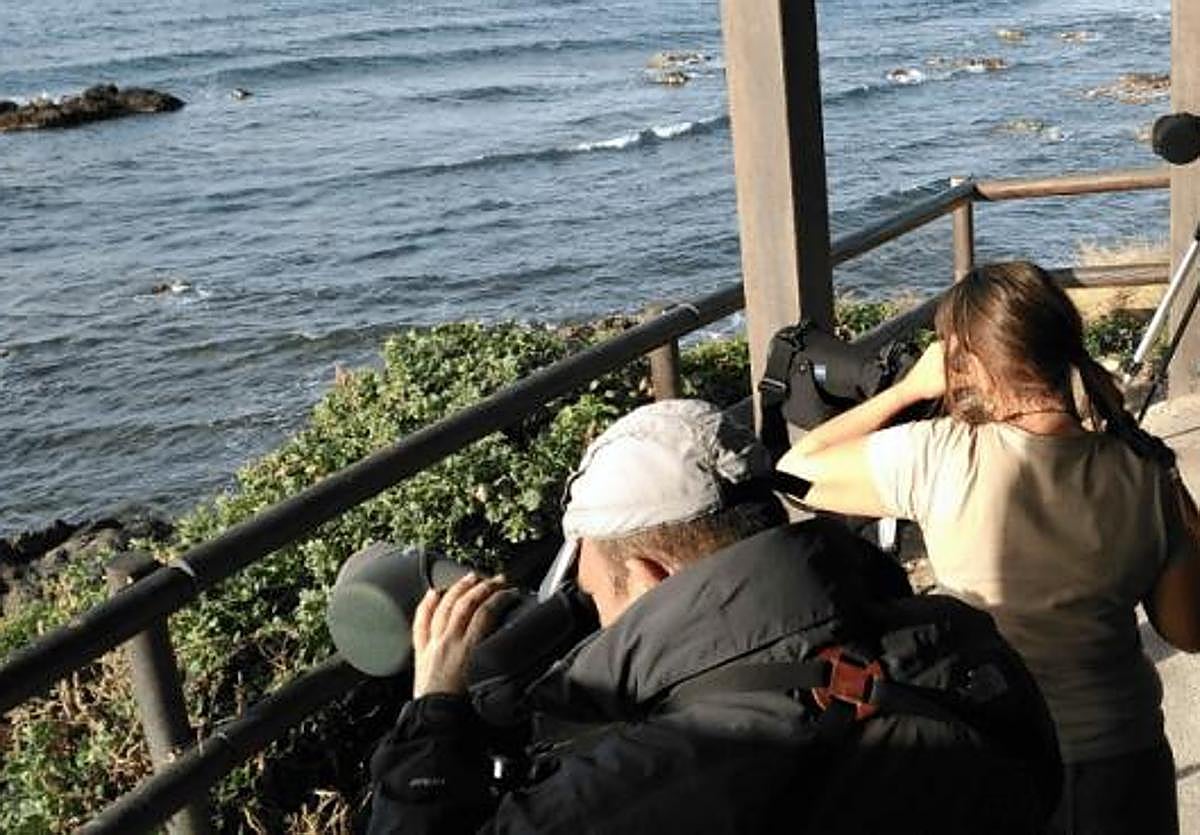
Mia Bucher (DPA)
On a Sunday evening, a group of teenagers and young adults stand scanning the sky through binoculars on the former site of Berlin's Tegel Airport.
"There's a heron!"
"Can you hear the corn bunting?"
For many young people, these are not typical things to say. But for this group of 10 birdwatchers aged between 12 and 26, they are part of a shared passion.
"Since I joined the Young Birders Club, I've been going out pretty much every weekend," says Ole, aged 12.
Related story
"Birding" is simply another word for birdwatching - but, as enthusiasts point out, it sounds a little cooler.
Ole is part of a growing international community of young birders. Across Europe and beyond, conservation groups say more teenagers and young adults are taking up the hobby.
A recent UK study found that birdwatching is now the second-fastest-growing hobby among Generation Z (those born between 1995 and 2010), after jewellery-making, with nearly 750,000 young people regularly taking part.
Many young birders trace their interest back to the Covid pandemic lockdowns, when spending time outdoors became one of the few available ways to escape the confines of home.
At 12, Ole is the youngest member of his Berlin group. "My friends think I'm a bit crazy because I get up quite early," he says.
He and the other young birders are challenging one of the hobby's oldest stereotypes: that birdwatching is only for older men in hiking gear.
On Instagram and YouTube, a growing number of young creators share sightings, explain bird calls and bring the hobby to new audiences.
Apps and online communities help enthusiasts exchange observations and organise meet-ups.
Christopher König from Germany's national bird conservation network says the birdwatching community is becoming younger - and increasingly female.
"For a long time, the hobby had a reputation for being something only old men in odd clothes did," König says. But now, he says, there are more and more young bird enthusiasts.
"The proportion of women has also been increasing over the years."
Back at the former Tegel Airport, Cora takes out her spotting scope. The 18-year-old usually goes birding at least once a week, equipped with a camera, binoculars and an audio recorder for bird calls.
On her phone, she keeps a detailed handbook of European birds - unfortunately only available in Dutch.
"I've always been really interested in nature in general. Then, at some point, I was given a pair of binoculars as a present. Then came the pandemic, and I had loads and loads of time to spend outdoors," says Cora.
Charlotte, also 18, discovered birdwatching in a similar way. During lockdown, she began spending more time outside simply out of boredom - and found a new fascination with nature.
"I enjoy it because it's a way of being outdoors," she says. For her, it is also a welcome break from constant screen time.
During the three-and-a-half-hour excursion, the young birdwatchers barely look at their phones. Their conversations are interrupted mainly by sudden bursts of excitement and fingers pointing towards the sky.
Sometimes, the excitement fades quickly: "Ah, it's just a pigeon."
But then comes a real highlight.
"Stop, a harrier!" co-group leader Manuel Tacke shouts.
Everyone turns their binoculars towards the sky, while Theo lifts his camera with its enormous lens, trying to capture the bird like a wildlife paparazzo.
The sighting later turns out to be a Montagu's harrier, a rare breeding bird that is seldom seen in Berlin.
For many young birdwatchers, however, the appeal goes beyond finding rare species. The hobby offers a sense of calm and connection in a fast-moving world, says Laura Muschiol, co-leader of the Young Birders Club.
"Given the current state of the world, I think it's really comforting to see that certain things keep coming back," she says. "The bird I've spotted in my local park is back again this year, no matter what's happening in the news. And I think there's something rather comforting about that."
The young birders also contribute to scientific research by recording their observations through citizen-science platforms. Their photos, audio recordings and sightings help researchers monitor changes in bird populations.
König says participation has grown sharply in recent years, with thousands of new observers joining monitoring platforms. The surge began during the pandemic but has continued afterwards.
For scientists, this enthusiasm is valuable. Data collected by amateur birdwatchers complements official surveys and helps track the decline of species, particularly among farmland birds such as the partridge, skylark and lapwing.
The Berlin group end their outing with an impressive list of sightings: 45 species in total, including two lapwings, several wheatears, black kites and the rare Montagu's harrier.
Each sighting is uploaded online - turning a Sunday evening spent looking at birds into a small contribution to conservation.
![[]](http://static.vocstatic.com/voc26/latest/assets/images/favicon/surinenglish/apple-touch-icon-57x57.png)