
5 October, World Architecture Day
A house that creates legends
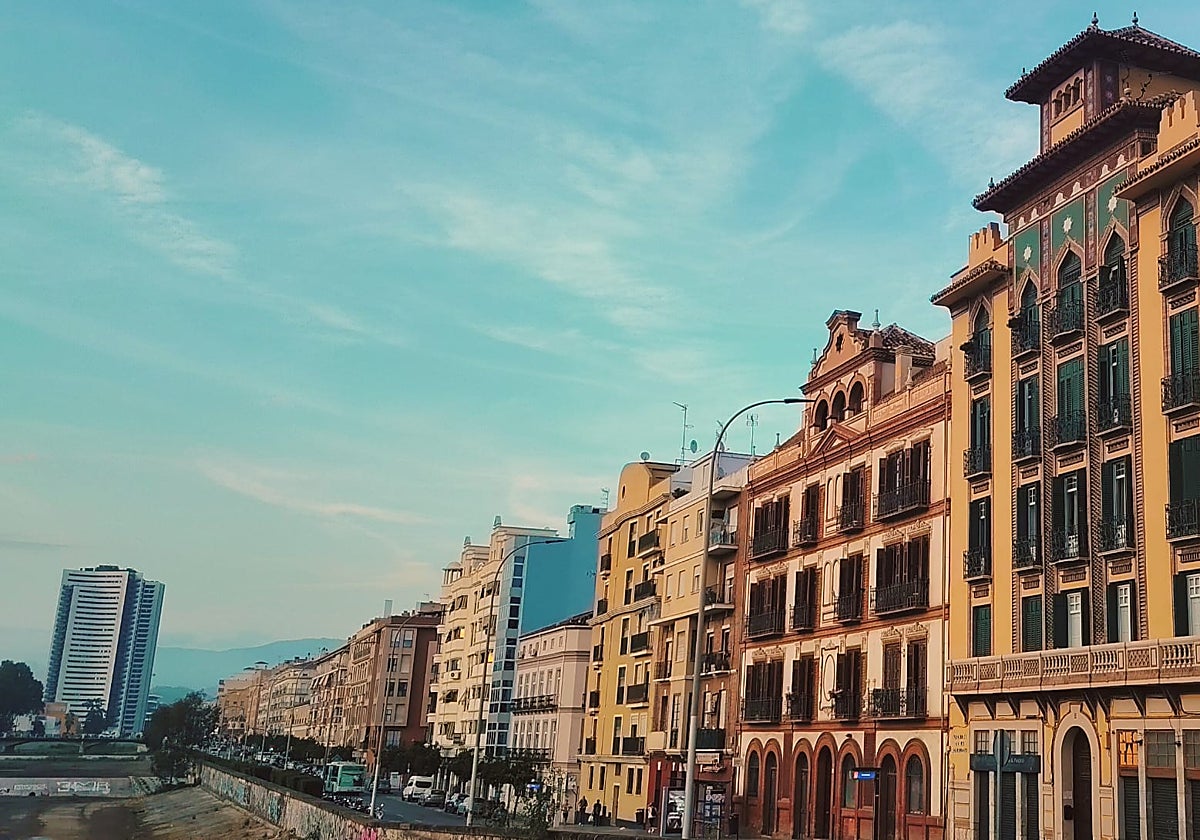
This impressive building in an oriental style, with its exotic façade, is part of Málaga’s architectural eclecticism and is… the subject of various legends linked to foreigners
Alekk M. Saanders
Malaga
World Architecture Day is celebrated annually on the first Monday in October to highlight how architecture shapes human settlements and everyday life.
Regionalism-Deco combines the geometric and modern forms of Art Deco with traditional elements of Andalusian regionalism
Málaga boasts many examples of distinctive architecture that attract the attention of tourists. Some of these buildings with their colourful façades and unusual shapes easily bring to mind the whimsical palaces of fairy tales. So unsurprisingly that legends and anecdotes circulate about some of them. One such house on Avenida Rosaleda is more and more often described as having been bought by a wealthy man from the East for his beloved wife from Málaga.
Fusion of styles
If you take a stroll along the Guadalmedian River, you’ll see an Art Deco-style house inspired by the Mudejar style. Incidentally, it is often described as ‘Regionalism-Deco’ and is considered to be very characteristic of Málaga. This architectural style combines the geometric and modern forms of Art Deco – such as zigzags and aerodynamic lines – with traditional elements of Andalusian regionalism, modernism and local historicism: glazed ceramics, exposed brickwork and richly decorated balconies.
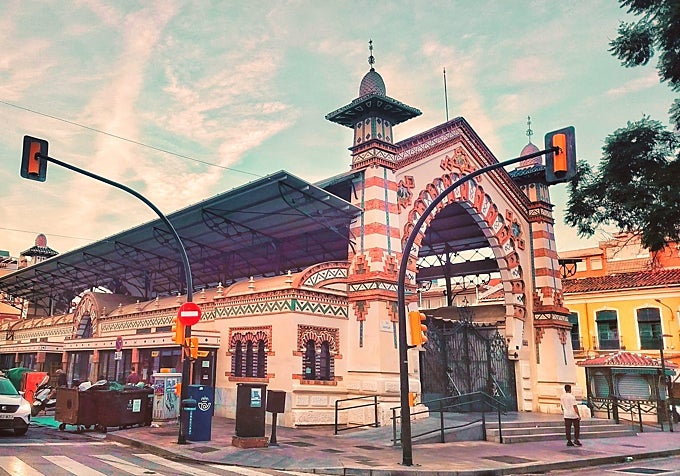
In the first half of the last century, the Malaga-city architect was fond of combining Art Deco volumes and lines with finishes in an oriental or regional style, polychrome tiles and details of Neo-Mudejar or Neo-Renaissance origin. His name was Daniel Rubio Sánchez. He was born in Castile-La Mancha and it was there, in Albacete, that he began his career as an architect. In 1919, the architect moved to Andalucia to work in Antequera and Málaga.
In Antequera, he designed the headquarters of the Antequera Savings Bank. In Málaga, his name is often mentioned in connection with the impressive designs of the Salamanca market and ‘Villa Fernanda’. Furthermore, in the city centre, one can come across two buildings designed by this architect. These are the residential building at 5 Sagata Street, next to the central market, and the aforementioned building at 3 Rosaleda Avenue.
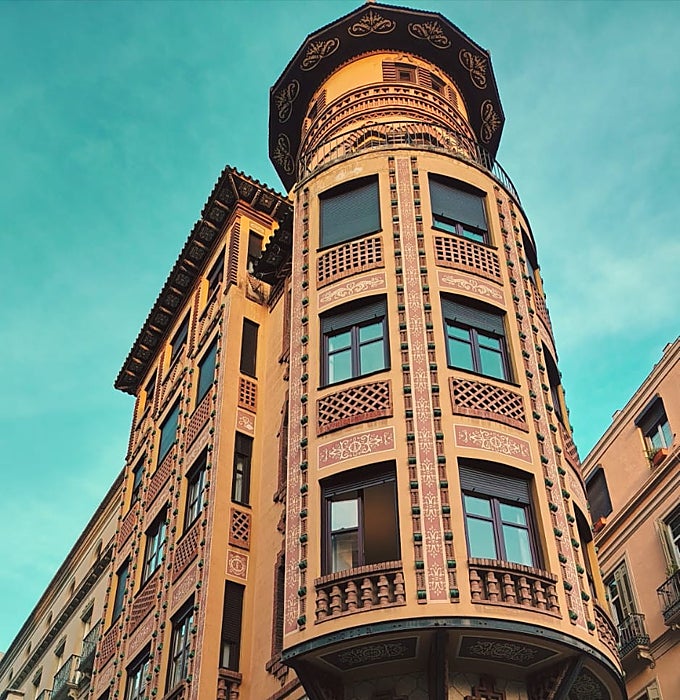
In the city centre, one can come across two buildings designed by Daniel Rubio Sanchez. These are the residential building at 5 Sagata Street and at 3 Rosaleda Avenue
Their façades consist of bricks laid in a zigzag pattern, with embossed vertical stripes and colour contrasts. It is worth noting that the play of light played an important role in the design. Both buildings face west, as the designs were conceived so that sunlight would fall on the ceramic materials and create distinctive reflections at sunset.
A charming legend
It is therefore no surprise that such luxurious homes give rise to legends. SUR in English met with the flat’s owner, who enthusiastically shared that he had become the proud owner of a part of this building. He had always admired it, whilst at the same time believing that such fabulous architecture would cost a fortune. However, when the opportunity arose to purchase one of the flats, he was pleasantly surprised by the price, but was even more impressed by the building’s history. Upon signing the contract, he learnt that the house had once belonged to Maharaja Jagatjit Singh, the Maharaja of the princely state of Kapurthala, who in 1908 married Anita Delgado, a modest flamenco dancer from Málaga.
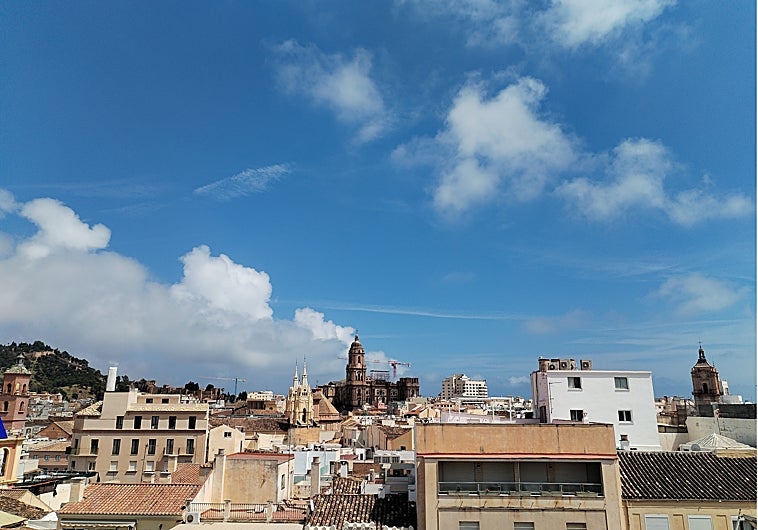
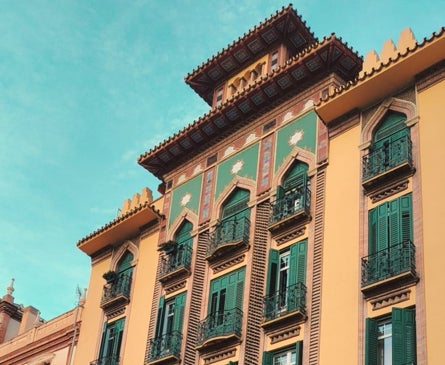
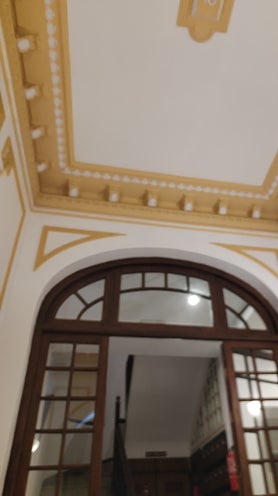
According to his version, the Indian rich man believed that Anita would always feel drawn to her hometown and would always want to visit Málaga. Her modest home in the centre of the city (the original house at 17 Calle Peña no longer exists) would not have been befitting of a princess’s status. Therefore, it is believed that this house, built in an oriental style, was purchased by the foreigner for 'malagueña' Anita and her relatives. Apparently, evidence of this can be found in one of the details in the house’s entrance hall, which might display one of Anita’s magnificent jewellery collections.
No obvious coincidence
In fact, we have been unable to find any other sources in which the house on Rosaleda Avenue is mentioned in connection with the Maharaja and Anita Delgado. Moreover, based on the historical facts, such an assumption is clearly dubious. The house was built in 1940, and it makes no sense to speak of a loving husband giving his beloved wife the house as a gift during that period. Indeed, the Indian prince was still alive, as was Anita Delgado, but by that time they had not been married for 15 years because they had separated in the mid-1920s.
It is true that after the divorce, Anita Delgado left India and first moved to Paris and then settled permanently in Spain. It is reported that Anita did indeed return to her Malaga and settled in a small mansion in Pedregalejo, in the eastern part of the city, at 125 Avenida de Juan Sebastián Elcano, where the ‘Costa del Sol’ School of Tourism is now located. The celebrity eventually settled in Madrid, where she passed away in 1962.
It is worth noting that the origins of the ‘Indian’ legend may lie in the renovation of this building in Rosaleda Avenue 3, carried out by... ‘Mahatma’. This Sanskrit word means ‘great soul’ and is widely associated with India (Mahatma Gandhi was the leader of the Indian independence movement). However, ‘Mahatma’ is simply the name of a local architectural studio that was responsible for renovating the building’s façade in 2020.
![[]](http://static.vocstatic.com/voc26/latest/assets/images/favicon/surinenglish/apple-touch-icon-57x57.png)