
Cinema
Hollywood filmmaker swaps Los Angeles for Alhaurín de la Torre
After more than 20 years working in the US, screenwriter, director and producer Adam Mason has started from scratch on the Costa del Sol
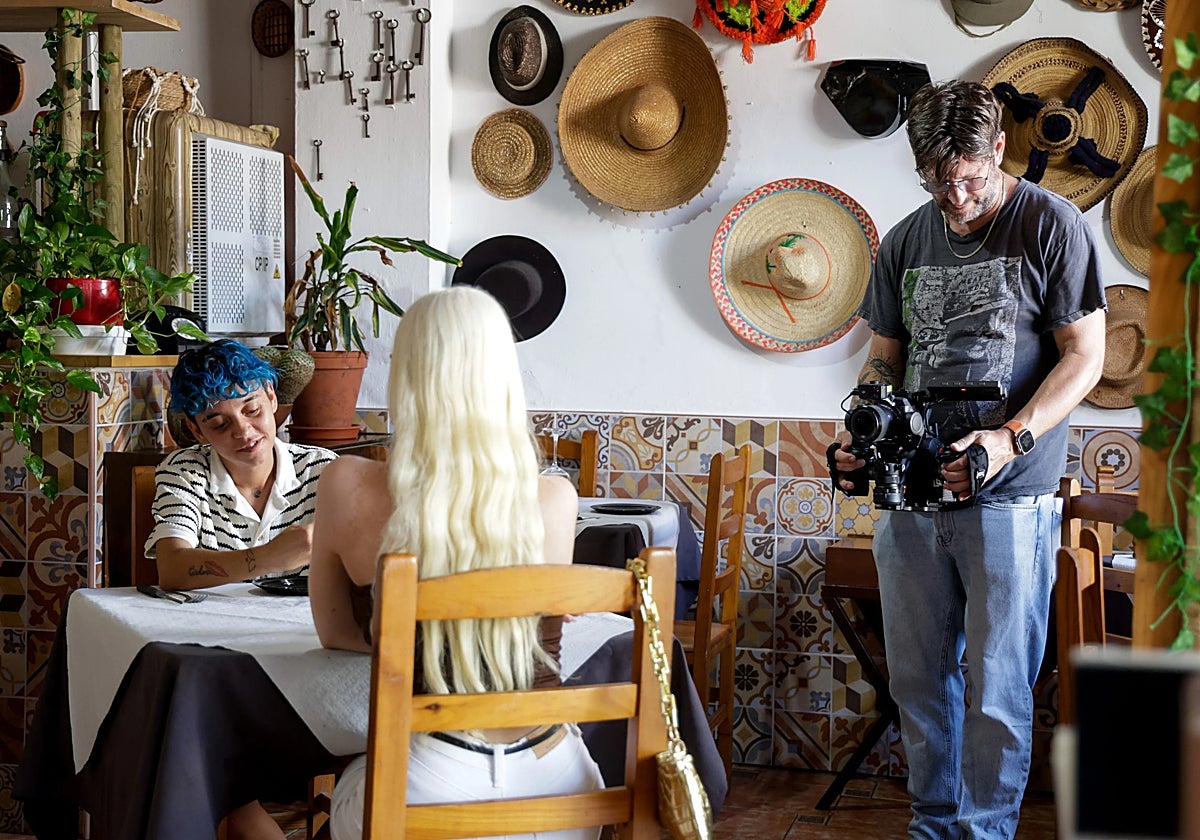
Daniela Craft Márquez
Adam Mason, 51, was born in Cambridge. He has spent two decades writing, directing and producing films and television programmes in Los Angeles and London, ... working on projects for major studios and alongside stars such as Demi Moore.
Two years ago, he and his wife Elizabeth Thomas left everything behind to settle in Alhaurín de la Torre with their three children.
The move had been in the making for years. The couple first visited Malaga in 2011, when a local festival screened one of Mason's films. When the pandemic made much of their work remote and their eldest daughter was about to start secondary school, they decided the time had come to leave the US for good.
Now, living in the Costa del Sol, Adam considers the move a turning point in both his career and life. "It's like a rebirth for me," he says.
His first project since the move is a 20-minute short film shot in Malaga this summer. "We want to live here forever, so we want to be part of the culture," Elizabeth says.
The film, Invisible, was written by Mason alongside his regular collaborator, Simon Boyes, and was shot over several days. It is produced by the director himself, alongside his wife Elizabeth and his friend Víctor Miró.
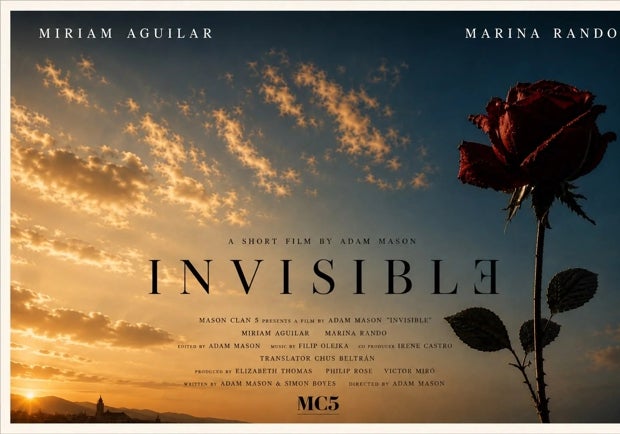
The film tells the story of a girl who feels overwhelmed by a world that completely ignores her, until she meets another deaf teenager and the two of them run away together. Both roles are played by young deaf actresses from Malaga, neither of whom had acted in front of a camera before.
The plot had been floating around in Adam's mind for over a decade. It came about when he observed how his wife's deaf brother communicated with family and friends at gatherings.
What fascinated Adam was the way he could hold a conversation with someone on the other side of the room. "It struck me as a sort of superpower that they could do that," Adam says.
Elizabeth remembers it the same way: "He thought it was really cool to be able to communicate with someone from a distance, without making a sound."
Mason plans to submit the short film to festivals through his contacts in Los Angeles, starting with Sundance in January, in the hope of securing a slot at the upcoming Málaga Film Festival.
He also wants to turn it into a feature film later on. He also has a more personal hope for the project, although he is keen to make it clear that it is nothing more than a wish: to get the short film into Antonio Banderas' hands.
"My dream would be to find a way to get in touch with him, for him to see the short film and see if he might be willing to get involved in some way," Adam says.
A different way of filming
Invisible was filmed at La Casamata, a restaurant in Malaga owned by Fátima El-Ouaari Jiménez, whose family has run it for over 40 years. It bears little resemblance to the grand film sets one might imagine in Hollywood. It is an intimate setting and the crew was small, the equipment flown in from Los Angeles.
Adam himself acted as cameraman. His family were also part of the shoot. At one point, it was his youngest son who held the clapperboard and called "Action" before a scene.
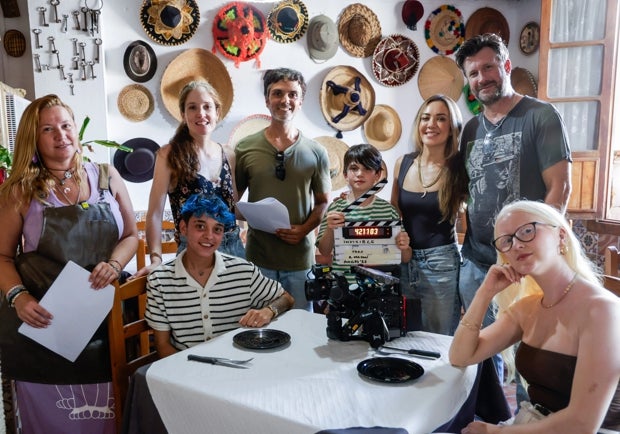
Fátima had never experienced anything like this in her restaurant. She also didn't realise for a while that the man asking to use her premises for a few hours was a Hollywood director.
A spirit of collaboration characterised the entire production. Shot on virtually no budget, Invisible has been made possible entirely thanks to people willing to give their time, their space or their talent simply because they wanted to be part of it.
The two leading actresses have known each other since they were children, through the Malaga association for the deaf. Miriam Aguilar plays Rosa, the film's protagonist, while Marina Rando plays Alejandra, the friend who shows her that life is worth living.
Both describe this experience as something very different from anything they've done before. "The theatre pales in comparison to this, but it's curiosity that motivates me most," Marina says.
For Miriam, the story hits closer to home. She learnt sign language from a very young age. Hardly anyone in her family knew sign language and her deaf uncle used to eat at a separate table during family gatherings because nobody could talk to him.
It was her mother who taught her to sign so that she could build that bridge. Over time, she trained as an interpreter, until she lost much of her own hearing as an adult.
What Miriam's character goes through in the film is not far removed from what her own uncle has experienced. He has received insults in public on more than one occasion and a customer in a restaurant once called him rude for not responding.
It's a direct reference to the scene filmed in the restaurant, in which a waiter treats Alejandra, who is deaf, with contempt. "I'm doing this for him," Miriam says. "Whatever happens with this film, I want the credit to go to him."
Neither of the two actresses had ever auditioned for a film before and neither of them seems to have quite taken in the fact that they are taking part in a film directed and shot by a Hollywood director.
Working with three languages at the same time
Filming meant working with three languages at once: English, Spanish and Spanish sign language. Mason doesn't speak Spanish, so Elizabeth, who is still learning, translated for him whenever she could, alongside Víctor. Chus Beltrán, a sign language interpreter, completed the chain: Mason spoke in English, Víctor translated it into Spanish and Chus signed for the actresses.
"It was a bit of a mad process," Adam admits, "but in the end it worked out great." On the last day of filming, the switching back and forth between languages was barely noticeable. "I stopped thinking about it," he says. "It started to feel completely natural."
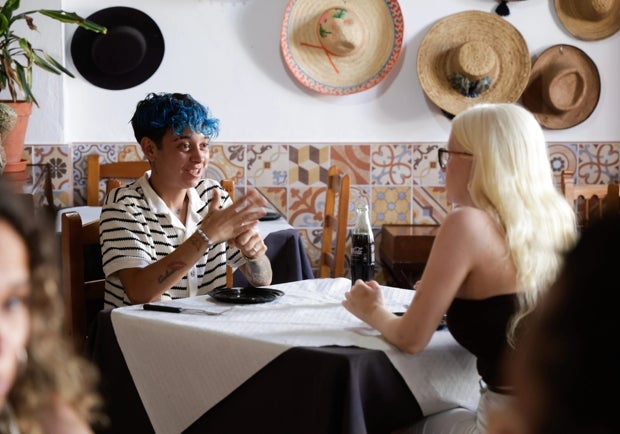
The language barrier also had an impact on his writing style. After drafting the scripts in English, Adam ran them through artificial intelligence to translate them into Spanish and then went through them with Víctor. "It even adapts them to the region and the dialect," he says.
The dream
Adam is already thinking beyond this short film. "Personally, I'd love to be able to make films using local talent, all set in Malaga, telling Andalusian stories," he says.
For him, learning the language is part of the plan. He admits that it has been a challenge he's had to push himself to tackle.
Ultimately, it all comes down to the desire to put down roots. After 20 years of moving from production to production across two continents, what Mason wants now is something smaller and closer to home. "If I could make one film a year in Malaga and not have to go anywhere, that would be more or less my dream."
![[]](http://static.vocstatic.com/voc26/latest/assets/images/favicon/surinenglish/apple-touch-icon-57x57.png)