
Health
Andalusian healthcare will pay 47,250 euros for mistake that kept feeding tube in patient's colon for 64 days
The patient was a 21-year-old man from Malaga with a rare neurodegenerative disease who suffered a severe deterioration in his nutritional status and diarrhoea
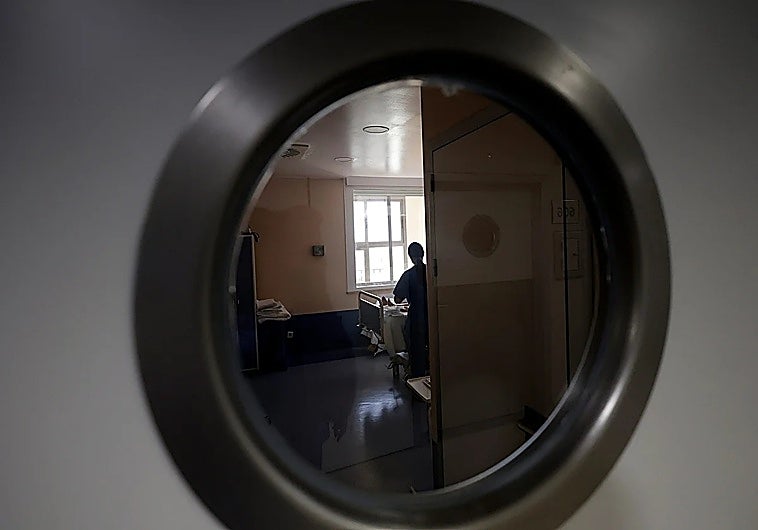

The Andalusian health service (SAS) has acknowledged a "failure in care" due to the incorrect placement of a feeding tube in a patient's colon ... rather than his stomach. The tube remained in the wrong position for 64 days.
The patient, now deceased, was a 21-year-old man from Malaga with adrenoleukodystrophy. This is a rare neurodegenerative disease that made him unable to walk and speak, triggering epilepsy and swallowing difficulties. The young man needed a wheelchair to move around and was completely dependent on other people in his daily life.
The patient remained in hospital for 64 days, from 13 May to 15 July 2020, with the tube placed in the transverse colon rather than in the stomach, as a CT scan later revealed.
The SAS has partially upheld the claim for financial liability brought by patients' legal advisor Damián Vázquez. Andalusian healthcare has agreed to pay compensation of 47,250.84 euros.
The young man died several years after these events, but his death was due to the natural progression of his condition and not to this mistake. For this reason, the regional government of Andalucía has refused to award the family compensation of 233,877 euros, as the lawyer had requested as an alternative claim.
According to an SAS doctor, the young man had developed, as a result of his illness, problems with swallowing, choking and coughing. He went for a consultation with an endocrinologist at Malaga's Hospital Regional on 10 February 2020.
Following this consultation, he was admitted to hospital on 13 May to have a feeding tube fitted.
"The procedure is justified due to severe swallowing and nutritional disorders," the doctor's report says.
Upon discharge on 15 May 2020, the young man was tolerating food well. Subsequently, there were a series of calls with the endocrinologist, "as well as visits to A&E and consultations during which the parents reported that, since the tube was fitted, the patient had been experiencing diarrhoea, abdominal bloating, weight loss and a low-grade fever".
On 9 July, during a visit to A&E, doctors found that he had lost five kilos since the placement and was having difficulty clearing secretions.
On 10 July, he was admitted to hospital due to poor management of secretions and intolerance to enteral nutrition, as well as "severe malnutrition". On 15 July, he underwent an abdominal CT scan which confirmed "that the distal end of the PEG tube was located in the transverse colon rather than the stomach".
The tube was removed and the patient began to be fed via a nasogastric tube. On 29 October that year, the gastric feeding tube was reinserted via a laparotomy gastrostomy. This was followed by several hospital admissions and various visits to A&E.
"A painful case"
Lawyer Damián Vázquez has said they will continue to pursue legal action.
"This is a particularly painful case because we are talking about a young man with a devastating illness who was entirely dependent on his family and the health service," he stated.
"The family has fought for years to have what happened recognised. This ruling, at least, gives them the satisfaction that the authorities have had to accept their responsibility (...) The authorities have a duty to act with the utmost diligence, particularly when it comes to patients with serious and complex illnesses," Vázquez stated.
Carmen Flores, chair of the El Defensor del Paciente association, believes that this ruling should serve to strengthen protocols for patients with complex conditions. According to the association and, in fact, the SAS itself, the patient should have undergone "a safer surgical procedure", given his "physical condition".
![[]](http://static.vocstatic.com/voc26/latest/assets/images/favicon/surinenglish/apple-touch-icon-57x57.png)