
Health
Malaga-based paediatrician says hand, foot and mouth disease is likely to spread to all children in class if one student has it
Paediatrician Marta Garín clears up any doubts about a seasonal virus that is currently experiencing a spike in infections and discusses one of the most puzzling late-onset symptoms: onychomadesis

Málaga
The appearance of small blisters around a child's mouth often sets off alarm bells for parents, who fear their child will have to miss ... days at nursery. However, Malaga-based paediatrician Marta Garín offers reassurance regarding the usual peak in HFMD (hand, foot and mouth disease), which is very common in the autumn as the new school term begins.
"It'a viral illness with a clear seasonal pattern, so it's bound to crop up," the doctor says.
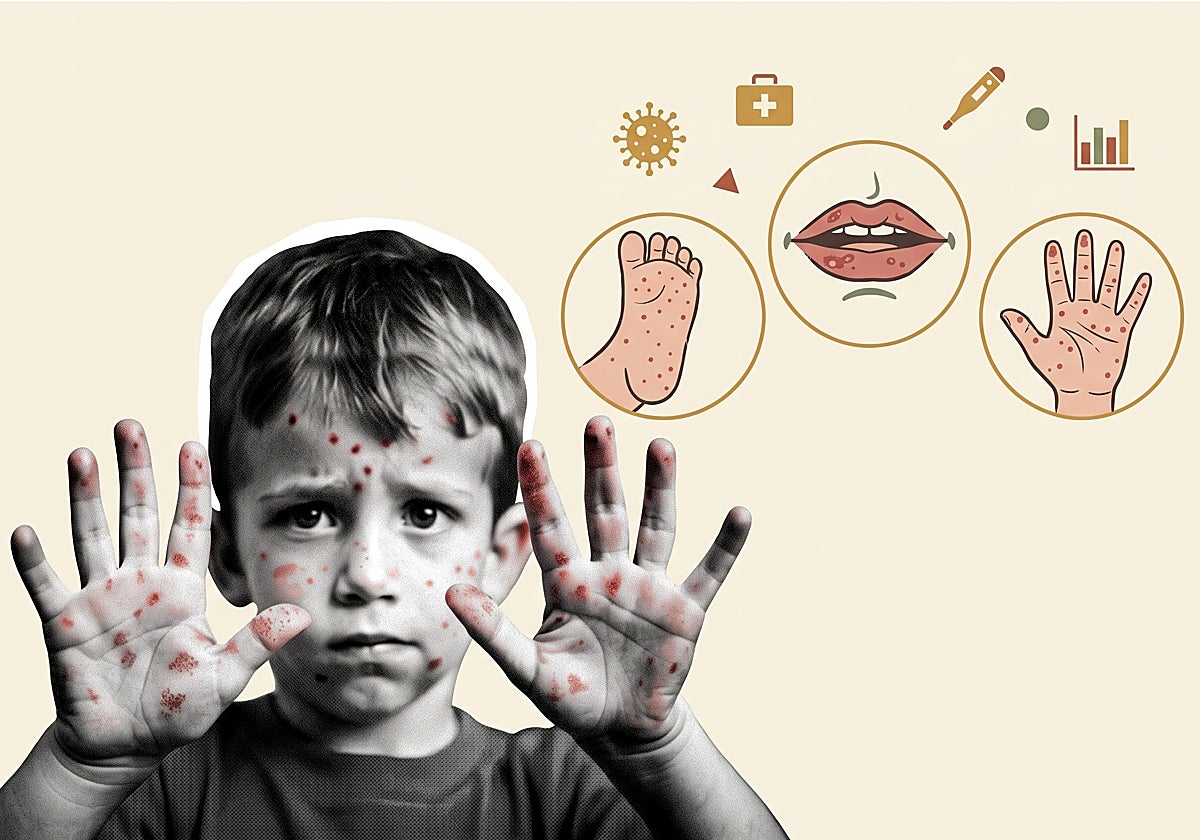
The most characteristic external symptoms include "papular lesions, like little bumps, around the mouth, on the palms of the hands, on the soles of the feet and also on the bum".
"I suppose it would have been a bit of a mouthful to call it hand-foot-mouth-bottom," Garín jokes.
The paediatrician points out that these skin rashes aren't the main problem: "The concerning lesion is inside the mouth, where sores cause pain, making children eat poorly, giving them hellish nights and making them drool a lot."
Garín says that children can continue going to nursery and school provided they do not have a fever and are eating well. "Infection occurs even before symptoms appear and the highest peaks in transmission occur during that early stage."
Therefore, keeping a child at home once the rash has appeared does not stop the spread of the infection among the rest of the students. According to Garín, "once an outbreak occurs, almost everyone tends to catch it" because the virus is transmitted via saliva and faeces and survives very well on surfaces.
That said, she recommends avoiding contact with children from other groups so as not to spread the outbreak beyond the classroom.
As this is a viral infection with no specific treatment, care focuses on managing symptoms with paracetamol, ibuprofen or sprays for the sores, with recovery taking seven to ten days. A child can become reinfected on several occasions.
Dr Garín warns of a late-onset symptom that often frightens parents: onychomadesis. "Three or four weeks later, they may lose their fingernails and toenails. It sounds unpleasant and is rather unsettling, but it's nothing serious," she reassures parents.
