
Health
'The great silent epidemic we're facing is fatty liver disease and it's going to get worse'
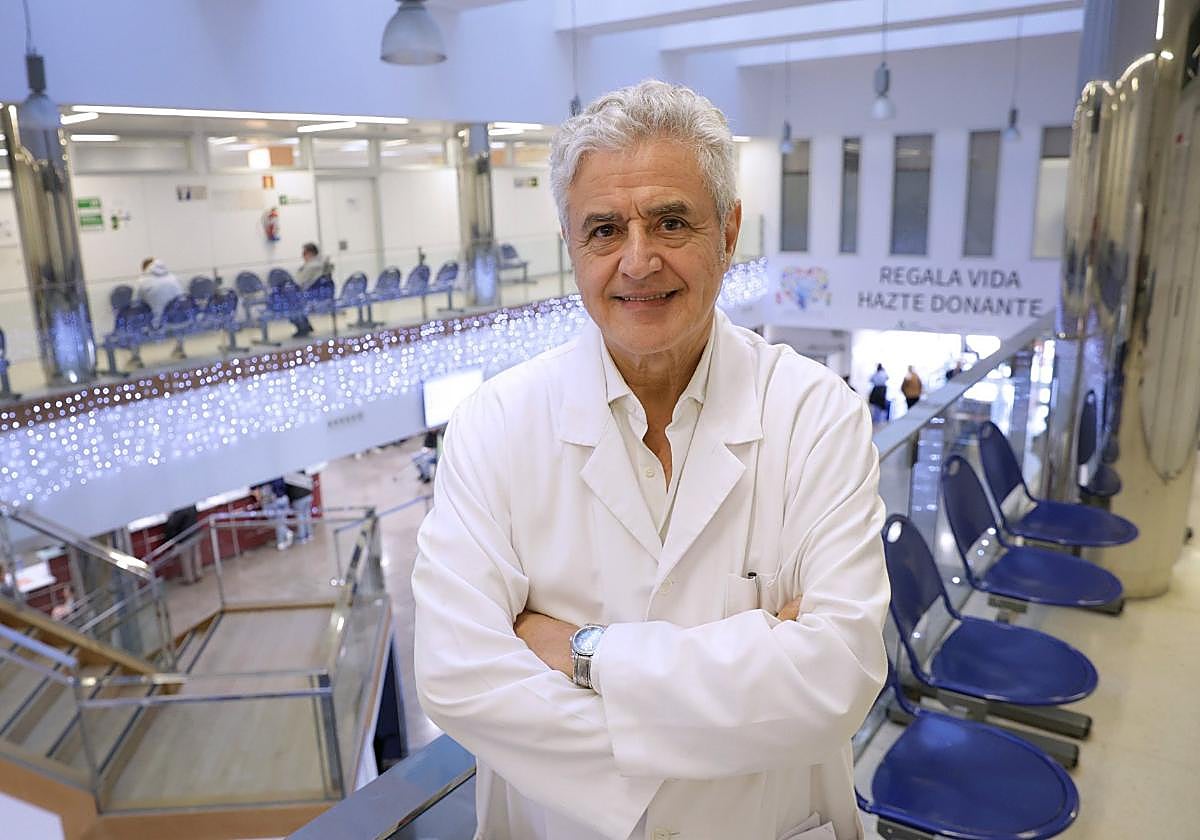
Raúl Andrade, head of digestive medicine at Malaga’s Hospital Clínico Universitario Virgen de la Victoria discusses the problem
José Antonio Sau
Raúl Andrade, head of digestive medicine at Malaga's Hospital Clínico, is also a professor at UMA, researcher at the Biomedical Research Institute of Malaga (IBIMA Plataforma BIONAND) and a recognised expert in hepatotoxicity. In this interview, he analyses the state of liver health among the province's residents and reflects on the importance of this organ for life.
What liver diseases are most common and how has the patient profile changed in recent years?
What is now most common is the liver disease called metabolic syndrome, caused by the accumulation of fat in the liver, due to situations such as obesity or diabetes or hypertension: all of them together form what is called metabolic syndrome and lead to fat being deposited in the liver and then the liver becoming inflamed. This is something similar to what occurs in many countries, both Western and non-Western. For example, it is also very common in Middle Eastern countries; it is a very prevalent disease. But as I say, it is a global phenomenon. What has been changing is that this disease has become the leading cause of liver disease and chronic infectious diseases, such as viral hepatitis from hepatitis C virus or hepatitis B virus to a lesser extent, have been decreasing in frequency.
Hepatitis C is now, I suppose, residual...
Residual, yes. Hepatitis C has not really been eradicated because the virus is still present in some people, especially in groups we would call at risk of contracting the infection, but the widespread prevalence this disease had in the 80s and 90s has completely disappeared thanks to the arrival of new, highly effective treatments.
Fatty liver is becoming a silent epidemic. What factors are driving it?
Fatty liver has a lot to do with our lifestyle: doing little exercise, sedentary behaviour, a diet of highly caloric ultra-processed products that, unfortunately, are consumed very frequently today. Then alcohol consumption also contributes greatly, but it is precisely obesity, sedentary lifestyle, diabetes, all those metabolic disorders that contribute to fat being deposited in the liver and this disease occurring.
What drugs or supplements cause the most hepatotoxicity?
Hepatotoxicity is a problem that, fortunately, is infrequent when taking a drug that is commercially available, but it is true that when it occurs it can become serious. I would not want, in this regard, to generate alarm with my comment, because there are commonly used drugs that very occasionally produce liver toxicity. This happens, for example, with an antibiotic that is amoxicillin and clavulanic acid which is consumed very frequently, Augmentin. It is estimated that in approximately one out of every 2,500 to 3,000 people who consume it, it can produce liver toxicity, which fortunately is also mild most of the time. This does not mean we cannot take this drug, but it is indeed perhaps one of the most frequent causes because the drug is also consumed very frequently. And then any commonly used drug, very occasionally, in an undetermined person, for reasons that are still complex to understand due to the drug's own effect, but also due to the host's response with their unique idiosyncrasy, causes them to develop toxicity and not benefit from the therapeutic effect of the drug but instead develop a liver problem. One of the most harmful, most dangerous myths is the one that says everything that comes from nature is harmless and beneficial.
This also happens, you say, with herbal products...
I would draw attention to the fact that many people think that herbs and everything that comes from nature, a decoction of any herb found in the field, is beneficial because it is a natural product. This is completely false because many herbs have toxic alkaloids that can produce toxicity, not only in the liver, but also in other organs. One must be very careful.
What lines of research are you working on at IBIMA regarding hepatotoxicity?
We have been working for many years on this line of liver toxicity and lately what we are doing is working not only to identify risk factors for developing liver toxicity, but also on in vitro models, that is, using cellular models to try to unravel the mechanisms by which toxicity occurs in the liver, looking for response profiles of the immune system to the phenomenon of liver toxicity and we are also trying to develop models that serve us to reproduce liver toxicity problems in small organs developed in vitro so that we can study them in much greater depth. Their translation to clinical practice will still take time.
Is it true that the liver does not usually hurt?
It is true that when there is a chronic liver disease, and liver toxicity almost always manifests as acute hepatitis, it is not that it hurts, but the patient clearly has symptoms. Abdominal discomfort may appear, nausea, vomiting, fever in some cases may appear and above all what is called jaundice occurs, which is a yellowish colouration of the skin, of the sclera of the eyes and this is very specific. But it is true that it is not an organ that hurts.
In fact, the heart does not hurt either until one has a heart attack or the kidney can hurt if one has a kidney stone.
What three preventive measures would be most effective to maintain a healthy liver?
Not drinking alcohol. Before, there was talk that small amounts of alcohol could even be beneficial. Alcohol is a substance external to the organism. The organism does not have systems to metabolise it. Following a Mediterranean diet, if possible, with plenty of fruits, vegetables, greens, lots of fish, little meat.
What worries you most about the future of liver disease and what makes you optimistic?
About the future of liver disease, I am worried about the great epidemic we have, silent, as you said before, of metabolic fatty liver. It is an epidemic whose dimension we are only now beginning to perceive, but its dimension is going to increase. These effects are long-term. For tomorrow we have no solution: today we do not have medications that cure these metabolic disorders. There are great advances with these types of drugs such as GLP-1 analogues, Ozempic and similar ones, which reduce excess weight and can contribute to slightly improving the metabolic profile. But it is worrying because several decades from now we will have a very significant overload of the health system due to all these metabolic diseases, including liver disease. On the other hand, I am very optimistic since these drugs for hepatitis C were developed. I have seen many of my patients die. Today, fortunately, patients with hepatitis C have disappeared from the transplant list.
Besides alcohol, what other causes of cirrhosis are common?
At the present time, one of the most frequent causes is fatty liver, not from alcohol consumption, although that too. Alcohol, the initial lesion it causes in the liver is the accumulation of fat, but then it progresses toward cirrhosis.
Viral hepatitis has greatly decreased its share, let's say, as responsible for cirrhosis and there are also rarer causes, other metabolic disorders, iron deposits in the liver, which also have a genetic character, or copper deposits, but this is autoimmune liver disease, which is also increasing in incidence, that is, autoimmunity phenomena that cause liver damage, which can be acute and chronic in the liver, and which also end up deteriorating it if the patient is not treated.
It seems that we don't give the liver much importance in daily life, and it is one of the fundamental organs for life...
The liver has always been defined as the great chemical factory of the organism: it has to, on the one hand, purify the toxic substances that enter with diet and drink, and, on the other hand, the red blood cells that are aging are destroyed and the liver processes all that. In addition, it manufactures all the proteins in our organism. The liver also has the reserve of glucose, in the form of glycogen. That is, it is a great chemical factory that is absolutely necessary for our daily functioning.
![[]](http://static.vocstatic.com/voc26/latest/assets/images/favicon/surinenglish/apple-touch-icon-57x57.png)