
Health and wellness
Ten million bacteria: a simple routine that can save lives
Washing your hands regularly reduces infections by up to 50 per cent and prevents up to 200 diseases
José Antonio Sau
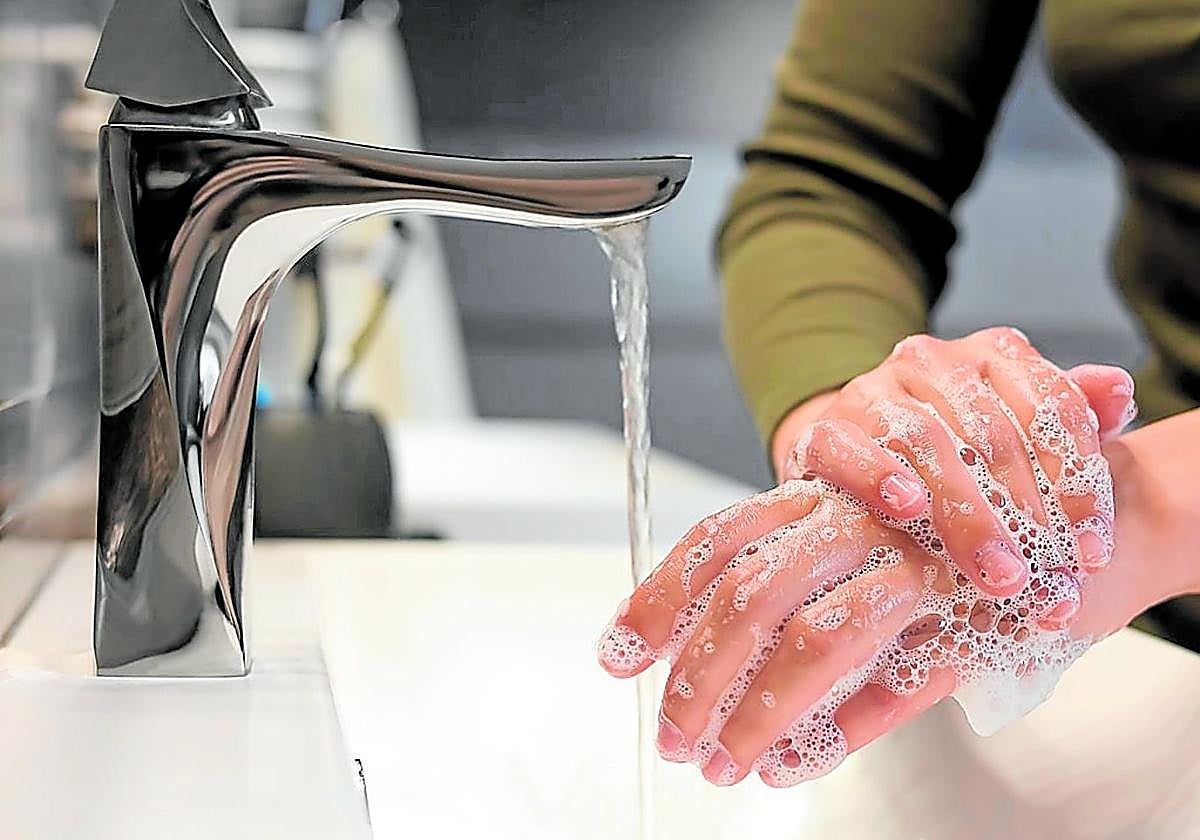
It seems like an innocuous gesture, but it can save your life. A single hand can harbour up to 10 million bacteria and countless viruses, so washing them is a simple practice lasting between 20 and 50 seconds that reduces the risk of infection by up to 50 per cent, Jesús Mejías, nursing supervisor of preventive medicine and public health at the Malaga’s regional university hospital, told SUR.
“In a matter of seconds we can kill up to 99 per cent of microorganisms, including bacteria and viruses. It is classified as the most effective measure to prevent both respiratory and gastrointestinal diseases; it is one of the techniques with the highest prevention percentage, and can even be compared to a vaccine,” he says.
“It reduces transmissions of diarrhoea, respiratory infections or those caused by other bacteria by up to 30 per cent. We can prevent up to 200 diseases with what can be done in 20 to 30 seconds,” he explains. It is beneficial for the healthy population, but for children, the elderly and people with a pathology that causes immunosuppression, oncological processes or transplant recipients, “the prevention is even greater” because of the potential damage it can avoid.
Virus reservoir
“Hands are a reservoir for many viruses and bacteria. Many viruses have a respiratory component, and we can act against that with masks or using the elbow when sneezing, but most include a contact component,” he explains.
“Hand hygiene acts on the main mechanism of transmission of all bacteria and many viruses: if we block the transmission mechanism we eliminate the spread,” he states, insisting: “It is one of the most effective and, obviously, least expensive measures to prevent any infectious disease.”
These pathologies can lead to death following a complication, he warns. “In the winter season we have Covid, all the infectious diseases that are airborne and respiratory viruses in children like RSV, as well as adenoviruses, rhinoviruses, metaneumoviruses and other illnesses that can lead to greater complications like meningitis or microorganisms that can produce enteric or diarrheal symptoms,” he lists.
“Soap and water is recommended when our hands are visibly dirty.” this specialist clarifies. In cases where the hands look clean but a cash machine, handrail, lift button or doorknob has been touched, the use of hydroalcoholic gel is recommended. When using soap and water, the technique covers taking between 30 and 50 seconds. With gel, it takes 20 to 30 seconds. He highlights that the ideal approach is to use common sense. “Normally before and after eating or using the toilet, and before and after any technique in the case of healthcare workers. When we are going to handle food or things we might put in our mouth and before and after touching anything like the nose, eyes or ears,” he underlines.
Are citizens aware of the importance of this practice? Mejías agrees that people are more aware than a few years ago, perhaps as a result of the pandemic, which pushed hygienic-sanitary measures into the collective subconscious. “The problem is that it is a technique undervalued by the public, though not by healthcare professionals. It is actually better than an antibiotic because that is used to cure something, but washing your hands will prevent taking that antibiotic, as you will avoid catching the bacteria or virus,” he says.
Bacteria and viruses
He insists that he is referring to practically all bacteria and viruses, given that they generally possess a contact component. He states that bacteria can even last up to a month on a piece of furniture, meaning “we can cause cross-transmission across thousands and thousands of people who can become infected by bacteria or viruses.” Doctoral theses have even been written on the subject which accentuates its importance as a preventive mechanism.
For washing to be effective and eliminate 99 per cent of microorganisms, it is necessary to rub the backs of the hands while interlacing the fingers, clean between the fingers from the palm, rub the back of the fingers from the opposite palm, encircle the thumbs with the palm of the opposite hand, and rotate and rub the tips of the fingers and nails making circles in the palm.
A simple gesture that, without a doubt, can save lives.
![[]](http://static.vocstatic.com/voc26/latest/assets/images/favicon/surinenglish/apple-touch-icon-57x57.png)