
Health
'Surgery is the best method for effective and sustained weight loss'
Malaga surgeon César Ramírez points out that the gastric sleeve allows a reduction in excess kilos of between 60% and 65% and the bypass, between 70% and 75%
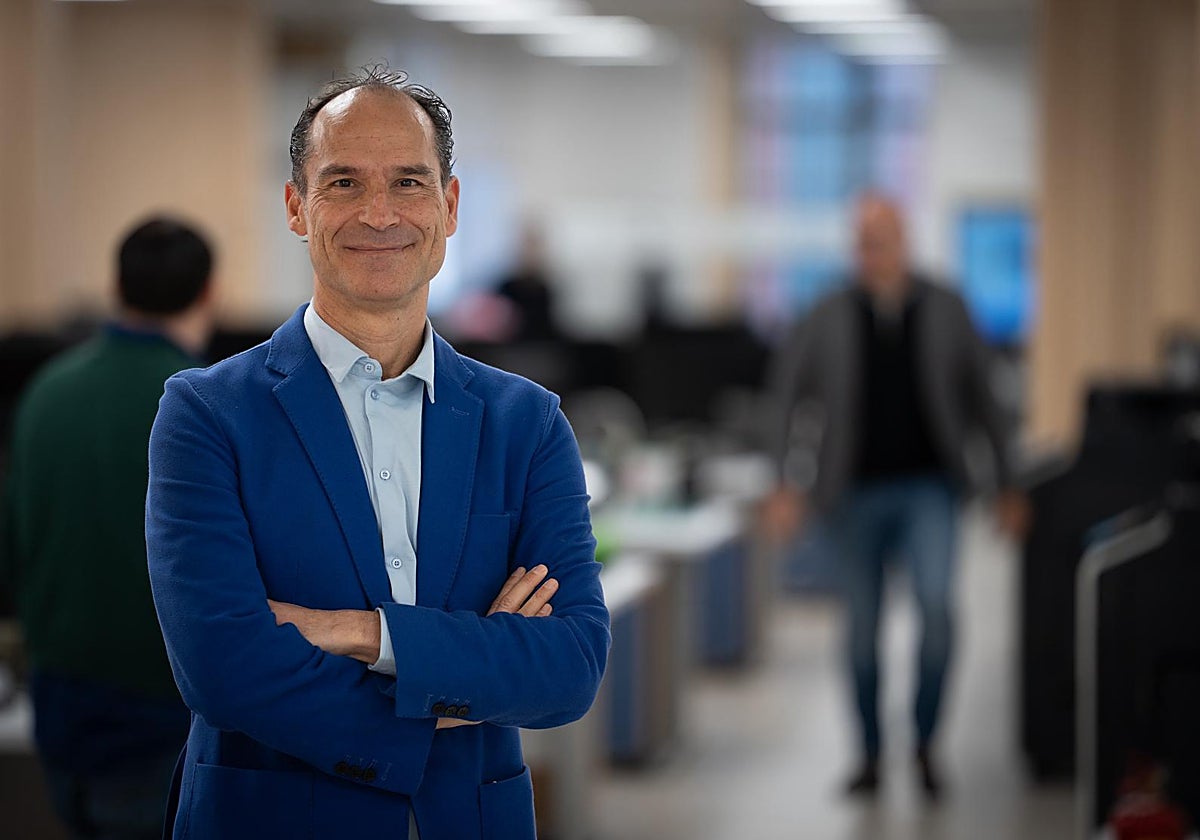

César Ramírez is head of the Surgery Department at Quirónsalud Málaga and Marbella and director and founder of the Instituto Quirúrgico de Andalucía (IQA). In addition, he is one of the great references in Europe for bariatric surgery, a type of intervention that has now lost ground thanks to GLP-1 analogue drugs, i.e. the already popular commercial drugs such as Ozempic and Wegovy (semaglutide), Mounjaro (tirzepatide) or Saxenda (liraglutide), which allow body volume reductions of 30%.
However, Dr Ramírez stresses that the most effective technique for losing weight and maintaining that weight loss is bariatric surgery, as its two main models allow a 60%-65% (gastric sleeve) and 70%-75% (bypass) reduction in excess weight.
Dr Ramírez reminds us that this surgery is prescribed "to patients with obesity who have not managed to lose weight by any of the established methods: nutritional intervention and physical exercise, which are the two fundamental pillars; or medical treatment".
"There are 650 million obese people in the world and between 800,000 and 1,000,000 surgeries are performed, which means that not even 2% of obese people in the world have access to surgery," he stresses (specifically, only 0.15% have access).
Patients
Most of his patients have been to an endocrinologist who has treated them "from a multidisciplinary point of view, nutritionally, dietetically, with an exercise plan. Most of them have undergone medical treatment with GLP-1 analogues and have failed: they see surgery as the last door. Not everyone can have surgery. Obese patients "have an eating behaviour disorder".

Surgery should be applied to patients who have a body mass index over 40. Those with a BMI over 35 can also undergo these procedures, provided they already have the diseases associated with obesity: type two diabetes, hypertension or dyslipidaemia (hypercholesterolemia and hypertriglyceridaemia or both), because "the three conditions are the vascular risk," specifies Dr Ramírez, who recalls that many patients with a BMI of between 30 and 35, if they have these pathologies, are also candidates, according to various medical societies.
"It is a surgery that helps to eliminate metabolic syndrome, because it corrects these three complications: as the patient loses weight, cholesterol, triglycerides, hypertension and diabetes are corrected. It is not cosmetic surgery to look more handsome or younger, or to be less fat, but to turn a sick person into a healthy one," stresses the surgeon. It is called metabolic surgery.
"You have to keep your medication for life: you can't spend 300 euros every month for a needle prick
"Surgery is the most effective technique for an obese patient to achieve sustained weight loss over time," he says. He recalls that an intervention of this nature costs between 15,000 and 20,000 euros, while GLP-1 analogue drugs cost "an average of 250 euros a month", which amounts to almost 3,000 euros a year.
"You have to keep them for life: you can't spend 300 euros every month for a shot," specifies Dr Ramírez, in addition to the fact that "70% of patients have a rebound effect and regain the weight they had" when they stop taking the medication.
"The drugs injected provide the initial weight loss, but when you stop taking them, as there has been no nutritional education, nor a loss or modification of the patient's habits or lifestyles, which return to the same ones, the vast majority, 70%, regain weight," he points out, reminding us that obesity affects 20% of the population in Spain, 60% if we add overweight.
Obesity is a disease
You have to push yourself physically; obesity is, after all, a disease with a genetic component: with one obese parent, 40% of the children are obese; if both parents are obese, 90% of the children are obese. We’re talking about a chronic patient,” he notes, emphasiaing that it is true these drugs are very useful: “We are increasingly using them in patients with obesity to induce weight loss.”
Operating on a person who weighs 180 kilos is a greater complication than operating on someone who weighs 140. “To assess commitment, I prescribe the analogs for a couple or three months, and if the patient loses 15 to 20 kilos, I say: ‘This guy is committed,’” he explains.
However, he warns: “People who do not have obesity and associated diabetes, but simply want to lose weight for aesthetic reasons, should not use this type of medication. Its use is increasing every day, and this is not right.”
"Of the patients we operate on with obesity, 80% have had multiple attempts at weight loss"
In his opinion, the problem is "maintenance afterwards". "Of the patients we operate on with obesity, 80% have had multiple attempts at weight loss," he points out, and recalls that the success rate of these operations is 98%. "It is a super-safe procedure," he points out, so that in the last 15 years of the programme's existence, 800 surgeries have been performed.
"We used to do 80 or 90 per year, and we do less because of the impact of the new drugs: but I also foresee a rebound effect of this in the coming years". Dr Ramírez is referring to the fact that bariatric surgeries will rise again because of the cost and the difficulty of maintaining the weight if there are no significant vital changes, as well as the fact that there is "a percentage of patients who cannot tolerate" the drugs because of the side effects.
Follow-up
Follow-up in bariatric surgery has to be very strict, at least for five years after the operation, "because when they regain or start to regain, as I say it happens at 20%-25%, if you are on top of it, GLP-1 analogues have their place". In addition, all patients, before undergoing surgery, are screened by a psychologist.
"I had a patient whose brother filmed her, she was discharged, 48 hours later she sent me the video of her opening a pizza she had just ordered and starting to eat it: this patient escaped the psychologist, it can happen, and she fooled us".
![[]](http://static.vocstatic.com/voc26/latest/assets/images/favicon/surinenglish/apple-touch-icon-57x57.png)