
Health and wellness
Are all supplements as harmless as we think? Recent studies cast doubt on some of them
Three studies into their effects on brain health raise a suspicion that doctors have long been voicing. “They are designed for physiologically normal subjects”
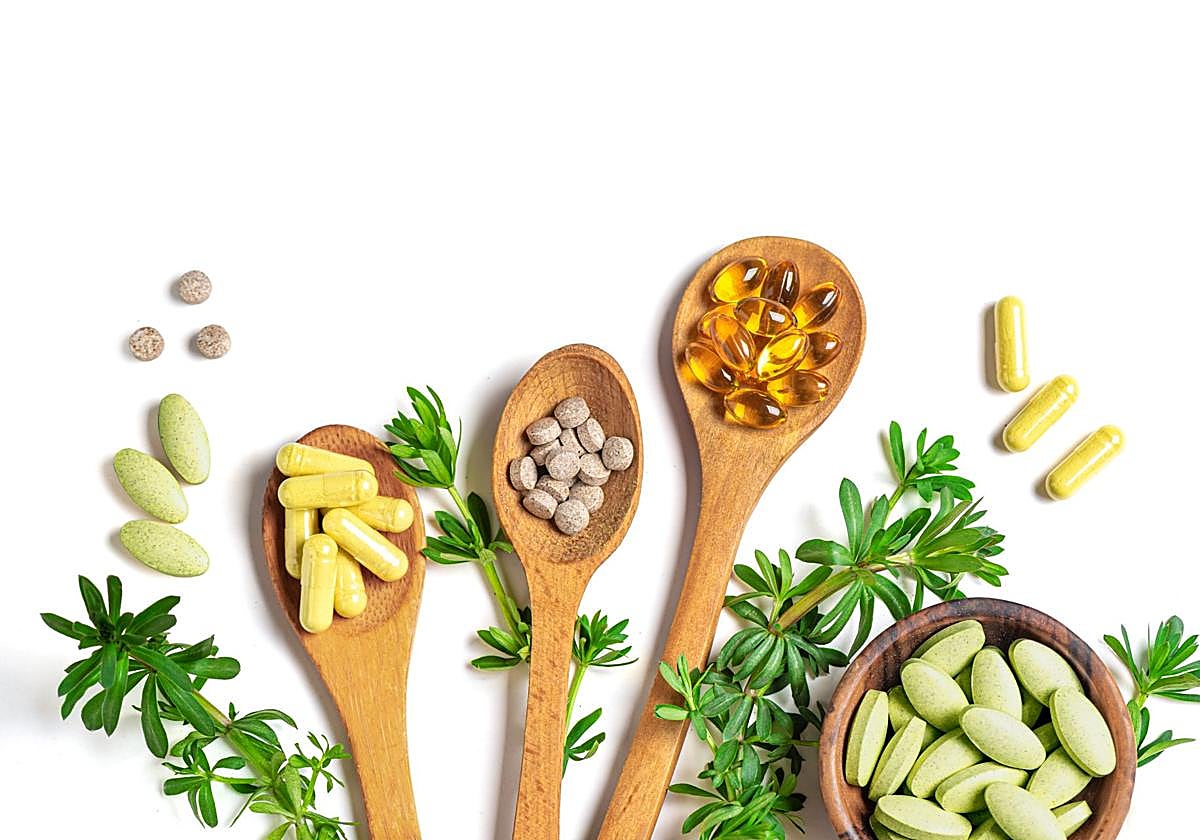

In today’s society, taking pills is seen as a sign of illness and ageing, something that frightens us greatly. However, taking supplements is seen ... as a sign of good health and preventative care. It is very much in vogue. And the figures back this up. Last year, the food supplements sector achieved a turnover of 2.1 billion euros, according to estimates from the Spanish Association of Food Supplements (Afepadi). This represented a 7 per cent increase on the previous year. It is estimated that seven out of ten Spanish adults have consumed one of these products in the last year.
The figures come with a caveat because they are estimates; moreover, the term ‘food supplement’ encompasses more than just supplements. But it is a fact that there are more and more of them on the market and more people who say they take them. Above all, under the pretext that ‘it can’t do me any harm’. A few months ago, a photo of the actress Paula Echevarría, aged 48 – though she looks much younger – went viral. It showed her breakfast and all the supplements she was taking: there were no fewer than 13 tablets, including omega-3, collagen and magnesium…
Healthcare professionals are concerned about this issue because, they suggest, regulation in the sector is lax. But this year, in addition, three studies have been published suggesting that this assumption of safety may not hold true. The first was published in January and focused on vitamin D. Until now, low blood levels had been linked to accelerated cognitive decline. And there had been hope that taking supplements might slow this down or halt it. However, the study, published in the British Medical Journal (BMJ), concluded that older adults with normal vitamin D levels who took part in the research and who took these supplements showed greater cognitive and executive function decline than those who did not take them.
In April, another analysis published in the Journal of Prevention of Alzheimer’s Disease linked the continued use of omega-3 supplements with a more rapid decline in cognitive function in people aged between 55 and 90. And in June, yet another study from the University of Florida indicated that glucosamine, which is frequently used to relieve the pain of osteoarthritis, is associated with an increased risk of mild cognitive impairment progressing rapidly.
"Any substance that enters our body has some sort of effect"
All three studies have limitations and do not demonstrate a cause-and-effect relationship, only associations. However, they have highlighted that the healthcare sector’s widespread concern about the number of supplements we take without supervision is justified. Guillermo García Riba, a member of the Behaviour and Dementia Study Group of the Spanish Society of Neurology (SEN), explains: ‘While legislation on medicines is extremely strict and requires research, rigorous clinical trials subject to state-controlled and fully regulated practices, for supplements this is not stipulated in any way; in other words, the only requirement is that they do not cause an adverse effect.”
So are we consuming dangerous substances? Studies neither prove nor suggest that they are. But what we must not assume is that they are harmless ‘in themselves’. "They are not inert. Any substance that enters our body has some sort of effect." Nor should we be blinded by the fact that they are marketed under the ‘natural’ label. “Assuming something is harmless simply because it exists in nature is a mistake. There are things in nature that are poisonous,” the neurologist points out sternly.
'Changing' concepts
“Supplements are designed for a physiologically normal individual,” the specialist continues. They are formulated for people who meet certain criteria. But at the moment we are faced with two factors that prevent us from knowing whether we meet them. One is that the concepts of normal and abnormal, and of health and illness – particularly in older people – are changing, thanks to advances in science and medicine. The other is that we do not know for certain what our state of health is: we may be experiencing a decline in our mental capacity without it having a significant enough impact for us to suspect that this is the case. In this specific case, taking omega-3 might not only be of no benefit, but could actually be counterproductive, according to researchers in Florida. It is important to emphasise that these are still only indications and further research is needed to draw firm conclusions.
In the three studies we have mentioned, the supplements were intended to support brain health. It is known that diet influences brain health, but there is still a long way to go before guidelines can be established on exactly how this works. This is particularly because, as well as being complex, the brain does not have a static metabolism; on the contrary, it changes with age and circumstances. Following an injury, for example, it consumes more energy. And with age, the blood-brain barrier – which is responsible for supplying ‘nourishment’ – weakens and functions less effectively. For this reason, experts remain cautious and adhere to a guiding principle: what may seem harmless or beneficial in one situation may not have the same effect in another.
What we eat influences how our brain functions "more than we realise," says neurologist Guillermo García Ribas. "It’s true that, scientifically speaking, this is a complicated issue to tackle because eating is something we do every day for 70, 80 or 90 years of our lives," he acknowledges. But an increasing number of studies confirm that what happens in our gut has a direct impact on what happens in our brain. And bear in mind that this organ is very hungry. “It’s the organ that consumes the most energy in our entire body.” That’s why it’s important to be mindful of what we put on our plates. But that’s not all: brain health doesn’t depend on a single, isolated intervention, but rather on combining three fundamental pillars: “Diet, physical exercise and social interaction.”
![[]](http://static.vocstatic.com/voc26/latest/assets/images/favicon/surinenglish/apple-touch-icon-57x57.png)