
Health
Malaga province diagnoses over 1,200 cases of prostate cancer a year: the silent tumour men don't talk about
Early detection is crucial to improving the chances of a cure for prostate cancer
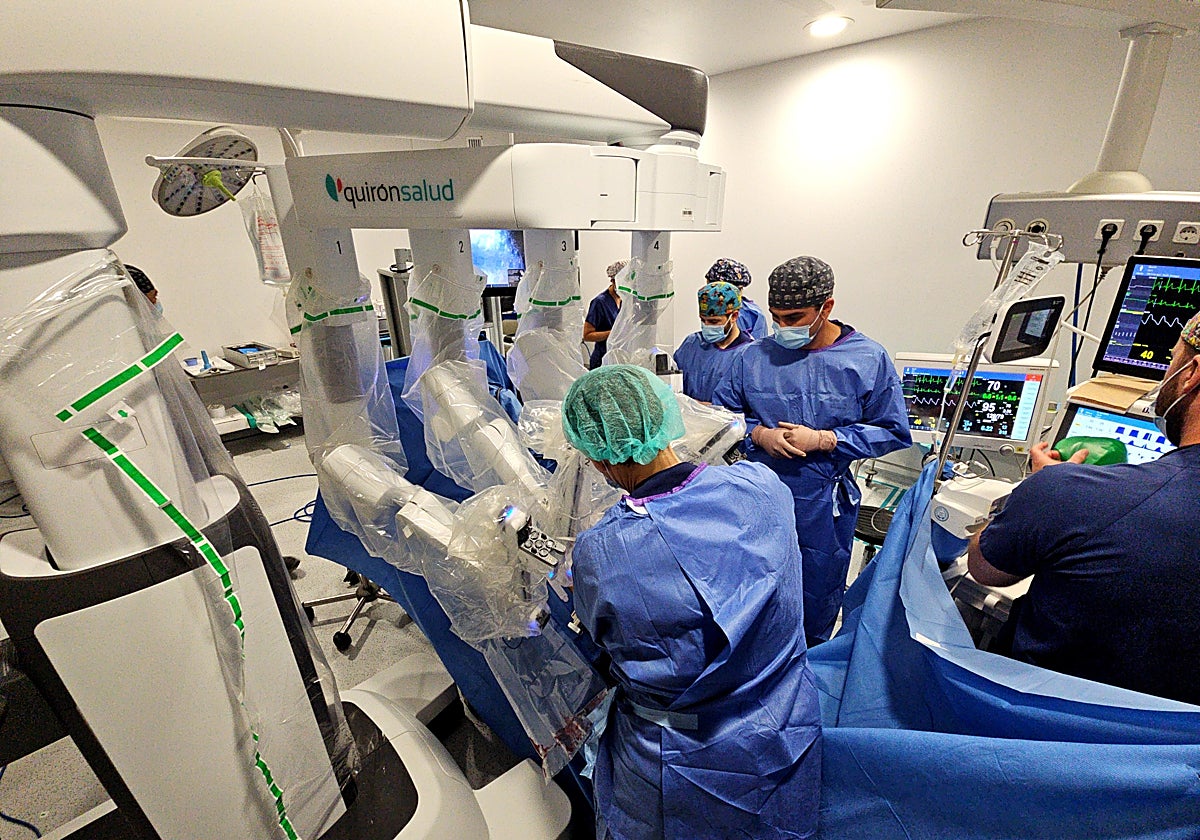

November is also known as 'Movember': the month that raises awareness to men's health. It always brings prostate health and the importance of early ... detection of tumours to the fore.
Every year, Malaga province diagnoses between 1,200 and 1,300 new cases of prostate cancer. The number for the whole of Spain has so far approached 35,000 this year.
Head of urology at the Quirónsalud hospital in Malaga Dr José Ángel Gómez Pascual states that "early diagnosis improves the chances of successful treatment and a cure". "Urological check-ups from the age of 50 onwards, and earlier for men with risk factors such as a family history of prostate cancer, are vitally important."
In addition, these check-ups assess the state of other organs in the urinary tract, such as the kidneys and the bladder. It is essential to carry out an individual risk assessment, measure prostate-specific antigen (PSA) levels via a blood test and, where indicated, conduct a urological examination.
Related story
-

Cancer research
José Antonio Sau
It is not necessary to have symptoms to have this cancer. If you wait until you have symptoms, diagnosis is delayed.
There are also other advanced techniques, such as multiparametric magnetic resonance imaging and fusion-guided prostate biopsy, which combines magnetic resonance imaging and ultrasound to pinpoint suspicious areas more accurately.
The technology enables samples from identified lesions, improving the detection of clinically significant tumours. Advances in surgical techniques also allow for increasingly precise and less invasive procedures. In selected patients with localised prostate cancer, radical prostatectomy, which involves the removal of the prostate, is one of the main treatment options.
Da Vinci
The introduction of robotic surgery using the Da Vinci system represents a significant advance, as it provides the surgeon with a magnified three-dimensional view of the surgical field and greater precision and freedom of movement for the surgical tools.
These characteristics are particularly important in a procedure as delicate as prostate surgery, given the proximity of the anatomical structures involved in urinary control and erectile dysfunction.
"Robotic technology facilitates a meticulous dissection and, where the characteristics of the tumour allow, the preservation of neurovascular bundles, with the aim of minimising any potential functional sequelae of the procedure," Dr Gómez says.
Benefits
As this is a minimally invasive procedure, it can lead to less blood loss, a quicker post-operative recovery and a shorter stay in hospital.
The approach is comprehensive and multidisciplinary, involving urologists, medical oncologists and radiation oncologists. Advances in radiotherapy have made it possible to develop more precise treatments and shorter treatment regimens for certain patients with prostate cancer.
Experts believe that there are still cultural barriers, fears and prejudices that lead some men to delay seeking medical advice, particularly when it comes to issues relating to sexual or urological health.
Making check-ups a regular part of life, talking openly about symptoms and seeking advice whenever in doubt are key steps towards improving detection and treatment.
The data
One in eight men will be diagnosed with prostate cancer during their lifetime, according to Seom (Spanish society of medical oncology) estimates. It is the third most commonly diagnosed cancer in Malaga, after lung and breast cancer.
Innovative hormonal therapies and a new drug, Lutetium-177 (described as "a radioactive missile") have helped to improve survival rates for this type of tumour.
Frequent urination, especially during the night, is the main symptom, although it is also a sign of other benign conditions such as benign prostatic hyperplasia, which is "a growth that occurs in the prostate as a man ages, causing an obstruction to the flow of urine". This is why it is said to have no symptoms, as it overlaps with those of other urological conditions and the tumour may go unnoticed. Occasionally, though less frequently, blood may be detected in the semen or urine.
When there are warning signs, the patient should see their GP, who will carry out a blood test to measure PSA (prostate-specific antigen), take a medical history and perform a digital rectal examination: "a palpation of the prostate to check for any harder areas that might be cause for concern".
The patient is then referred to the urology department, where risk groups are established based on three factors: the PSA level, the stage of the tumour (assessed via a transrectal ultrasound or an MRI scan of the prostate) and the patient's medical history. Where appropriate, a biopsy is carried out. "Treatment varies depending on the stage; we must distinguish between localised and advanced cancer," head of Hospital Regional's oncology department Dr Álvaro Montesa says.
Localised prostate cancer is cancer that has not metastasised. "We refer to the result as the Gleason score, which is the histological grade of the tumour, and, depending on whether the tumour affects one lobe of the prostate, both lobes or to a greater or lesser extent, it is categorised into risk groups: low, intermediate and high," he explains.
