
Health
Malaga hospital adapts new cutting-edge therapy against rare blood cancer
The new personalised CAR-T therapy offers a second chance to patients with multiple myeloma when conventional treatments are not as effective
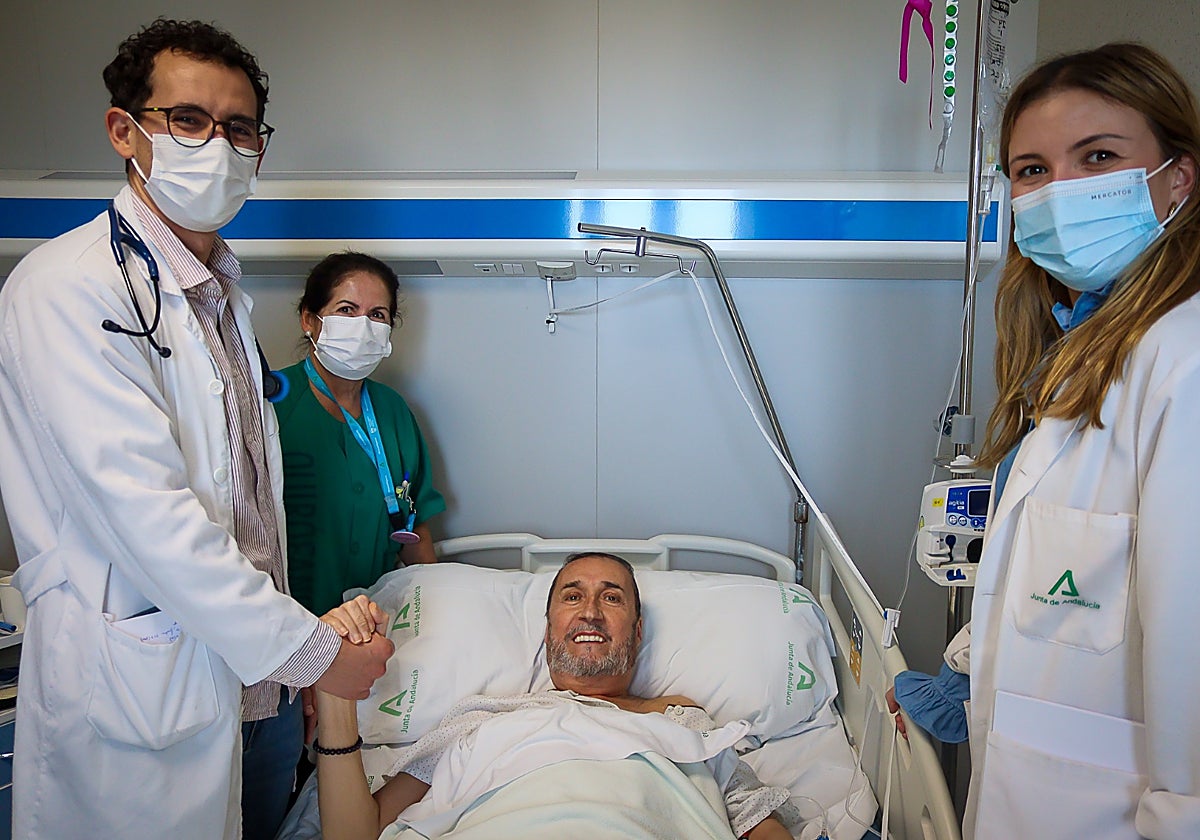

Doctors at the haematology and haemotherapy unit of Hospital Regional Universitario in Malaga have administered the first innovative CAR-T therapy to a patient with multiple myeloma - a rare type of blood cancer.
This new treatment has been available at the hospital since February. It offers a second chance to patients for whom conventional treatments have either stopped working or have not been as effective.
The cutting-edge CAR-T therapy was already available to certain chosen patients. The news is that a new drug (Carvykti) has been approved for use in the past month. It has the capacity to alleviate symptoms and improve quality of life and survival.
"CAR-T therapy is an innovative personalised cell therapy. The process begins with the removal of T-lymphocytes from the patient's blood. These cells are sent to a specialised laboratory, where they are genetically modified to recognise a specific marker present on myeloma cells. These 'reprogrammed' lymphocytes are then re-infused into the patient in order to identify and eliminate the tumour cells," Dr Carola Díaz Aizpún, coordinator of CAR-T therapies, says.
They administered the new drug for the first time in February, while treating a man from Granada. Since then, five others have benefitted from the treatment, "which represents a very significant progress in access to advanced therapies".
What is myeloma?
Multiple myeloma is "a blood cancer that affects plasma cells", which are responsible for producing antibodies. "These cells become malignant, accumulate in the bone marrow and produce abnormal proteins, which can lead to bone damage, anaemia, kidney failure and infections. It is still a chronic and incurable disease, "but it is increasingly controllable thanks to therapeutic advances".
Between 30 and 40 cases are diagnosed in Malaga province each year. Dr Díaz Aizpún says that diagnosis happens after detection of protein alterations in blood tests or "symptoms such as anaemia, renal failure or bone involvement".
Between 30 and 40 cases are diagnosed each year in Malaga province. It mainly affects people over 65 years of age.
Head of the haematology and haemotherapy unit Manuel Isidro Muñoz Pérez says: "The application of this therapy in our centre means that we have a complete portfolio of services in haematology, making us one of the leading hospitals at national level, authorised by the Ministry of Health to offer the most advanced therapies. It is also a healthcare challenge, as we treat a very large number of patients, as we are also a reference point for the provinces of Granada and Almeria."
"Patients in our province can receive this CAR-T cell therapy without the need to go abroad at any time," Dr Muñoz states.
The benefits of the treatment "are very significant". "From a clinical standpoint, it allows us to achieve response rates exceeding 80 per cent, clearly surpassing the therapeutic options available until now for relapsed patients. Furthermore, it not only increases the number of patients who respond, but also significantly prolongs the duration of this response compared to individual therapies," Dr Díaz Aizpún says.
Weeks of entry
"Аlthough the treatment requires several weeks of hospitaliсation, it represents a very significant change in patients' quality of life: we go from continuous therapies to an approach administered in a single day. If the response is favourable, we can achieve long periods without disease and without the need for medication for myeloma. In addition, this allows the patient to gain independence from the hospital by gradually spacing out their appointments," the Malaga professionals say.
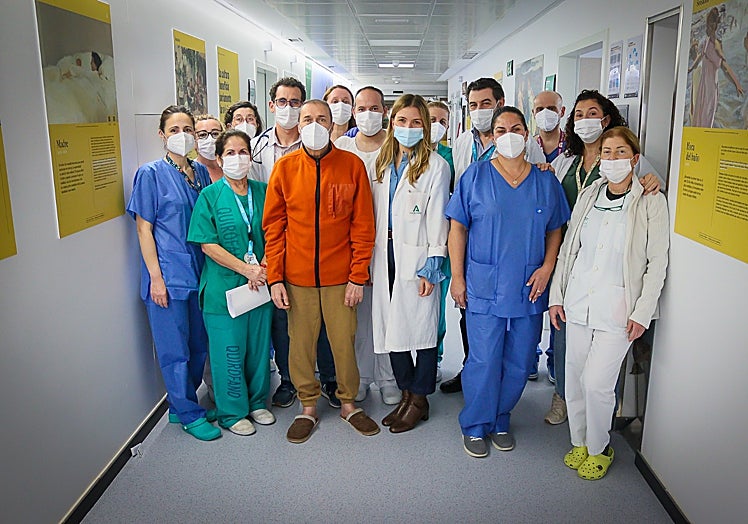
The standard treatment of myeloma has undergone a very significant development in recent years.
"The incorporation of new drugs and therapeutic combinations has improved both survival and quality of life for patients: currently, standard treatment is based on a combination of intravenous, subcutaneous and oral drugs, which are administered periodically in the outpatient hospital, allowing treatment to be received without the need for hospitalisation. In selected patients, generally under 75 years of age, this approach is complemented by an autologous bone marrow transplant," the Hospital Regional team states.
Five-year survival has increased significantly in recent years and is between 60 and 80 per cent, but it depends on factors such as disease risk profile, age and response to treatment.
There is no cure for the disease, but five-year survival has increased significantly in recent years. It depends on factors such as disease risk profile, age and response to treatment. Currently, five-year survival is between 60 and 80 per cent.
"We are talking about an increasingly chronic disease, with which many patients can live for years with a good quality of life," Dr Díaz Aizpún says.
![[]](http://static.vocstatic.com/voc26/latest/assets/images/favicon/surinenglish/apple-touch-icon-57x57.png)