
Health
Malaga hospital races against time to save lives through transplants in just a few hours, with the coordination of 100 specialists
Extractions, flights, ambulances and operating theatres coordinate in a meticulously planned operation that leaves no room for delays
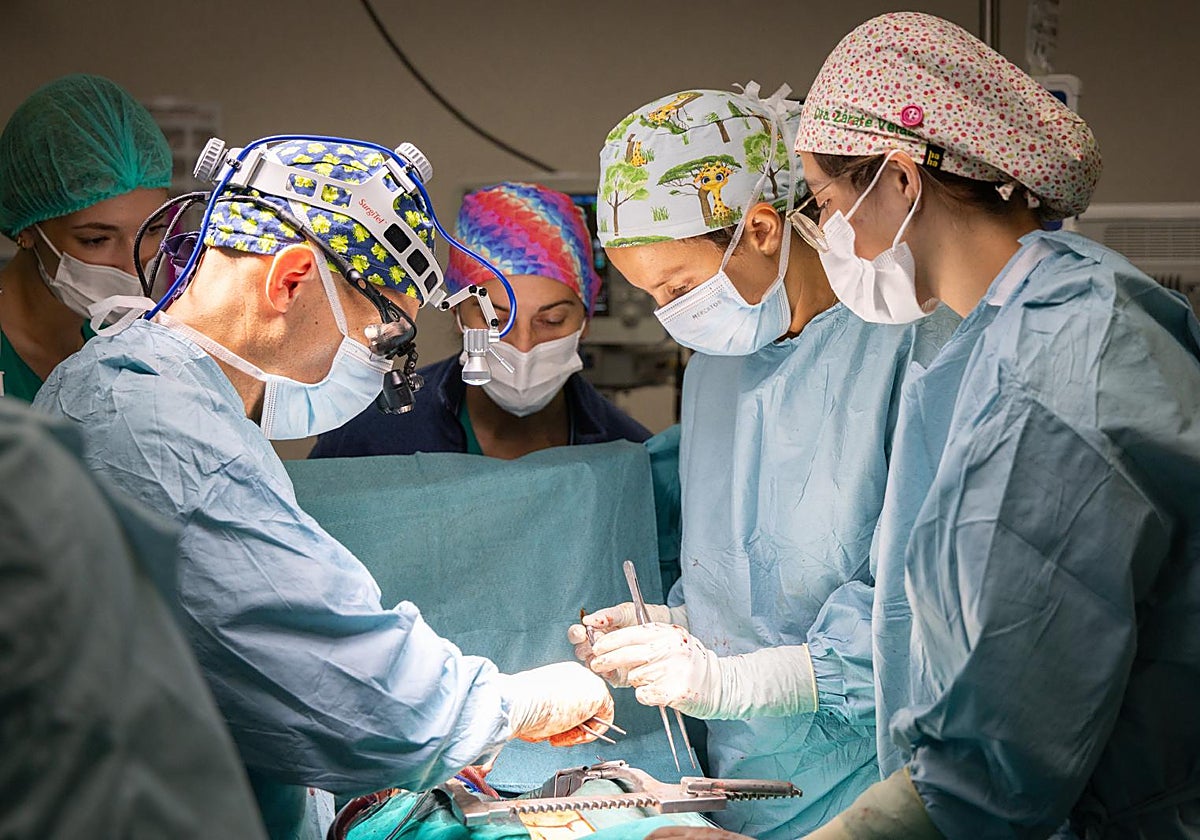

When someone dies and their organs become available for donation, a complex operation involving as many as 100 people gets under way. Medical teams, transplant ... co-ordinators, laboratories and transport services must work together to get the organs to suitable recipients, often within just eight to 12 hours and, at most, 16 or 18. Every stage follows strict protocols and nothing is left to chance. It is a race against the clock with one overriding aim: to save another life.
Malaga's Hospital Regional Universitario is experienced in carrying out such feats. On 15 September, for example, its surgeons performed six kidney transplants and three liver transplants in just three days. This required considerable clinical and logistical resources, from securing the organs to carrying out the operations and providing follow-up care.
Experts from nephrology, urology, hepatology, hepatobiliary and pancreatic surgery, anaesthesiology, internal medicine, nursing, laboratory services and diagnostic imaging all took part in those nine procedures.
In 2024, the Regional was the hospital complex that performed the most kidney transplants in Spain, with 242. It ranked second in 2025, carrying out 206 (the second-highest annual figure in the hospital's history). It also performed 67 liver transplants, again its second-best result, and eleven pancreas transplants, making it the second-largest centre in Spain for this procedure, behind Madrid's 12 de Octubre hospital.
Assessment
The process takes place inside the hospital, explains Domingo Daga, the regional transplant co-ordinator. "We identify potential donors in hospital very quickly. As soon as a colleague in intensive care, a hospital ward or the emergency department identifies a patient whose condition could develop into one compatible with organ donation, they notify us immediately." The transplant team then goes to assess the patient and carries out a medical evaluation.
The team are called in when a patient is close to death. "We carry out a clinical assessment to see whether there are any contraindications that would prevent the person from donating after they die. These are mainly infections or a history of cancer," Daga tells Sur.
They are called, of course, when the patient is about to die. “We carry out a clinical assessment to see if there are any contraindications that would prevent them from donating once they have died. Primarily, these are infectious contraindications or a history of cancer,” Daga tells SUR.
The next step is to speak to the family. "We always ask them what the person's attitude towards organ donation was," he says. The person may have expressed their wishes clearly while alive or their relatives may believe they would have agreed to donate based on their values and the way they lived.
Once the family give their consent, "a series of procedures begins, culminating in the patient being taken to the operating theatre so that any organs or tissues that could help other people can be retrieved". Until then, the patient remains in intensive care.
Preparing for donation
The medical team carry out a series of measures to prepare for donation while waiting for the patient to die, which may happen within minutes or take several hours. Once it does, intensive care staff, transplant co-ordinators and transplant teams set a series of procedures in motion, leading to the operating theatre.
It is essential to preserve the body so that the organs do not deteriorate. The team also request further tests to "establish more precisely whether the organs are suitable for the recipients waiting for them". These include blood tests, radiological scans, serology tests, blood group checks and tests to establish the patient’s immunological profile. Once the results are available, the team can identify the best recipient.
At the other end of the process, someone on the transplant waiting list is waiting for a phone call. Daga explains that the team match donors and recipients using clinical criteria alone, including blood group, immunological compatibility and organ size. "For example, we cannot give a liver from a man weighing 120 kilos to a woman weighing 50," he says.
Once the team have completed their assessment, they contact the recipient, who is waiting at home, and begin preparations for surgery and the transplant. "The whole process takes around 12 hours, although sometimes it takes eight and sometimes 18. These are hours in which we have to save a life. We have to act very quickly."
Daga highlights the number of people involved and the many procedures that must take place within a short period. The shorter the interval, he says, the better the quality of the transplanted organs, as they suffer less ischaemia and receive less oxygen deprivation. The process operates across the whole of Andalucía, so a recipient might be in Cordoba or Almeria, for example.
National offer
Organs are offered to transplant centres across Spain. "Sometimes a code zero is declared somewhere on the mainland: someone needs an organ within 24 or 48 hours or they will die. These patients have national priority. So if an organ becomes available in Malaga that could save the life of someone on the code-zero list in A Coruña, we send it there."
If there is no code-zero patient, the teams apply clinical and geographical criteria. "If two potential recipients are equally compatible, it is better to allocate the organ within a smaller geographical area, because it will travel less distance and spend less time in transit before the transplant."
An organ going to Seville will travel by ambulance, while one going to A Coruña will go by plane, Daga explains. "It depends on the distance. Sometimes we even send organs to Portugal, Italy or France. There is a European partnership, although this accounts for a small proportion. The vast majority stay in Spain."
Malaga carries out kidney, liver and pancreas transplants. Daga estimates that around 150 people are currently on the waiting list.
More than 90 per cent of transplant recipients survive beyond the first year. "The point is that if someone needs a transplant, they have no other option," he stresses.
Fernando Segura, medical co-ordinator for donation and transplantation at Malaga's Clínico hospital, highlights the contribution made by hospitals that do not carry out transplants themselves.
"It is very important to recognise the role these hospitals play in the organ and tissue donation process in Spain. Around 40 per cent of all transplants in the country involve donors who died in hospitals that do not perform transplants. After medical teams retrieve the organs, they transport them to the hospitals where surgeons carry out the transplants in the hours that follow," he explains.
Between 2014 and 2024, the Clínico recorded 368 organ donors, the third-highest total among Spanish hospitals that do not perform transplants and feature in the national transplant organisation's rankings.
The families
Daga says that 85 per cent of families agree to organ donation. "It is one of the things we learn most from and one of the greatest lessons healthcare workersreceive in their daily work. These families show extraordinary solidarity and altruism by helping people they will never meet. I have spent 30 years talking to families and I still get goosebumps when I see how much good there is in some people."
He stresses the enormous difference a transplant can make to someone's life. "Imagine being on dialysis and getting a call telling you to come in because they have a kidney for you. You may have spent five or six years unable to urinate, unable to drink as much water as you want or eat whatever you like and unable to work. Travelling is difficult because you have to undergo dialysis. It is like being born again."
He adds that doctors now have much better control over immune rejection thanks to effective immunosuppressive treatment, although research still has an important role to play. "In medicine, time means life in almost every situation." He also thanks the 60 to 70 people who donate organs in Malaga every year for their generosity.
Miguel Lebrón, transplant co-ordinator for the Malaga, Almeria, Ceuta and Melilla area, explains that there are two types of organ donation. The first follows brain death. "This is the familiar situation in which someone dies following a brain injury that leads to brain death, confirmed by a flat electroencephalogram." These donors go to the operating theatre while their organs still receive blood flow: "The heart is still beating, but the person has already been declared dead."
The second type is donation after cardiac arrest. This happens when intensive care doctors decide that further treatment would serve no purpose and that the patient is going to die, so they withdraw life-support measures.
"When the heart stops, the donation process begins. This requires more preparation in the operating theatre. We use a special machine to restore blood flow externally to the organs, which are no longer receiving it naturally. The machine circulates the donor’s own blood, helping the organs function and receive oxygen while the team retrieves them," Lebrón explains.
The donor
When someone becomes a donor, transplant co-ordinators assess which organs they can donate and contact the ONT (national transplant organisation). "The organisation checks the waiting lists and tells us which hospital or patient should receive each organ. Our own surgeons may carry out the retrieval, or surgeons from other hospitals may come to collect organs such as lungs or hearts."
Heart transplants take place in Seville and Cordoba, while lung transplants are carried out only in Cordoba. Patients can also donate corneas and musculoskeletal tissue, including bone, tendons and ligaments.
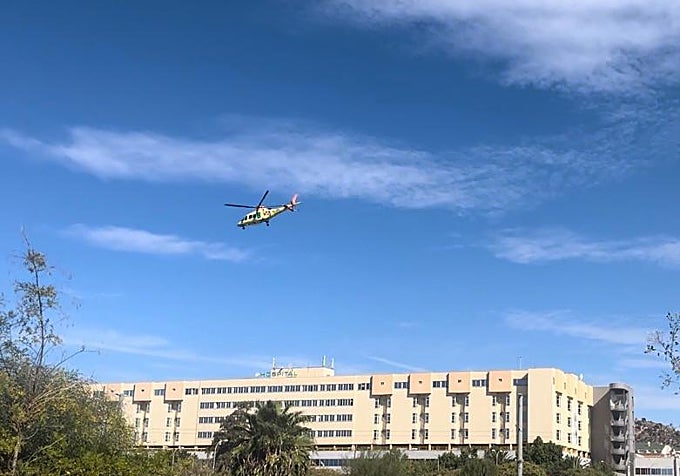
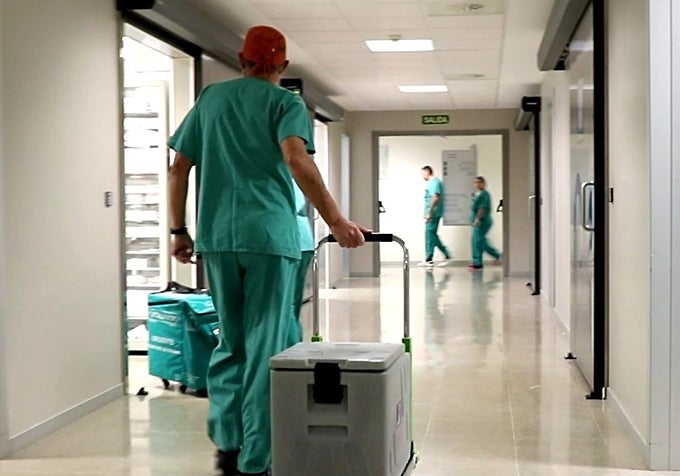
The teams use specially equipped vans to transport organs, as well as commercial aircraft when necessary and helicopters when time is particularly tight. "It is a very complex operation. A single donation can involve up to 100 people," Lebrón says. Many of them co-ordinate their work by telephone. The figure includes pilots and drivers, as well as surgeons, nurses, healthcare assistants, porters and doctors from different specialities.
Around 300 transplants take place at Malaga's Regional hospital every year: almost one every day. "We are a national reference centre for kidney transplantation," Lebrón concludes.
