
Health
Malaga researcher links childhood stress to anxiety and depression in adulthood at Yale University
The study identifies a treatment target to curb the impact of early trauma on mental health in adulthood
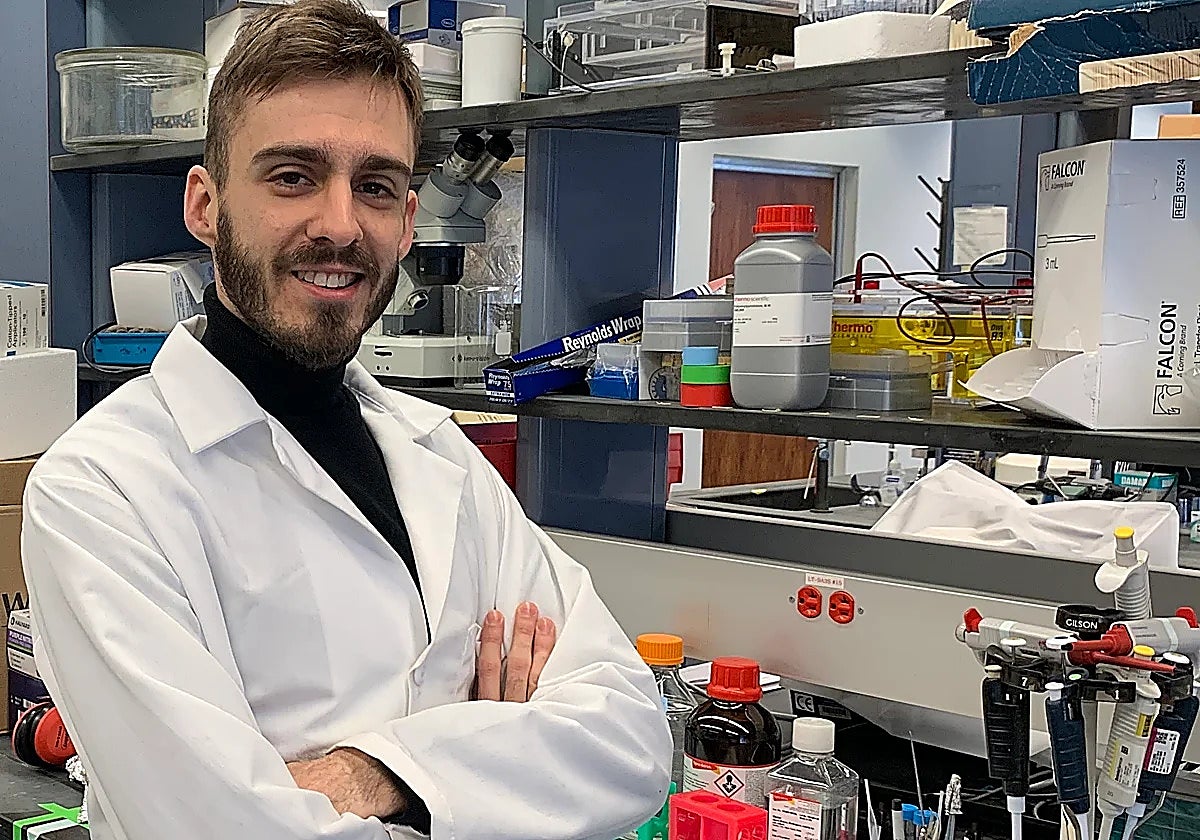
José Antonio Sau
Malaga-born researcher José Muñoz Martín is only 28 years old, but he is working under the supervision of one of the world's leading experts in animal models of early stress: US psychiatrist Dr Ari Kaffman.
Muñoz Martín studied Biochemistry at Malaga University (UMA) and then completed a Master's degree in Cell Biology. He is currently working on his doctoral thesis in an innovative area: how childhood stress affects neurons in adulthood.
The young Malaga researcher spent nine months working closely with Dr Kaffman at Yale University. This has allowed him to link childhood trauma with anxiety, depression and other mental health problems in adulthood.
His research could have significant implications for the treatment of vulnerable children. The study has identified a treatment target known as TREM2, a receptor that can potentially be modified through drug treatment.
"Particularly in children facing adversity, whether because of family breakdown, lack of caregivers or exposure to war, enhancing the expression of this receptor could reduce the impact of stress on brain development and increase resilience," he told SUR.
Research placement
As a visiting researcher at Yale, Muñoz Martín contributed to a joint project involving UMA and IBIMA Plataforma BIONAND, both of which funded his stay through exchange grant programmes.
"This allowed me to join a group at Yale whose work closely aligns with what we do at UMA within the stress neurobiology group, led by Margarita Pérez Martín and Carmen Pedraza," Muñoz Martín said.
His time at Yale, one of the world's most prestigious universities and a member of the Ivy League founded in 1701, ran from October 2024 to June 2025.
"The research focuses on how childhood stress affects brain cells, particularly microglia," he explained. "These cells perform several functions and play a crucial role during development because they remove non-functional synapses from the brain."
Childhood stress reduces levels of molecular 'pruning shears' known as TREM2 in the brain, preventing the removal of unnecessary connections and disrupting the development of neural circuits.
What are synapses? "Neurons communicate through synapses. They are the bridges that allow signals to pass between nerve cells. Brain circuits consist of vast networks of neurons connected through these synapses," the researcher said.
What happens when a child experiences stress?
According to Muñoz Martín, stress reduces the activity of microglia, meaning they can no longer remove unnecessary synapses effectively.
"As a result, those synapses remain in place, long-term connectivity becomes disrupted and this can lead to mental health problems such as anxiety and depression in adulthood," he said.
"People who have experienced stress or trauma during childhood are more likely to develop a mental health condition later in life," Muñoz Martín said.
What his team attempted to do was translate this "to an experimental animal model": transgenic mice, which "have the same cell types as humans and the same brain structures and behaviours". The goal is to understand people.
Microglia
Microglia use a receptor known as TREM2, which "acts like pruning shears" to eliminate synapses. It is able to identify those that are not functional and that will be eliminated.
"Stress reduces the expression of these molecular shears. As a result, unnecessary synapses cannot be removed properly, preventing brain circuits from developing as they should," the young researcher said.
The key question, he said, was simple: "What happens if we increase the concentration of this receptor despite the presence of stress?"
"We found that TREM2 plays a direct role in removing non-functional synapses. In the long term, mice with higher levels of the receptor showed better memory performance. Their synapses developed the correct size and structure as they matured and we also observed improvements in connectivity."
The findings allowed researchers to track brain development from childhood through to adulthood, including behavioural outcomes.
"In other words, TREM2 provides important clues about the cellular mechanisms involved in connectivity problems, which may in turn contribute to anxiety and depression later in life," Muñoz Martín said.
This research was published in the journal Brain, Behavior and Immunity.
The importance of enrichment
"We also saw that subjecting these mice to functional enrichment, putting more nesting material and toys in the cage, despite the stress they were experiencing, produced improvements in connectivity," Muñoz Martín said.
In addition, "a balanced childhood, in which there is play and care, will improve brain development and mental health".
Muñoz Martín also co-authored a second paper published in eNeuro as part of the so-called Parenting Project.
In that study, researchers removed nesting material from mother mice raising their young, limiting the resources available to care for their offspring. "We investigated how maternal behaviour breaks down under these conditions and found that stress affects the mothers as well. That, in turn, increases stress hormone levels in the pups," he concluded.
Review public health, medical care, and clinical news
![[]](http://static.vocstatic.com/voc26/latest/assets/images/favicon/surinenglish/apple-touch-icon-57x57.png)