
Health
Malaga El Clínico hospital patient with genetic ALS participates in global drug trial
Only 20 people with the rarest and most aggressive variant of the disease are currently receiving this drug treatment
José Antonio Sau
The third Neuroweekend Malacitano at Malaga's Hospital El Clínico focused on a case concerning a patient with genetic ALS (Amyotrophic Lateral Sclerosis), which is one of the rarest and most aggressive variants of the disease. The woman is participating in a global trial testing the efficacy of the Jacifusen drug in slowing the progression of the disease.
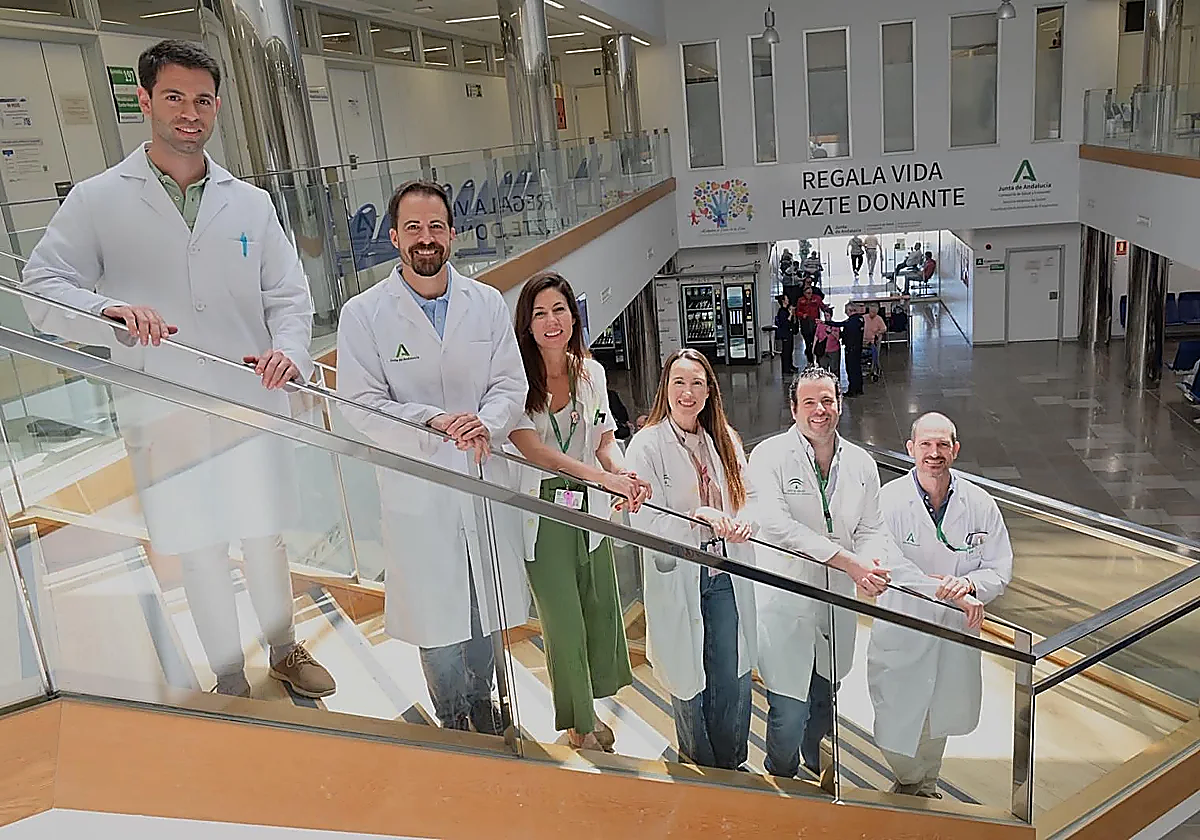
The high-level forum brought together 120 neurologists from around the world this past weekend. Head of the neurology department at the Malaga hospital Dr Carlos de la Cruz coordinated the event.
The patient from Malaga is receiving treatment at the Puerta del Mar hospital in Barcelona. Her case concerns the FUS gene. "It is extremely rare and very severe," Dr Pilar Carbonell, who presented the case, told SUR.
"The most relevant developments are the advances in genetic ALS, where we already had a treatment available, specifically for the SOD1 gene. Now, there is hope for the FUS gene," Dr Carbonell stated.
Jacifusen is an antisense oligonucleotide, just like the drug Tofersen that targets the SOD1 genetic variant. "What it does is decrease the production of that highly toxic mutant protein, the FUS protein. An expanded access programme, first implemented after initial in vivo and in vitro studies, showed that this protein was toxic," Dr Carbonell said.
"It has been shown to decrease neurofilaments in the cerebrospinal fluid, above all," she stated. This decreases the accumulation of this toxic protein.
The onset of this variant is quite early, with a very harsh and rapid progression for patients and their families. A total of 12 patients have participated in the programme, "the vast majority of whom experienced progressive clinical deterioration, but some showed improvement or stability".
A clinical trial is now under way to "study the definitive efficacy of this drug". Dr Carbonell said that the results should be ready soon. The original research came from Columbia University.
Mutations in the FUS gene are a very rare cause of ALS. Approximately ten per cent of all ALS cases are hereditary, with the remainder being sporadic. FUS gene mutations account for between 0.5 and one per cent of all ALS cases, that is, fewer than one in every 100 patients with this disease has a mutation in this gene.
The onset is usually early, before the age of 40. It can appear in adolescents or young adults and its progression can be rapid. Although not always the case, there is sometimes family history.
Gene SOD1
The Clínico hospital was the first health centre in the province and one of the first in Andalucía to administer Tofersen to a person with an ALS mutation that occurs in the SOD1 gene.
The Ministry of Health approved funding by the National Healthcare System (SNS) a year ago. Dr Carbonell told SUR at the time that it had managed to stabilise the clinical deterioration of some patients.
ALS is a disease that affects neurons in the brain and spinal cord, causing a progressive loss of the ability to control muscle movements, eventually leading to generalised paralysis that prevents patients from breathing, moving and speaking. There are 100 cases in Malaga province.
According to the Spanish society of neurology, this new treatment helps preserve neuronal function and slows the disease's progression.
Hospital Clínico and other leading hospitals in Andalucía have been administering the drug for almost a year and ten months, even though its inclusion within the SNS only became effective on 1 July. The Andalusian health service (SAS) funded it for 23 patients, the first of whom began treatment in September 2021. By May 2025, five patients were actively receiving treatment.
![[]](http://static.vocstatic.com/voc26/latest/assets/images/favicon/surinenglish/apple-touch-icon-57x57.png)