
Exclusive
Carmen’s life after a face transplant: ‘I recognise myself by my eyes’
We spoke exclusively to the Spanish woman who was the first to receive a face transplant from a donor who had undergone euthanasia. A moving account of an extraordinary case
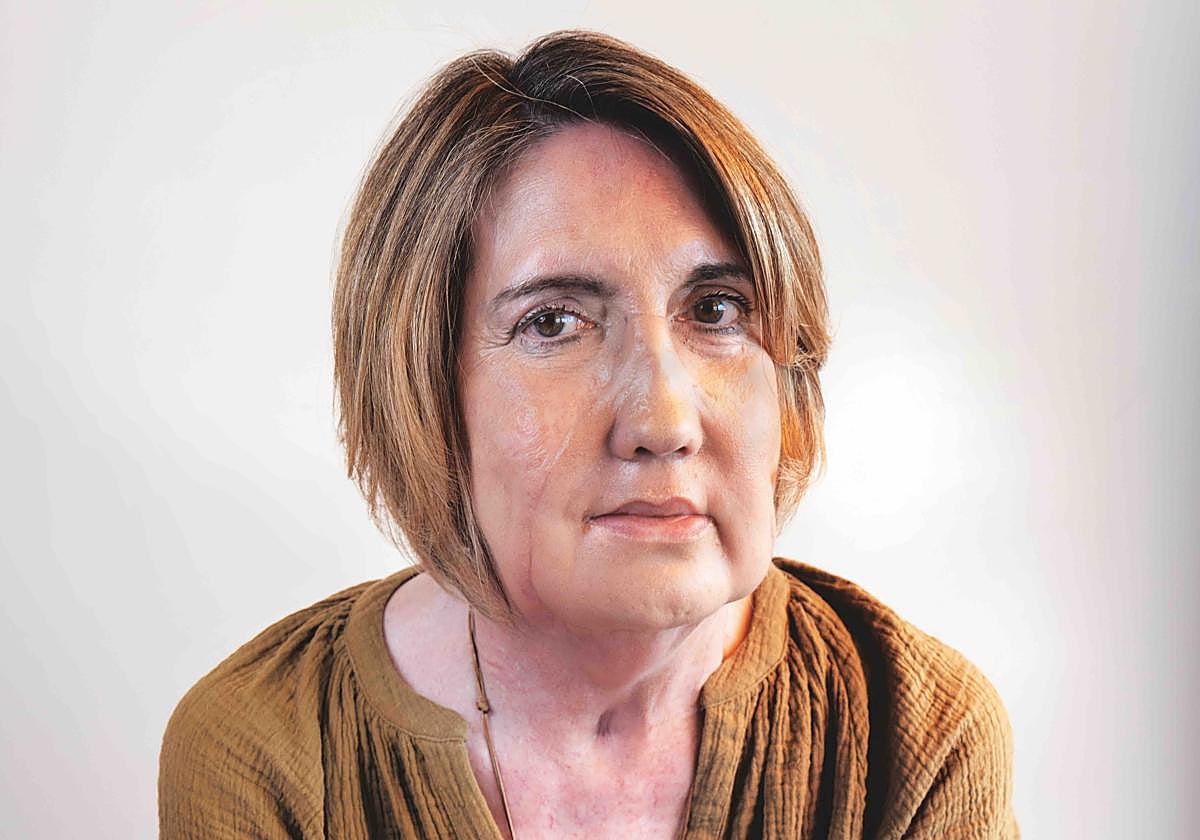

It all started with a spider. Small, insignificant. A pool spider. Carmen brushed it off her leg with a swat of her hand. It was ... 15 July 2024 and she and her husband were on holiday in Las Palmas. The Canarian weather was perfect, mild; the drinks were cold; they were enjoying themselves in the company of friends. “I’ve always been someone who loves to enjoy life,” she recalls two years later, with a new face and a body marked by scars. “I want to live; I’ve always wanted to live. I like going out and having fun. That’s why I’m here, and that’s why I’m not dead.”
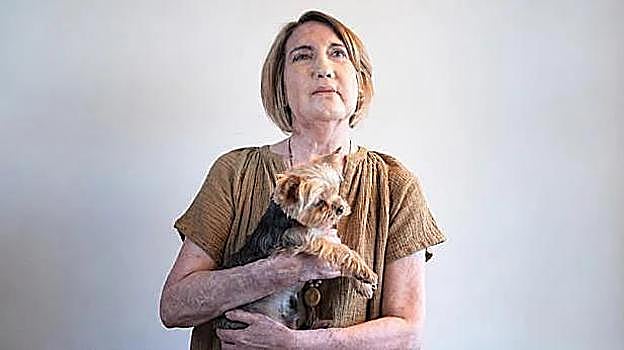
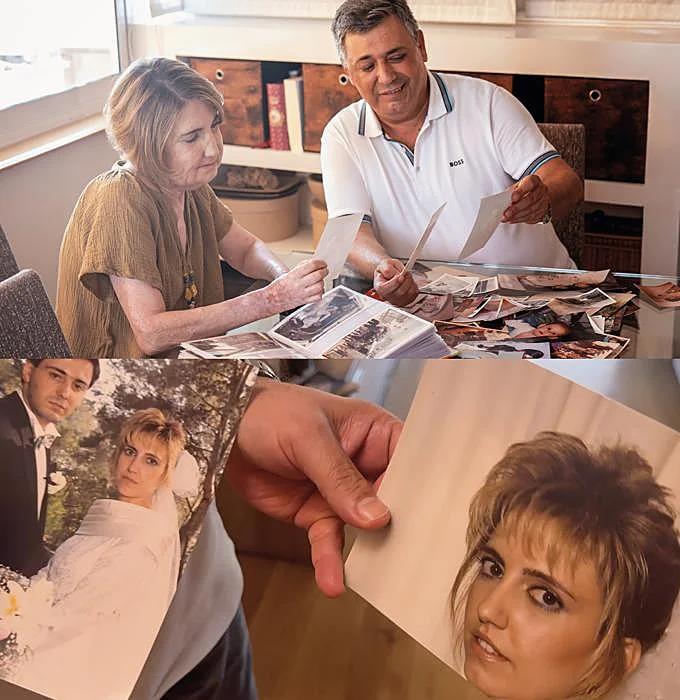
After
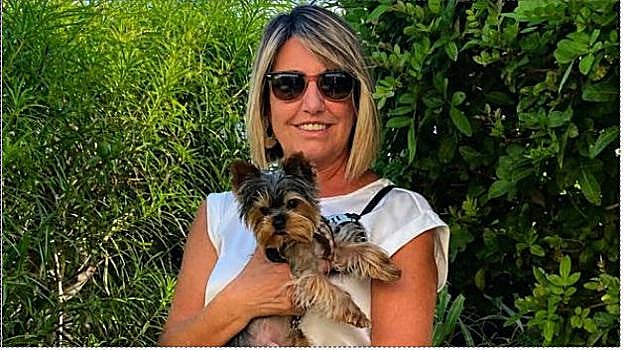
Before
The spider that bit her was not poisonous, but it transmitted a bacterium notorious for its most devastating effects, similar to flesh-eating bacteria. “At the time, I didn’t feel anything out of the ordinary. It was just a bite. It took several days before I started to notice the symptoms.”
Carmen’s immune system was severely compromised, which was why a bacterium that might have been harmless in other people had a devastating effect on her, triggering a process of necrotising fasciitis. Suddenly, her own body began to attack her. High fever. Weakness. Confusion. Her organs began to fail one after the other. Low blood pressure. Rapid heartbeat. Anxiety. Bewilderment. What was happening?
She was sent home from hospital twice and told that there was nothing wrong with her. But when Dr Marcos Granados – head of A&E and the Intensive Care Unit at San Roque Hospital – saw her come in, he realised she was in a septic state and admitted her to the ICU straight away. The last words she remembers before slipping into unconsciousness were those of the Cuban doctor telling her: “Carmen, to save your life, I have to put you to sleep.” At that moment, the doctor – with decades of experience behind him – was not sure whether the 59-year-old woman really had any chance of survival.
“We put her under, intubated her…” explains Granados. “When you have refractory sepsis, it causes a breakdown of your entire immune, renal, respiratory and neurological systems… All of Carmen’s organs had failed and she needed continuous dialysis.”
Carlos, her husband, was told that she might die within the next few hours and that he should prepare for the worst. But the patient managed to stay alive through the first three critical hours, then the next seven, and then the next 12. From the fourth day onwards, her kidneys, lungs and heart began to function again very slowly. On the seventh day, Dr Granados performed a tracheotomy.
‘Nobody at the hospital told me what they’d done to me. One day they put me in a lift and I saw my reflection in the mirror. I looked like a monster. I had no lips or nose. I was absolutely devastated.’
In the ICU, Carmen was given high doses of antibiotics, as well as noradrenaline and vasopressin, which work synergistically to raise blood pressure and ensure that blood reaches the organs. Those drugs helped her maintain her vital signs, but at the same time they were depriving her most fragile tissues of oxygen – namely, her skin and the soft tissue of her hands and feet. According to Granados, this contributed to her losing her nose, upper lip and palate… as well as three toes on one foot and two on the other.
While she slept, her husband was receiving bad news and threats of amputation. A man of strong character and boundless determination, Carlos moved heaven and earth to ensure his wife was transferred to a better-equipped hospital on the mainland. On 5 September, a medical evacuation aircraft finally took Carmen to Barcelona.
Despite being sedated, the patient recalls brief images from that journey, and just six days later, on 11 September, she officially came out of her coma.
When she woke up, she weighed just 41 kilos. She had lost all her muscle mass and was unable to stand. In the ICU at Hospital Clínic, she underwent what is technically known as ‘debridement’ – the removal of dead, damaged or infected tissue from wounds.
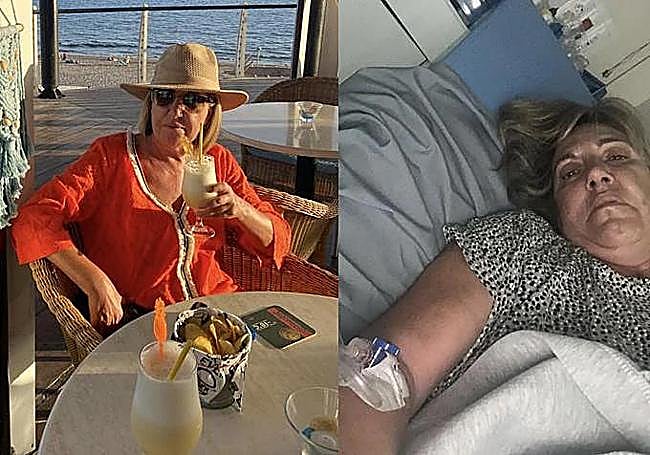
“I could feel the plasters on my face being changed, but I had no idea what had happened to me. Nobody told me anything. Nobody warned me,” recalls Carmen, still with a pained expression. “One day they put me in a wheelchair and wheeled me into a lift that had a large mirror. Suddenly I saw myself and was horrified. I looked like a monster. I had no lips or nose, and I also had a huge bald patch. I couldn’t breathe and told the ward assistant that I needed to go back to my room. It really shocked me because nobody had prepared me for it; nobody had said, ‘Look, we’re going to do this or that to you.’ Nobody. That was a very difficult moment for me.”
In December 2024, exercising every patient’s right to a second opinion, Carmen Gil (who at that time was still unable to eat by mouth, was drooling and had difficulty speaking) met for the first time with Dr Joan-Pere Barret. He was head of the Department of Plastic, Aesthetic, Reconstructive and Burns Unit at Vall d’Hebron University Hospital and, at that time, the surgeon responsible for two of the five facial transplants carried out to date in Spain.
During the consultation, accompanied by her daughter Brenda and her husband, Carlos, Dr Barret was clear and informative about her options: the first was to do nothing; the second was reconstruction through reconstructive plastic surgery using grafts from her own body (which would involve several operations over years without achieving a full recovery of function); and the third was a face transplant, which required finding a donor and carried serious risks, including death, as illustrated by the case of Isabelle Dinoire in France.
The first partial face transplant in history was carried out in November 2005 at Amiens University Hospital, France. The patient, Isabelle Dinoire, had suffered severe injuries after being bitten by her dog, and her new face made front pages around the world. Since then, 54 face transplants have been carried out globally, but Isabelle Dinoire survived for just eleven years after her operation. Why?
“I didn’t want grafts, I wanted a transplant. I wanted to live as I had before. To eat, go out, have a tipple, have a coffee, stroll along the beach. I’d rather have 10 years lived to the full than 20 miserable ones. I was absolutely clear about that.”
“One of the causes of her death was uterine cancer caused by immunosuppression – the medication used to prevent rejection,” explains Barret. “But the ultimate cause was that, when she stopped taking that medication, necrosis set in within the transplanted tissue.”
Carmen did not want grafts. She was fully aware of the risks, but she did not hesitate to opt for the transplant despite Dinoire’s case. She recounts it with her usual sense of humour: “I didn’t want ‘sausages’ on my mouth. With grafts, you can end up in the operating theatre more than twelve times and still not get it right. I wanted to live as I did before. To eat, have a tipple, have a coffee, go for a walk on the beach. I’d rather have 10 years lived to the full than 20 miserable ones. It was crystal clear to me. Ever since I met Barret, I’ve felt I was in good hands. I was never afraid. In fact, every time I go into the hospital and ask for him, I say: ‘Has God arrived yet?’”
The doctor is shy and blushes at his patient’s half-joking comments. How does he feel when people call him ‘God’? “Quite simply, I feel overwhelmed, because I believe I’m just doing what I know how to do, and at the same time I know there’s always room for improvement.”
Carmen likes to tease Barret and leave him baffled. “Sometimes I ask him how come they didn’t operate on my breasts, given the number of people in the operating theatre and the 16 hours they spent on my transplant,” she says, laughing. “The first time, he looked at me as if to say, ‘Are you serious, Carmen?’” She laughs heartily, though a little reservedly, as she still cannot open her mouth very wide.
“What happened with the donor is truly unique,” explains Dr Barret. “Nobody planned it; she wanted to donate her face.”
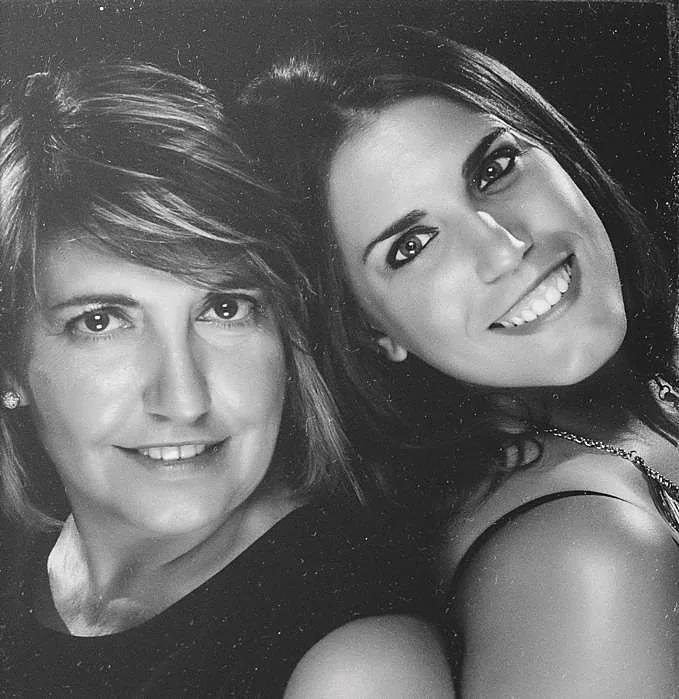
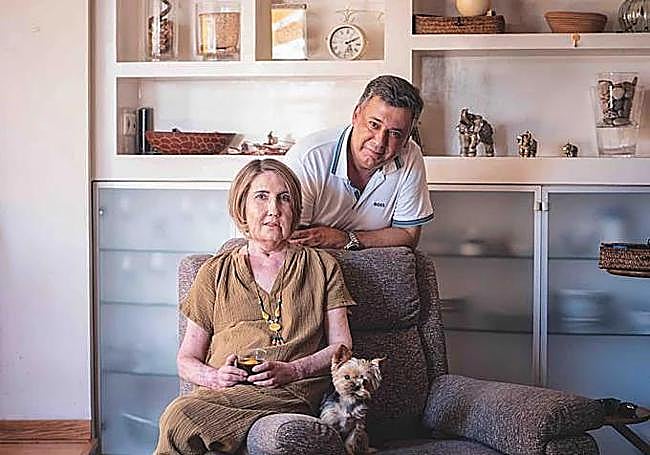
Carmen was born in one of Barcelona’s long-established neighbourhoods – the sort that retains the layout and character of a small town, with traditional shops and bars frozen in the 1970s. She met her husband when she was 16 at a nightclub. Carlos was there, and he initially noticed her friend. They have been together ever since and made their living in the dental clinic business. They have a 34-year-old daughter, a flat with two terraces, and a Yorkshire terrier called Coco. They have been on 22 cruises together. Ever since she was admitted to the ICU in Las Palmas, Carlos has not left her side. “In him, I found the love of my life, but how I did it, I don’t know. When it comes to love, there are no secrets: either it works or it doesn’t.”
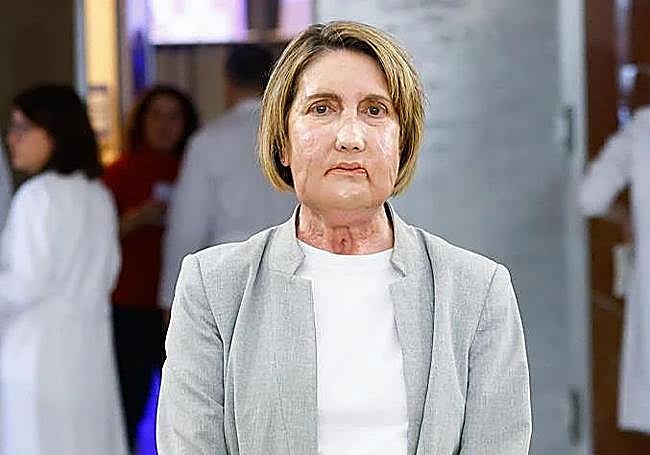
Carmen’s character and resilience were crucial in making her an ideal candidate for the transplant. Assessment takes into account not only a patient’s physical condition, but also the psychological strength required to look in the mirror and not recognise oneself.
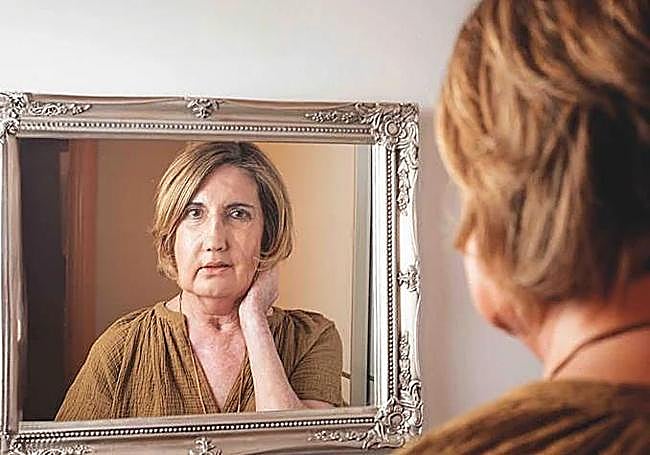
Now, standing in front of that mirror, what does she see? Carmen hesitates for a moment before replying: “It’s not me, but it is me. I’ve always had very expressive eyes, so I recognise myself by my gaze, but neither the nose nor the face nor the mouth are mine.”
In reality, they are hers now, but they used to belong to someone else. To the anonymous donor, whose name and story remain unknown, even though her perfect lips are right there on Carmen's face.
Dr Barret met the donor in person and spoke with her. It is not standard practice, but this marks the first time in history that a face transplant has been carried out using a donor who had requested euthanasia. That circumstance made all the preparations leading up to the operation unique.
“I’m practising giving kisses outwards, because at the moment they only come out inwards. Even so, I kiss as best I can. I shower my daughter with kisses.”
Data protection laws are strict regarding donor confidentiality. The hospital prefers not to release the exact date of the transplant to prevent anyone connecting the dots between the donor’s identity and her date of death. It is known, however, that she was a young woman.
“What happened with the donor is something truly –” Joan-Pere Barret clears his throat, his eyes welling up – “perhaps unique. Nobody set out to do it: she wanted to donate her face.”
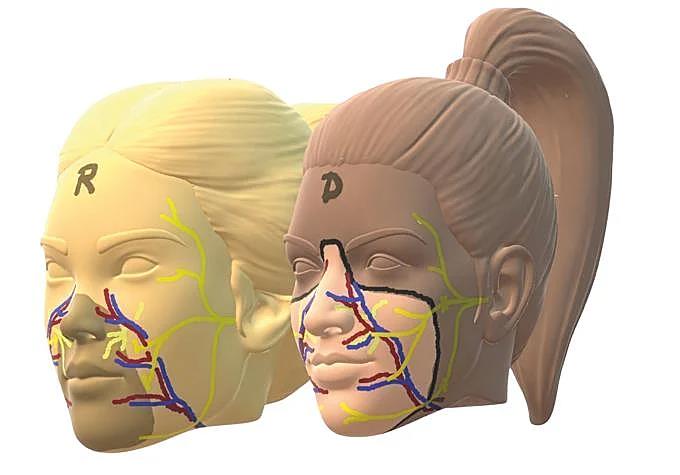
These special circumstances meant the surgery date could be scheduled in advance and preliminary anthropometric studies carried out, including a three-dimensional digital scan of the bone structure. It was established early on that all key markers matched between the donor and Carmen: blood group, sex, skin tone, and physical measurements.
More than a hundred people were involved across the dual operation (the donor extraction and the recipient implantation). The anaesthetists – four on duty at all times – set the pace of the surgery. There was an army of nurses and ward assistants. Four surgeons operated simultaneously, taking turns over 16 hours.
“First, you have to revascularise the face,” explains Barret. “Once the organ is in the recipient, you let the blood flow through, check that it’s working properly, and then start removing the deformed tissue to carry out the transplant itself.” Then comes the fine detail. Carmen continues to point out that Barret restored “even the ridges on the palate” for her.
And what was the immediate aftermath like? How did Carmen feel?
“The truth is, you don’t feel a thing, because you’re so drugged up that everything seems unreal. I remember that all the staff were extremely careful when moving my head. I felt very well looked after. You haven’t seen yourself yet, but you notice that your face feels different. It’s a strange sensation. I wouldn’t know how to explain it.”
Comments on social media can be cruel. “They used to say I looked like Putin,” Carmen recalls with a smile. “It bothered me at first, but then I realised they had a point.”
Five months after the operation, she appeared at a press conference alongside Barret and the surgical team to break the news. “I took it in my stride; the doctor was more nervous than I was because he suffers from stage fright.” But the day after proved a bit more difficult than Carmen had expected: “When I saw myself on the front pages of the newspapers at the newsagent’s opposite my house, it was a massive shock. I got calls from TV stations, but I didn’t want to go on. It was all too much.”
What is more, social media reaction was harsh. Comments under online articles mocked her appearance. Her husband could not help reading them. “They were saying things like, ‘I bet her husband’s run off,’ or that she was so ugly she could have chosen a different face,” recalls Carlos, still indignant.
“They also said I looked like Putin,” says Carmen with a laugh. “At first it bothered me, but then I thought they had a point. I don’t see myself as ugly.”
One of the achievements she is most pleased about is being able to drink comfortably again – a coffee, a Coca-Cola. Fluids used to spill, but rehabilitation has helped her regain control. “My next challenge is to eat a ham sandwich with warm bread and tomato. I still can’t open my mouth fully, so the crusts would hurt.”
What about kissing? Can Carmen kiss with her new mouth? “Although it might not look like it,” Barret interjects, “beneath that lip, the orbicularis muscle – which puckers the lips and pushes them forward – is her own, even though the outer layer has been transplanted.”
“I’m practising blowing kisses outwards, because at the moment they only go inwards. Even so, I kiss as best I can. I shower my daughter with kisses. My husband’s a bit worried he might hurt me, but we kiss each other. And my friends too. Mind you, because I’m on a lot of medication, sometimes I tell them: ‘Right, that’s enough for today: I’ve had my quota of kisses. There are so many of you, and with viruses you never know.’”
DR JOAN-PERE BARRET
Head of the Plastic Surgery and Burns Unit at Vall d'Hebron University Hospital and lead surgeon for three face transplants
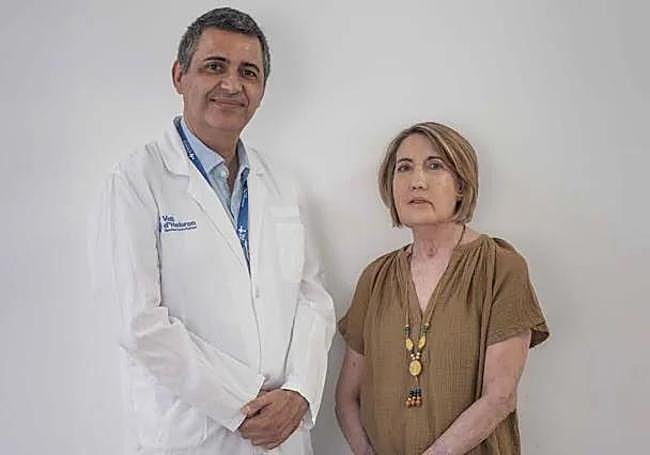
'A face is what we are - not whether we are handsome or ugly, but what we convey: affection, fear, love…'
As a child, Dr Barret used to make his own toys. He wanted to be a carpenter, like his father, until he became fascinated by the human body and discovered his other calling. “I like to believe that we’re all given a sort of destiny, and mine led me to become a doctor.” He learnt how to perform skin grafts – he still remembers it – on 2 January 1992, when, on his first day as a junior doctor, he was put in the operating theatre with a burn patient and told: “Get on with it.” He pursued his career in the United States (“where in a couple of years you advance professionally as much as you would in other countries in a decade”); in the early 2000s in London, he was immersed in research into face transplants. “Back then, it was all very exciting; the first one hadn’t been performed yet, but we were already looking for a way to do it.” And during his time in the Netherlands, he was mentored by pioneers in microsurgery.
![[]](http://static.vocstatic.com/voc26/latest/assets/images/favicon/surinenglish/apple-touch-icon-57x57.png)