
Health and wellness
Experts are quite clear: Hair does not protect you from melanoma
More and more scalp tumours are being diagnosed at a late stage. We need to wear hats more often
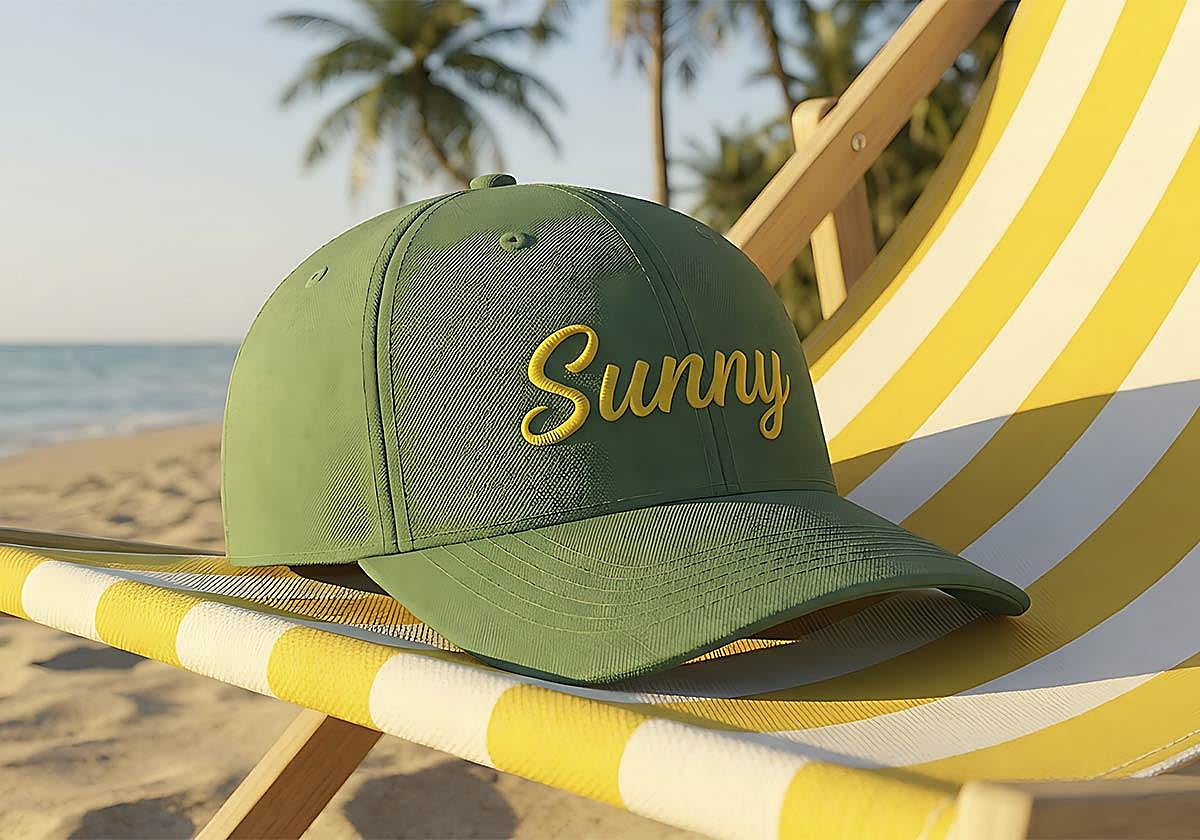

Today we’re off to the beach… or the mountains. Let’s check what we’ve got: we’ve got water, a towel, a few ... snacks, sun cream and… all set? No! We’re missing something very important. In fact, it’s just as important as sun cream: a hat! No, it’s not for fashion’s sake, nor because of influencers… nor even to avoid sunstroke – although that’s part of it too. It’s to protect our scalp, which happens to be the part of the body we neglect the most in summer when we’re sunbathing.
Doctors are in no doubt about this, particularly dermatologists: it is one of the areas most exposed to solar radiation and, paradoxically, one of the most frequently overlooked in skin protection and self-examination routines, which leads to a higher risk of developing melanoma. In Spain, around 8,000 new cases will be diagnosed this year, according to the report Cancer figures in Spain. It is usually detected when changes in the skin are noticed: moles, lumps, patches… And as awareness campaigns are effective, people seek medical advice straight away, leading to early diagnosis and a better prognosis, according to the Spanish Association of Dermatology and Venereology (AEDV).
The figures
8
out of every ten young people
People aged between 16 and 25 get sunburnt when they are exposed to the sun, according to a survey carried out in April by the Piel Sana Foundation.
The problem arises when these signs are on our head, hidden beneath our hair. As we cannot see them, by the time we discover them it is already too late. ‘Scientific evidence shows that melanomas located on the head are diagnosed at more advanced stages, which can significantly worsen their prognosis,’ explains Cristina López de la Torre, a lecturer at the Faculty of Biomedical Sports Sciences at the European University of Andalusia. She also notes that these tumours tend to be more aggressive: “They often have a higher growth rate and greater tumour thickness.”
In the shade
In light of this, it is absolutely essential to emphasise what we can do to prevent it, “which remains the most effective tool against skin cancer”, according to the AEDV. In this case, it is as simple as protecting yourself. It’s not about not going outside, but about not doing so without protection. The easiest option, and one we all have to hand, is a cap, a visor or a hat… In short, a physical barrier that prevents the sun from shining on us all the time and, on top of that, from giving us a nasty sunburn. If it includes SPF – it’s becoming increasingly common to find garments with UV protection – so much the better.
But there are other tips too. In chemists, you’ll find a whole range of products specifically for the scalp – not just for the hair, but for the skin underneath it. Most of them are oils. Don’t skimp on the sun protection factor here: the higher, the better. And remember to carry some in your bag so you can reapply it if you’re going to be outdoors for a long time. And anyway, if we have a choice, dermatologists are clear on this: from 11 am to 5 pm, it’s best to stay in the shade. At those times, solar radiation is at its strongest and most damaging to our skin.
The role of your hairdresser
Experts agree that none of this is new; we’ve been hearing it for years, but it seems we haven’t quite taken it on board. In fact, in recent years they have seen how, as a result of social media, unhealthy trends such as ‘sun tanning’ have made a comeback – the belief that getting a tan protects against future sunburn – with footballer Marcos Llorente as its most prominent (though by no means only) advocate. These trends have a major influence on the younger generation, who admit in surveys without any shame that they get sunburnt when sunbathing.
Alert
83%
of young people
Don’t forget to reapply sun cream after swimming, sweating or playing sport, advises the Spanish Association of Dermatology and Venereology.
Another recommendation dermatologists give us is self-examination. Just as we keep an eye on the moles on our legs, arms and even our backs, we should do the same with the spots on our heads. Is it more difficult? Yes, but there are always mirrors, family members… and our trusted hairdresser, who is often the one to raise the alarm when they spot something unusual.
López de la Torre advises against underestimating any signs we discover, or that are discovered in us, as they may be an early warning sign. “Symptoms such as bleeding, ulceration, itching, the appearance of a raised or nodular lesion, as well as the classic changes in asymmetry, edges or colour, should raise alarm bells.” If you notice anything suspicious, see a dermatologist straight away.
The scalp isn’t the only part of our body that we don’t examine closely enough to check the condition of our skin. Dermatologist Eduardo Nagore, coordinator of the Euromelanoma Campaign, points out another area that we don’t check as thoroughly as we should: ‘the soles of our feet’. To this we should also add the area between the toes.
And why do we neglect them? "Because of a false sense of security," she says. You need to apply sun cream to these three areas… just as you need to apply it to your eyelids, which many people avoid because the cream stings. You need to find one that doesn’t, but don’t skip this step. Another often-overlooked area is very close by: the ears, which are also very sensitive. And finally, there are the underarms. In this case, apply sun cream before deodorant. Make a note of this for your new summer routine.
![[]](http://static.vocstatic.com/voc26/latest/assets/images/favicon/surinenglish/apple-touch-icon-57x57.png)