
Health
Spanish pulmonologist warns of dangers of breathing in fire smoke: from pneumonia to asthma and heart attacks
"Smoke causes inflammation that affects all organs," Javier González Barcala says
Yolanda Veiga
"Just a few seconds' exposure to smoke from an intense fire can cause irreversible damage, such as irritant-induced asthma," senior pulmonologist at the ... Santiago de Compostela University Javier González Barcala says.
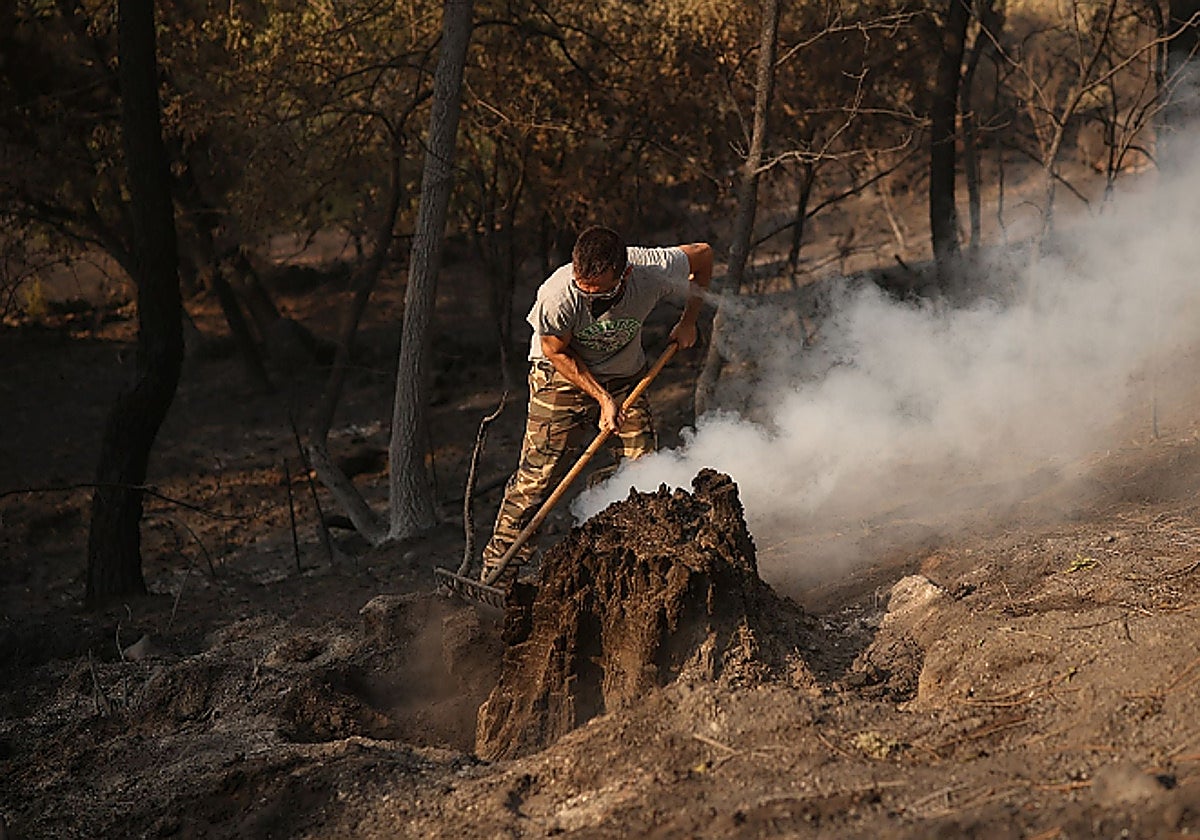
He outlines the risks of breathing in smoke from fires such as those currently ravaging vast areas of Ávila, Madrid and Castellón.
The severity of smoke inhalation is directly related to the scale of the fire. "The closer we are to the fire, the larger it is and the longer we are exposed to the smoke, the greater the impact on the body," González Barcala warns.
He describes the condition as "multisystemic". "Once smoke enters through the mouth or nose, the body responds to this with inflammation that affects all organs," he says.
González Barcala gives a wound as an example. "When we cut ourselves, the skin forms a scab. In this case, when smoke enters the body, it generates certain compounds (the equivalent of a scab on a wound) that travel through the bloodstream and cause damage that goes beyond lung disease."
González Barcala warns that "smoke not only affects people with asthma and COPD, but also leads to more lung infections such as pneumonia, as well as more arrhythmias, heart attacks and strokes".
Plastic debris
González Barcala states that "there is very solid evidence regarding these consequences".
"On the one hand, there are black carbon particles (soot) and micro-ash; on the other, the PM2.5 particles in the smoke, which are extremely small (measured in micrometres) and can penetrate as far as the tips of the bronchi; in addition, there are sulphur and nitrogen derivatives," he describes the harmful particles that enter the body.
This dangerous cocktail has an even more detrimental impact on health because "in the forest, it is not just trees and plants that are burning: there are also large amounts of plastic waste, which makes this smoke even more polluting".
González Barcala explains that the severity depends on the person's pre-existing state of health. "A healthy young person who has not been exposed to very intense smoke is unlikely to suffer any long-term effects, but for vulnerable groups such as the elderly and children or patients with high blood pressure, diabetes or respiratory problems… the risk increases."
There is a risk even when the fire cannot be seen or smelled.
"When the wind changes, the smoke changes direction. Just because you can't see the ash doesn'y mean the air isn't heavily polluted," he warns.
"Smoke and ash can travel very far. One need only recall that dust from the Sahara has been detected in South America. In the event of a fire, I believe that people living 30 or 40 kilometres away from a major blaze should already be taking precautions," González Barcala recommends.
The fires in central Spain are on that scale. "To avoid the effects caused by breathing in that smoke, the safest thing to do is to stay indoors with doors and windows closed and damp cloths in the gaps," the expert says.
If you have to go outside, "you must always wear a face mask". He also advises against going closer to the fire to record a video, especially if you have not taken precautionary measures.
"Any mask will do. If you don't have one, a handkerchief over your nose and mouth is better than nothing," the pulmonologist says.
If you have a lower-protection mask or a simple handkerchief or piece of cloth, González Barcala recommends dampening it. "The moisture causes the contaminant particles to adhere to the fabric, making it denser. The mouth is a more powerful entry point for air than the nose, which has more protective barriers, so you should avoid breathing through your mouth as much as possible."
![[]](http://static.vocstatic.com/voc26/latest/assets/images/favicon/surinenglish/apple-touch-icon-57x57.png)