
Health
Costa del Sol Hospital introduces MRI-guided breast biopsies to advance early cancer detection
New technique at Marbella hospital eliminates need for exploratory surgery on complex lesions visible only on MRI scans

Marbella
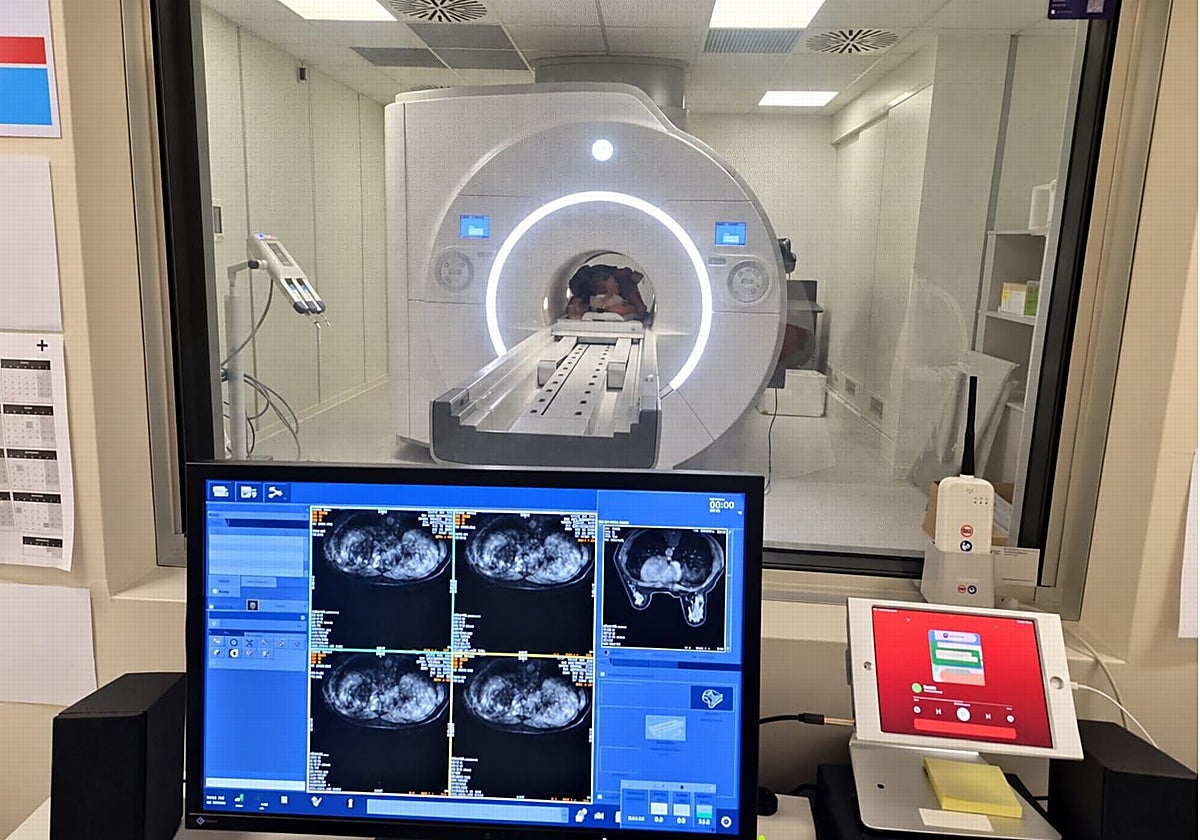
The radiology department at the Costa del Sol University Hospital (HUCS) in Marbella has introduced magnetic resonance-guided breast biopsy technology, marking a major advance ... in the early diagnosis and treatment of complex breast cancer cases across the Western Costa del Sol.
The state-of-the-art procedure, implemented through the Andalusian Health Service (SAS), allows specialists to target suspicious lesions that are visible exclusively on MRI scans and cannot be detected using standard ultrasound or digital mammography.
Until now, patients with lesions detected solely via MRI had to undergo invasive exploratory surgery in an operating theatre. The new technique enables the hospital's specialized breast radiology team to precisely guide biopsy instruments to abnormalities measuring just a few millimetres.
Dr Gerardo Blanco, head of the breast imaging section at HUCS, led the introduction of the technique, which utilizes a vacuum-assisted biopsy (BAV) system. "This is a minimally invasive technique that uses a thick needle connected to a vacuum aspiration system to extract samples of suspicious tissue," explained Dr Blanco. "It allows multiple samples to be obtained continuously with a single puncture," avoiding the repeated insertions required by conventional core needle biopsies.
The procedure is performed on an outpatient basis under local anaesthetic, taking between 30 and 45 minutes. Following sample collection, radiologists place a microclip marker at the site to guide future surgical or medical treatment, allowing patients to return home the same day.
Dr Carmen Lozano, head of radiology at HUCS, emphasized the impact on surgical precision: "This technique enables us to obtain a definitive map of the tumour. Not only do we confirm the presence of malignant cells at a very early stage, but we also determine the actual extent of the lesion... reducing the need for repeat operations to zero."
The hospital estimates that around 30 women per year across the health district - primarily those with dense breasts, high genetic risk, or suspected secondary tumour foci - will benefit from the new procedure.
