
Longevity
Chronological age vs biological age: does your ID card show the same years as your body?
While one shows the time passed since birth, the other is linked to the ageing of cells, tissues and organs

Malaga
"Age is just a number" is a well-known and partially true phrase. While age is certainly a number, it can change depending on ... which age we are referring to: chronological or biological.
Chronological age indicates the years that have passed since birth and is presented on any form of ID. It is based solely on the passing of time.
But time does not pass exactly the same for everyone, some age faster than others, some age faster than others, showing wrinkles sooner or developing diseases associated with ageing.
This is why some people in their 60s can maintain daily routines like walking 10 kilometres, whereas some 50 year olds may struggle to get up from the sofa.
This is where biological age comes into play, this reflects the health and the functioning of a person's biological systems. It is more accurate than chronological age in predicting the rate of ageing and can fluctuate to be higher or lower than the number that appears on your ID.
Biological age reflects the body's actual condition and determines the rate of ageing; it does not necessarily correspond to chronological age
Biological age is linked to the degree of cell, tissue and organ ageing (some may be older than others), rather than to the calendar. It reflects how effectively the body has aged and how this could shape its future.
As the CSIC researcher at the institute of economics, geography and demography, Alberto Palloni, who participated in an international study on a new method to identify biological changes, says, "having a biological age higher than the chronological age implies a higher risk of dying at an early age".
The biological age is mainly influenced by genetic and environmental factors (lifestyle, physical fitness, exercise, diet, stress management, personal relationships,etc.).
AUX STEP FOR JS
With the study of biological age, the scientific aim is not to make people look younger, but to calculate the increased risk of suffering from certain age-related conditions, including cardiovascular, respiratory, and neurodegenerative diseases. The objective is to implement measures aimed at promoting healthy ageing, enhancing longevity, as well as preventing and managing diseases.
How to lower your biological age
If your biological age is lower than your chronological age, congratulations! Keep up the good work. But if your biological age is higher than the age listed on your ID, all is not lost.
"If there are no serious underlying conditions or unfavorable genetic factors," biological age can be influenced "by modifying certain lifestyle habits," notes Mariona Jové Font, a biologist and member of the Spanish Society of Geriatrics and Gerontology.
The recommendations given to the patient will vary depending on which organ or organs are showing advanced signs of ageing; for example, the approach for the lungs is different from that for the brain.
AUX STEP FOR JS
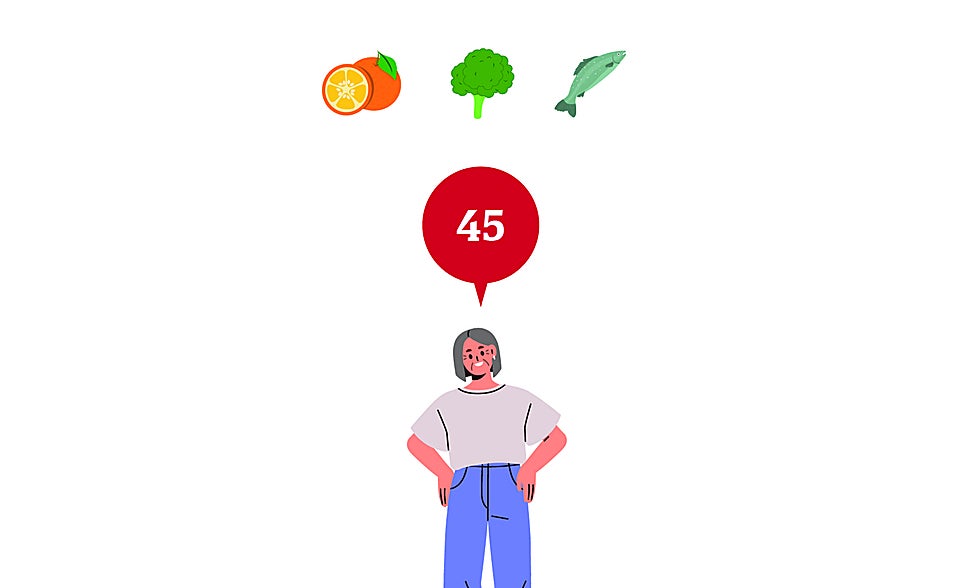
However, in general terms, it is possible to develop an action plan that includes areas such as nutrition, supplementation, exercise, lifestyle adjustments, and stress management to improve ageing at the cellular and physiological levels. Numerous studies also support moderate calorie restriction (consuming fewer calories than the body burns).
A balanced diet, exercise, sleep, stress management, and avoiding harmful substances contribute to better ageing at the cellular and physiological levels
Physical exercise is essential, as it improves cardiovascular function, increases muscle mass, and stimulates the production of natural antioxidants. A sedentary lifestyle is directly linked to telomere shortening (a key element of our DNA), while regular exercise that combines strength and cardiovascular training improves mitochondrial function and helps regulate biological age.
However, if a person's lifestyle has already caused excessive deterioration or if there is a genetic predisposition to a certain condition, the situation changes. Just as in a family where, for example, the grandmother died at age 100, there is a higher probability that her descendants will also live long lives, the same may be true if the probability relates to a genetic disease.
Tests to calculate biological age
Biological age is measured in various ways, although the markers most commonly used by biologists are, on the one hand, epigenetic clocks - specifically, changes in DNA methylation that accumulate in cells over a lifetime - and, on the other hand, telomere length.
There is a rising trend towards visiting private clinics to undergo biological age testing. Biologist Mariona José Font is skeptical of this approach. "If it were sufficiently proven which parameters are best to analyse, perhaps, but we don't have a single index that has been validly tested at the population level. With these kinds of things, we have to proceed with great caution," she argues.
Despite the progress, there are still debates about the accuracy and reliability of some of these tests. Critics point out that it is essential to interpret the results within a broader context and under the guidance of healthcare professionals.
These types of tests typically include DNA analysis (measuring DNA methylation patterns or telomere length), blood tests (analysing biomarkers correlated with cellular ageing), saliva samples, and, in some cases, image analysis using artificial intelligence algorithms to analyse photographs and estimate biological age.
The techniques vary, and in some cases, in addition to tests that assess the body's functional status and cellular ageing, physiological evaluations (stress tests, endurance, flexibility), biochemical analyses (cholesterol, glucose, inflammation), and anthropometric measurements (weight, body fat, muscle mass) are performed.
Credit
-
Design Encarni Hinojosa
![[]](http://static.vocstatic.com/voc26/latest/assets/images/favicon/surinenglish/apple-touch-icon-57x57.png)