
Health
Malaga sees surge in severe e-scooter crashes requiring complex joint reconstruction surgery
Trauma specialists warn a third of victims end up on the operating table as road collisions replace pedestrian falls following council bylaw changes
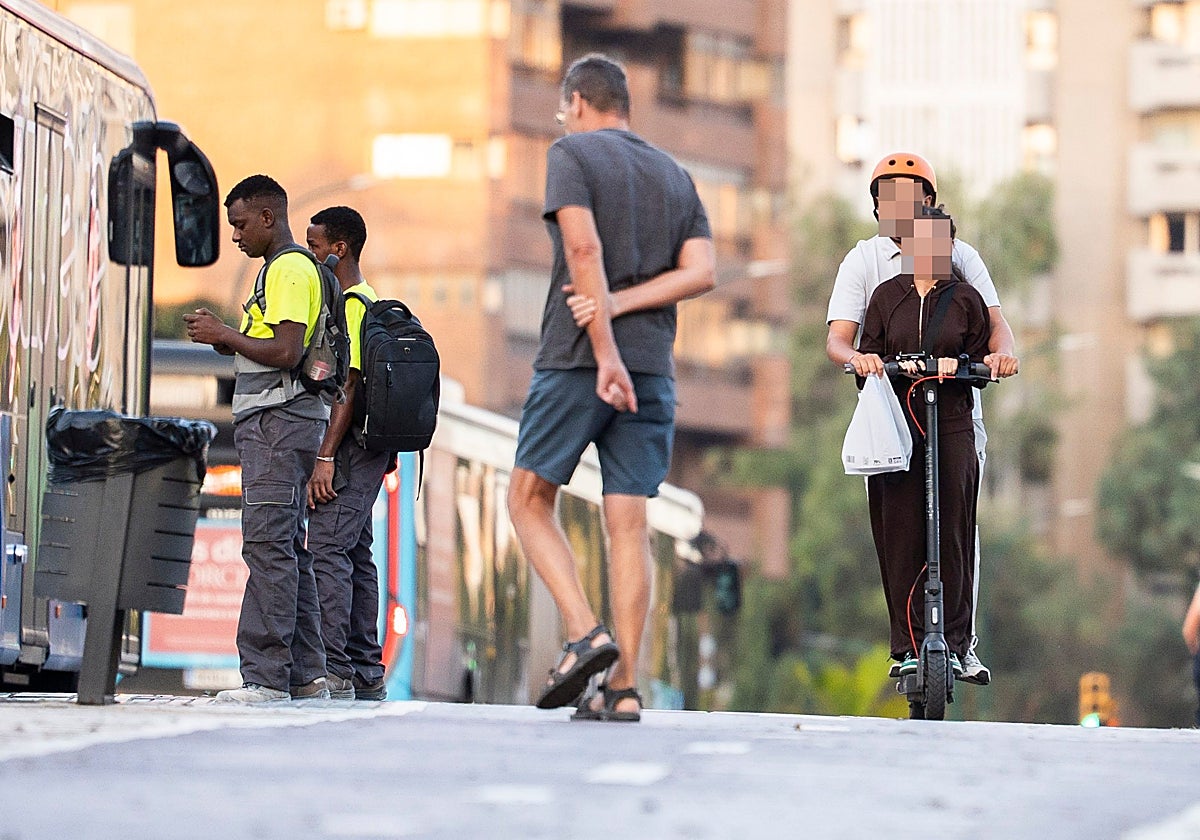

It all began between in the summer of 2018 and early 2019. Scooter-sharing companies began to set up shop in Malaga. In January 2021, ... an amendment to the city council's transport bylaw came into force, banning scooters from pavements and pedestrian areas and requiring them to use roads and cycle lanes.
As they became part of the traffic flow alongside vehicles, the number of pedestrians being hit by vehicles fell, while the number of collisions on the roads soared, leading in recent years to an exponential increase in serious fractures and highly complex surgical procedures.
Hospital Regional A&E doctor Juan Paz warns in a video posted on social media that, in recent years, the number of serious injuries caused by electric scooter accidents has risen exponentially. The victim is usually a young person with severe head injuries, chest and abdominal injuries and fractures to the limbs. Many end up in intensive care, in the operating theatre for emergency surgery and some even in the cemetery.
Related story
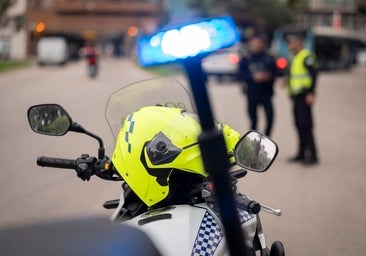
The causes of these accidents, Dr Paz says, are not wearing a helmet, exceeding the speed limit, failing to follow the rules or having consumed alcohol or drugs. The Local Police are deeply concerned about the severity of such accidents and the fact that riders are not wearing helmets that also protect the face.
A study by the UMA (University of Malaga) found in January that injuries caused by electric scooters have risen from an incidence of 1.7 per 100,000 inhabitants in 2018 to almost 50 in 2022. Furthermore, following the regulatory change, accidents involving pedestrians fell from 10.9 per cent to 5.2 per cent, but collisions with motor vehicles rose (from 8.8 per cent to 18 per cent).
David González from the department of traumatology at the UMA says that the most common injuries impact the face, head, neck and limbs. "Around 35 per cent of fractures occur in the facial bones." According to him and researcher Iskandar Tamimi, helmet use is low.
Injuries
Head of the traumatology and orthopaedic surgery department at the Quirónsalud hospital in Malaga Rafael López Arévalo explains that, initially, injuries to the upper limbs, face and skull were the most common. "Arm fractures are still common, but we are seeing more and more injuries to the legs, ranging from ankle and tibia fractures to femur fractures. Previously, the injuries were less severe," he says.
Dr López Arévalo explains that the change is a response to the rise in collisions with motor vehicles since scooters began to be used on the road. Previously, falls and collisions with obstacles were the most common, whereas now high-impact collisions are more frequent.
Many of these injuries require highly complex procedures. He estimates that between 30 per cent and 40 per cent of the patients they treat for these accidents require surgery.
"When fractures affect the joints and involve multiple fragments, it is necessary to reconstruct them anatomically to reduce the risk of osteoarthritis and long-term complications," Dr López Arévalo warns. This may lead to incapacity for work in the future.
Reconstruction
Dr López Arévalo is clear in his advice: "Just as a motorcyclist or car driver needs a driving test, there should be a test for e-scooter riders. When injuries are caused by high-impact collisions (those involving other vehicles or high-speed collisions with an obstacle) they result in traumatic brain injury. Facial injuries have not decreased, because helmet protection does not cover the face in the same way as motorcycle helmets do."
There are also fewer accidents involving pedestrians. Dr López Arévalo has operated on "elderly ladies with hip fractures, not just one, but several, caused by scooters".
"It's a very unstable vehicle, with a very high centre of gravity, on which you're completely exposed. You have no protection whatsoever. The wheels are so small that they skid much more easily and when they get stuck, you're thrown forwards, at which point an injury to your upper limbs is virtually guaranteed," he states.
Gravity
Head of the traumatology and orthopaedic surgery department at HM Hospitales in Malaga Dr Manuel Díaz Samada says that these surgeries are more common than they were a few years ago.
"These are more serious fractures because someone riding a scooter is much more exposed than someone travelling in a car or on a motorbike, and the impact is much more severe," he says.
Dr Díaz Samada points out that they see "many patients with vertebral fractures and, above all, fractures of the femur, which is the area where the femur and tibia meet, in other words, the lower limb, as well as some fractures of the wrist, humerus, spine and lower limb".
"They are more complex because they involve direct trauma to the person. It's not like the impact in a car, where the vehicle absorbs the shock. This affects the person directly," Dr Díaz Samada says.
"Usually, injuries to limbs, particularly the lower limbs, often end up requiring surgery, because they are more complex than a simple slip or fall in the street. Injuries caused by direct impact at speed are more difficult to treat conservatively," the doctor says.
He estimates that eight out of ten incidents involving pedestrians hit by vehicles result in surgery.
![[]](http://static.vocstatic.com/voc26/latest/assets/images/favicon/surinenglish/apple-touch-icon-57x57.png)