
Gardening in southern Spain
Fuchsia triphylla
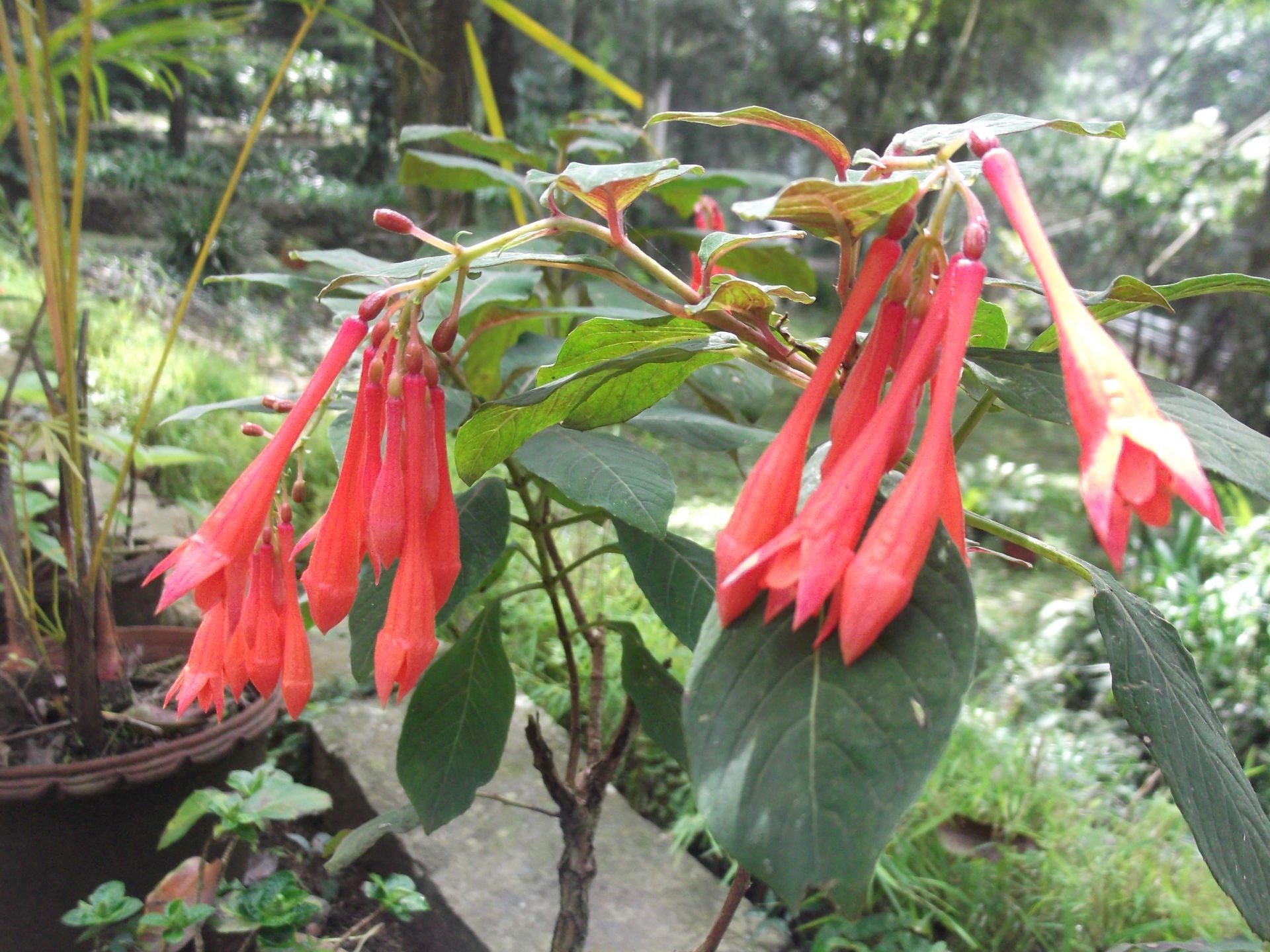
Commonly referred to as the firecracker or honeysuckle fuchsia this deciduous shrub features simple, large, dark green leaves and long, pendulous, tubular flowers
Denise Bush
Fuchsia triphylla is a member of the Onagraceae family and is one of over 110 species that comprise the Fuchsia genus.
French botanist Charles Plumier is accredited with the discovery and naming of the plant during an early 18th-century expedition to the Americas.
Native to the Caribbean island of Hispaniola, comprising Haiti and the Dominican Republic, he named the genus in honour of Leonhart Fuchs, a German physician, botanist and pioneer in the study of medicinal plants. Historically, Fuchsia was used as an antipyretic to reduce fevers, as a decongestant and as a remedy for uterine ailments.
Commonly referred to as the firecracker or honeysuckle fuchsia this deciduous shrub features simple, large, dark green or velvety bronze-tinted elliptical leaves with an upright habit and arching stems.
While wild specimens can reach up to three metres in height, cultivated garden varieties typically range between 90 and 120 centimetres tall and up to 1.6 metres wide.
The plant is best known for its long, pendulous, tubular flowers which have extended stamens and which form in clusters at the ends of the branches. The blooms can be shades of red-orange, red-purple, pink, white and warm coral-red, making them particularly attractive to butterflies.
The main flowering season extends from early spring to late autumn, with continual blooms produced on new growth.
In mild winter weather, sporadic flowering may continue. For optimal growth, the plant should be situated in bright, indirect light, with protection from hot afternoon sun and frost.
Soil should be kept evenly moist rather than waterlogged, watering whenever the top inch of soil feels dry. Regular feeding with a balanced organic fertiliser is advisable during the long blooming period.
Pruning should be carried out in late winter or early spring before new growth appears. Removing dead or diseased wood and cutting back the remaining branches by one third will encourage a bushier habit and prolific flowers.
Pinching out the new spring growth will also help the production of flowers.
Notable cultivars include Gartenmeister Bonstedt, a hybrid said to be able to withstand higher temperatures than most other varieties.
![[]](http://static.vocstatic.com/voc26/latest/assets/images/favicon/surinenglish/apple-touch-icon-57x57.png)