
Food and drink
A baker from a village in Malaga who was born in his bakery and carries on a tradition dating back two centuries
Miguel is 65 years old and continues to bake the artisan bread he learnt from his mother in Coín, although the future of the family business is uncertain
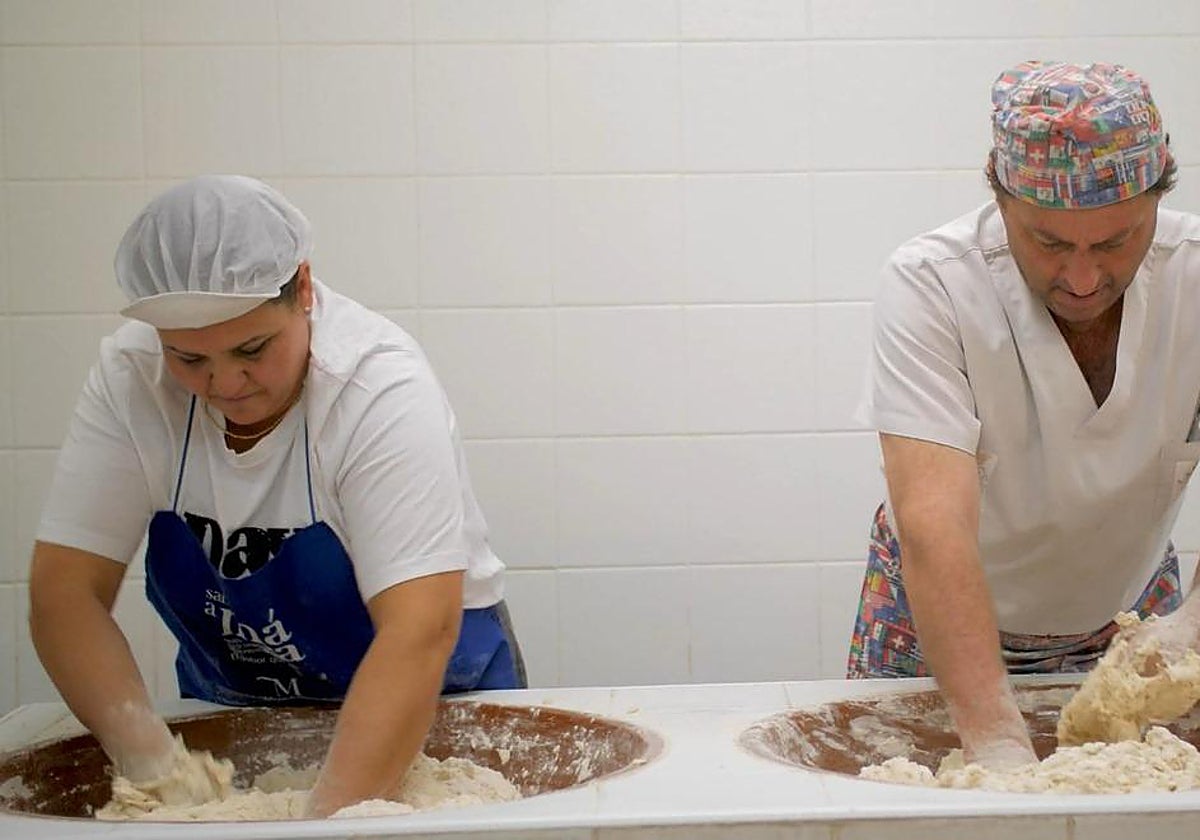

Miguel Urbaneja was born on 28 August 1961, but not in a hospital room. His first home was a bakery in Coín, among earthenware bowls, ... bread baskets and the comings and goings of a family that had been working with flour for generations. That is where he was born, and that is where he remains, 65 years on, upholding a method of making bread that has scarcely changed since the early 19th century. “I was born amongst earthenware bowls and baskets of bread,” he recalls matter-of-factly. According to what his relatives told him, his mother barely had time to recover from giving birth before returning to the bakery. It was a different era, and bread-making knew no rest.
According to accounts passed down through the generations, the origins of this family history date back to sometime between 1815 and 1825. There is no exact date to pinpoint the business’s founding, but there is a tradition that has endured for approximately two centuries. At La Curruca, as the bakery is known, time seems to have stood still in some respects: the dough is still kneaded by hand in earthenware bowls and the bread is still baked in wood-fired ovens, even though the industry has been offering much quicker alternatives for decades.
However, Miguel’s earliest memories are not defined solely by the smell of freshly baked bread. He was five years old when he saw his father suddenly fall ill whilst making some traditional rosquetes. That incident, which would ultimately lead to his death, changed family life forever. His mother took over the business and, for almost four decades, carried on with work that was as demanding as it was necessary to provide for her family. "She didn’t transform it, she didn’t change it," explains Miguel, who still recognises the sacrifice involved in keeping that way of working intact.
Amid the painful memories, he also cherishes others that bring a smile to his face. As a child, he used to accompany his father to fetch flour on a donkey, and he began to learn the art of kneading dough almost before he understood what it meant to have a trade. One of his happiest moments came when he was just eight years old, when he managed to make sourdough starter for the first time without any help. He was so delighted that he ran out to tell a neighbour. To anyone else, it might have seemed like a minor domestic feat; to that little boy, it was proof that he was beginning to master the work he had seen his elders do.
A profession that leaves no room for haste
Today, that knowledge is still evident in every batch. The usual process takes around four or five hours, including kneading, proving and baking, although the Malaga-born baker admits that he has occasionally had to speed up the process to fulfil urgent orders. The secret, he says, lies in understanding the dough and knowing how it responds. It also lies in the oven, where he uses different types of wood – from olive to pine, almond or holm oak – each of which lends its own distinctive characteristics to the baking process. The result is a loaf with a distinctive crust and texture which, he explains, can be kept in good condition for four or five days.
Sticking to these methods comes at a cost that isn’t reflected in the price on the counter. “We could have changed the way we work, as other bakeries did some time ago. Even my mother suggested we buy a dough mixer and a weighing machine, but we decided to carry on as usual because we were worried the bread would no longer be the same,” explains Miguel, convinced that preserving that traditional method was also a way of preserving the family’s identity. Demand became so high that he opened a second bakery just a few metres from the original, on Calle Cañuelo.
The future of a tradition
At the age of 65, Miguel watches with concern as artisanal businesses disappear and consumer habits change. But there is one uncertainty that particularly concerns him: the family succession. He has three children, two of whom have chosen career paths far removed from the bakery, whilst the youngest is still studying. For now, none of them has shown a clear intention to carry on the business. “We don’t know exactly what’s going to happen,” he admits, aware that keeping this craft alive demands a level of dedication that is difficult to reconcile with other aspirations.
After two centuries of family history, the future of La Curruca remains uncertain. Miguel makes no secret of the pride he feels in his craft, even going so far as to compare himself, with a laugh, to Cristiano Ronaldo: the footballer with the ball, and he with the dough. Behind the joke lies a whole life devoted to perfecting a craft passed down through the generations. That little boy who ran off to announce that he’d made his first sourdough starter is still kneading dough in Coín today.
