
Educatoin and Learning webinar
Laying the foundations for a global future
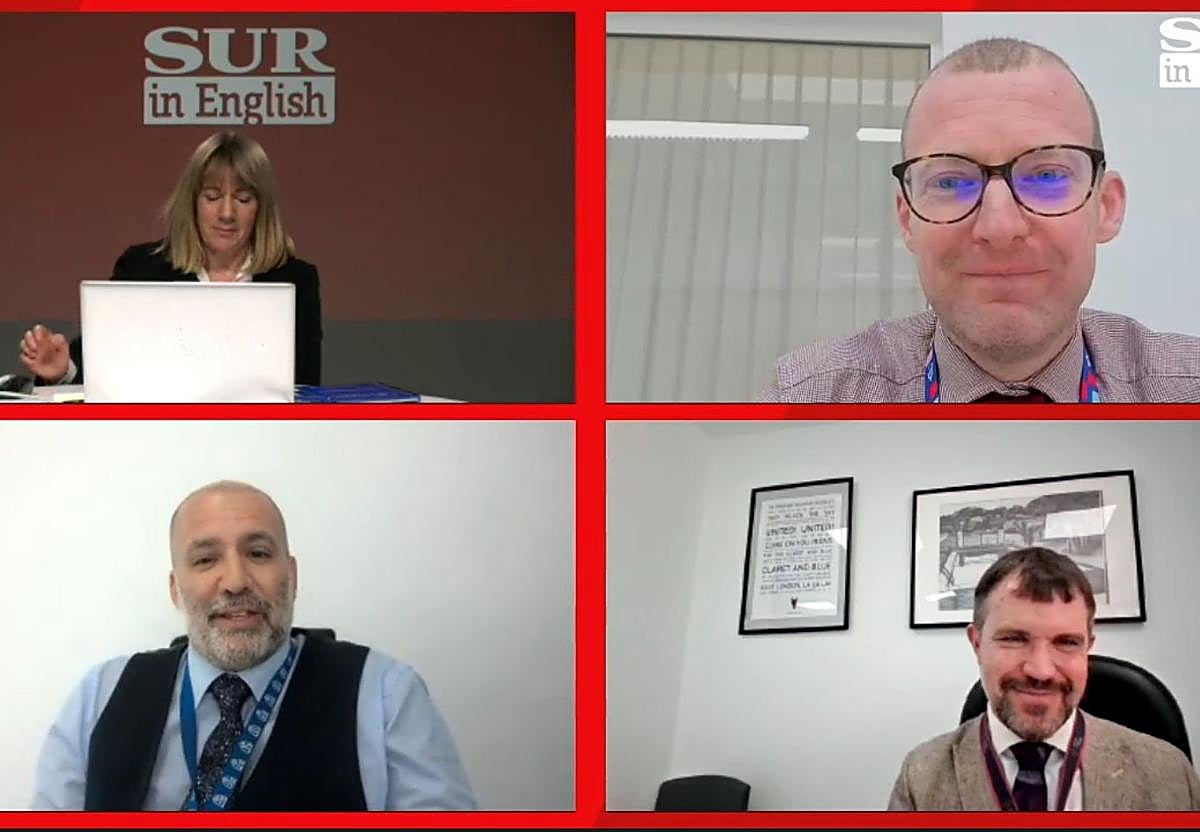
Headteachers from leading independent schools in Malaga joined SUR in English for the international education on the Costa del Sol webinar on Monday 9 March
Jennie Rhodes
Southern Spain, with its large international population, is home to some of the most prestigious independent schools in the country.
The schools are responsible for educating thousands of youngsters from preschool right up to those important years before embarking on university.
For its 2026 Education and Learning supplement SUR in English brought together head teachers from some of those schools to discuss their achievements and challenges during a forum on Monday 9 March.
Laying the foundations for a global future is the important role and responsibility of these schools as they work towards maintaining the high quality of education international schools and colleges in the south of Spain are renowned for.
Speaking at Monday morning’s webinar were representatives from four of those international schools: Richard Sutcliffe, School Director at English International College, Marbella; Gavin Palmer, Headteacher at Sunny View School, Torremolinos; Joseph Short, Head of Secondary and Sixth Form at Laude San Pedro International College; and Stefan Rumistrzewicz, Principal at British School of Málaga.
SUR in English editor Rachel Haynes welcomed participants and those watching the live stream before handing over to Jennie Rhodes who introduced the panellists and moderated the discussion.
British curriculum
Introducing himself and his school, Gavin Palmer said that Sunny View was now in its “55th year of international education on the Costa del Sol” and accepts children from aged two to 18, offering iGCSEs and A-Levels to students of 14 different nationalities.
Stefan Rumistrzewicz explained that at the British School of Málaga (BSM), around 40 per cent of the just over 1000 students are Spanish and 60 per cent are international, which the principal highlighted “reflects the changing demographic of Malaga”.

“Settling in at Sunny View starts with the warmth that students feel from the very first time they visit” “It is vital that what schools are teaching is being reinforced at home. There needs to be consistent messaging so that young people have a really good grasp of the society they are operating in”
Gavin Palmer
Headteacher. Sunny View School, Torremolinos
The school, which is situated just outside Malaga city centre, offers the British curriculum including iGCSEs, A-Levels and BTECs (Business and Technology Education Council).
Richard Sutcliffe explained that British students make up around 40 per cent of the English International College (EIC), which has been established for 40 years.
Like the other schools, the EIC takes students from age two to 18 and follows the British system, “culminating in iGCSEs and A-Levels”.
“In an international environment, we are particularly mindful that students may also be adapting to a new language, culture or education system.” “Independent learning is extremely important because it develops confidence, curiosity, and problem-solving skills”
Joseph Short
Head of Secondary & Sixth Form. Laude San Pedro International College
Joseph Short of Laude San Pedro said that “in an international environment, we are particularly mindful that students may also be adapting to a new language, culture, or education system, so patience and communication with parents are key”.
Settling in to a new school
The panellists started off by explaining how they help new students and parents to settle in at their schools. Gavin Palmer said that at Sunny View School “it starts with the warmth that students feel from the very first time they visit”.
He went on to say that the school is “very careful in making sure an incoming student is matched with a buddy to learn to navigate the school”.
He added that it is vital that students - especially at preschool and primary level - know who their class teacher is and that they are the people that the student can go to. “Proactively working with family to make sure a student is integrated as quickly as possible is key.”

“Establishing a culture of openness is vital so that students feel comfortable to come forward and not hide their feelings”. “AI is a marvellous tool with lots of opportunities but we need to teach students that using AI requires a skillset with powers of discernment, critical thought and ethics”
Stefan Rumistrzewicz
Principal. British School of Málaga
Stefan Rumistrzewicz of the BSM echoed Palmer’s words and added that at the British School of Málaga, where they welcome “a high number of new parents and students every year”, induction days are key so that students and parents get to meet teachers and other staff.
Similarly to Sunny View, new students at BSM are assigned a buddy to “show them the ropes”. Parents also act as ambassadors to welcome families who have perhaps moved from other countries or other parts of Spain.
Richard Sutcliffe highlighted that as the EIC has just 440 students “we get to have that personal touch with families” and that the school has “an open-door policy for parents”.
Joseph Short said, “At an international school like Laude, new students arrive throughout the year, so settling them well is extremely important. We focus on three main areas: orientation, peer support and pastoral monitoring.” He added that there is a “strong emphasis on peer integration”, with the school often assigning a “buddy or form support”.
Helping students to flourish
The discussion moved on to how the schools work with all students to encourage both high achievers and lower achievers to reach their individual goals.

“Sometimes students might open up to a teacher before they do to their parents”. “The ability to discern what is morally correct and right for humanity is key, as the education sector learns to handle all of these technological changes”
Richard Sutcliffe. Director, English International College
Richard Sutcliffe explained that for high achievers the EIC has various clubs and support structures in terms of future pathways, including university applications and careers advice.
He added that the school provides support in different languages to reflect the different nationalities represented at the school.
Gavin Palmer also said that at Sunny View Special Educational Needs (SEN) works hand in hand with English as an additional language department to make sure all children are supported and that the teacher-to-class ratio is important to making sure everyone gets the help they need.
Palmer pointed out that a child might have an emotional or social issue that they are not communicating which might be “the hurdle that is preventing them from flourishing”.
This led the panellists onto the next area which was what mechanisms the schools have in place to manage behaviour and responding to bullying.
“It’s an ever increasingly dangerous time for children with social media and bullying might be 24 hours,” Richard Sutcliffe of EIC said.
All of the panellists agreed that it is an increasingly difficult area to tackle but that it is key for schools to make sure that students and parents can come to them. “Sometimes students might open up to a teacher before they do to their parents,” he said.
For high achievers, Joseph Short explained that at Laude San Pedro, the focus is on “challenge and enrichment” and that “the goal is to ensure that able students are not just completing work faster, but thinking more deeply and creatively”.
Stefan Rumistrzewicz of BSM agreed and added that “establishing a culture of openness” is vital so that students feel comfortable to “come forward and not hide their feelings” but agreed that “It’s a very complex and difficult issue.”
Gavin Palmer of Sunny View School also stressed the importance of “ensuring a culture of openness” and that pastoral care and having trusted adults are important aspects of the school community.
Echoing these words, Joseph Short also said that Laude relies on “strong collaboration between teachers, support staff, and parents to ensure students receive the help they need”.
Technology and AI
Leading on from the discussion around behaviour and bullying, the panel reflected on whether the responsibilities of societal failures are falling onto schools. Richard Sutcliffe of EIC pointed out that “society always puts the blame on education” but now that technology is moving so fast “we need to support rather than blame schools”.
He went on to say that in a rapidly changing world where technology is developing so quickly, “no one knows what you are preparing your child for. Nobody knows, when a child starts school at the age of three, what the world will look like when they leave 15 years later. We need to strengthen students’ characters and resilience to handle life”.
Taking an optimistic view on artificial intelligence, Stefan Rumistrzewicz of BSM said, “It’s a marvellous tool with lots of opportunities” but just like the internet is misused, we need to teach students that using AI requires a “skillset with powers of discernment, critical thought and ethics”.
He added, “There’s more and more knowledge at our fingertips” and “the ability to discern what is morally correct and right for humanity” is key, as the education sector learns to handle all of these changes.
Gavin Palmer of Sunny View agreed with the heads of the EIC and BSM and added, “It is vital that what schools are teaching is being reinforced at home. There needs to be consistent messaging so that young people have a really good grasp of the society they are operating in.”
Independent learning
Talking about independent learning, the head of Sunny View stressed the importance of this skillset, saying that teaching students to learn independently from an early age sets them up so that when they get older and do GCSEs or A-Levels, they are able to “organise their time, think of their own wellbeing and get the right balance”, adding: “It’s an ongoing quest.”
Joseph Short said that at Laude, “independent learning is extremely important because it develops confidence, curiosity, and problem-solving skills.”
He added that “students should not only learn to follow instructions but also to ask questions, explore ideas, and take responsibility for their own learning” and that “staff-student ratio can influence how effectively this happens. Smaller ratios allow teachers to monitor progress closely, and support individual needs.”
Rumistrzewicz of BSM pointed out that “learning through exploring and making mistakes is how we all learn” and that it’s important that students get to know that and are comfortable with it”.
Richard Sutcliffe of EIC said that schools need to create “independent thinkers” who “go out there and are confident of their own ability” but he said that this takes “practice” and that students must learn that if they want to get the top grades then they “have to do something about it”.
Conclusions
The discussion went back to the importance of an open-door policy and getting parents involved in their children’s education, which all three participants said that in their schools, events are organised to both encourage parent participation but also to teach students not just about local culture and traditions, but those of the nationalities represented in the schools.
“Lots of families have moved here and the country, culture and language might be alien to what they know. Involvement is really important in that respect, Richard Sutcliffe of EIC said, while Stefan Rumistrzewicz highlighted that Malaga is “becoming more and more cosmopolitan”.
Sutcliffe pointed out that we’re living in a “global community” and that it is “important that we all understand each other - learn about each other’s cultures and generate understanding”.
Joseph Short of Laude San Pedro highlighted the fact that “parent partnerships are essential in education, particularly in an international school community”. He added, “This can be challenging when you have a school with so many nationalities but we make it work.”
All agreed that as educators in international schools, they have the “awareness and responsibility to help families assimilate”. Joseph Short stressed that “ultimately, our aim is to ensure every student feels known, supported, and part of the community as quickly as possible”.
Concluding remarks included the importance of exploring the wide range of international and British schools that the Costa del Sol has to offer before choosing one and also the importance of parents spending time with their children.
“Children are becoming slightly disconnected from society and us - go and do something with them - spend time with your children,” Richard Sutcliffe of EIC concluded. The heads of Sunny View School and British School of Málaga echoed the sentiment.
![[]](http://static.vocstatic.com/voc26/latest/assets/images/favicon/surinenglish/apple-touch-icon-57x57.png)