
1 August - Swiss National Day
In Cordoba, Swiss is synonymous with luxury
In Andaluсia, Córdoba has a clear historical link with Switzerland. Moreover, just like Switzerland, this province can also boast of its watches, cheese and chocolate
Alekk M. Saanders
Cordoba
The historical link between Andalucia and Switzerland stems from the founding of the ‘New Settlements’ in the Sierra Morena. The case is that in the 18th century, many areas of Andalucia were settled by immigrants from Germany, France and Switzerland. King Charles III wished for settlers from Central Europe to come to these lands in order to protect the Camino Real — the old National Highway IV. The settlers were granted 28 bushels of arable land, a house, livestock, tools and a ten-year exemption from taxes.
This Highway IV ran through the small town of La Carlota, situated just over 30 kilometres from Cordoba. Its inhabitants still bear foreign surnames, including Swiss origin. Incidentally, two centuries later, a stream of people set off in the opposite direction. In the mid-20th century, many young Andalusians from Córdoba province emigrated to Switzerland to escape rural poverty and seasonal unemployment. This large-scale outflow of labour peaked between 1962 and 1974, when Switzerland was in need of foreign ‘guest workers’. Apparently, the immigration helped many Cordovians to become wealthy. However, Cordoba itself has always stood out for its wealth.
Suizo Hotel
Córdoba’s first luxury hotel was named after Switzerland. The Hotel Suizo was built in the 1860s, during a period of rapid expansion of the railway network on the Iberian Peninsula. Thanks to the railway, tourist traffic began to flow into Córdoba, where there were no high-class hotels. It was then that the local Puzzini brothers of Swiss origin (whose real names were Nicolás, Fuster and Ambrosio Putzi) recognised this gap in the market and set about opening a hotel in the city. Soon, a neoclassical building covering an area of over 2,000 square metres stood in the centre of Córdoba, boasting 75 comfortable and elegant rooms and featuring an inner courtyard with Moorish columns.
The Hotel Suizo was ranked among the top ten hotels in Spain, distinguished by its spacious galleries, beautiful staircases and an atmosphere of modernity that appealed to all the city’s residents. The hotel offered carriage services, interpreters, a postcard shop and a restaurant serving exquisite French cuisine.
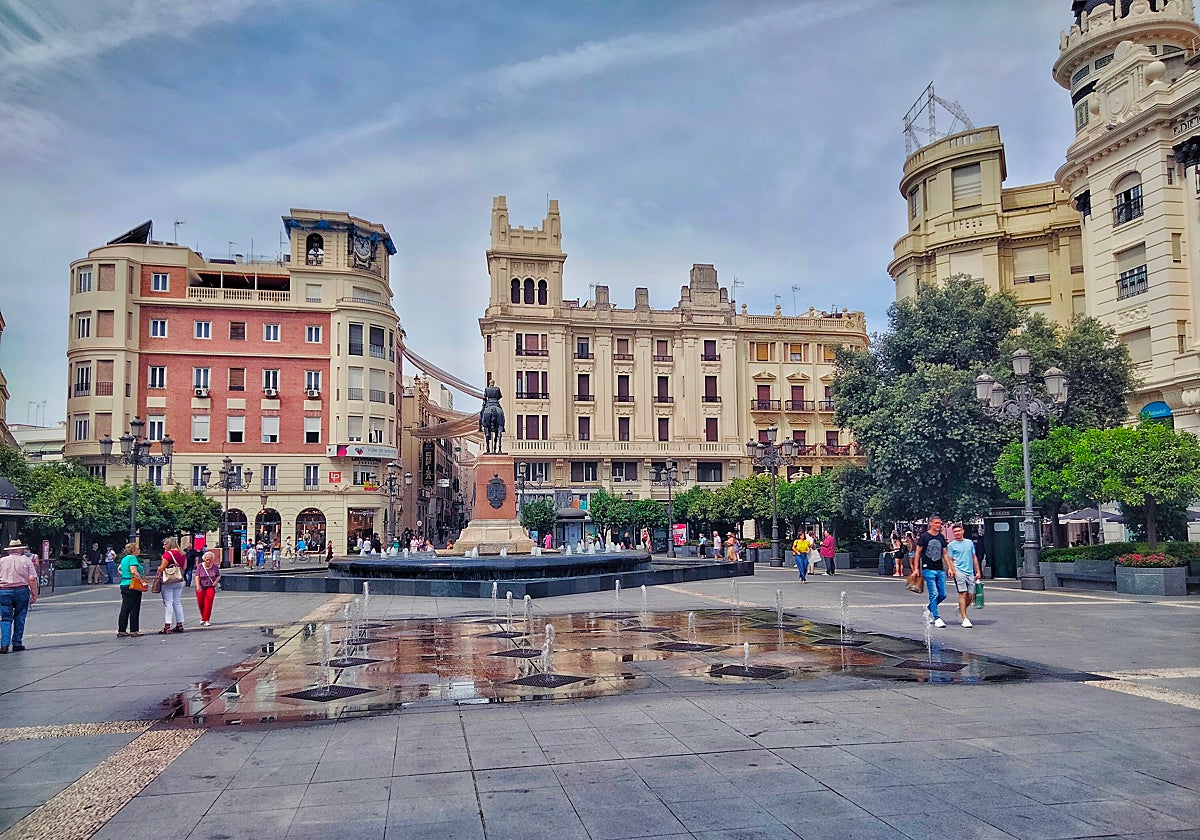
It hosted writers such as Pedro Antonio de Alarcón and José Zorrilla, presidents of the First Republic, as well as members of European royal families, such as Leopold II of Belgium. The demolition of the hotel in 1923 left a vast empty space right in the centre of Córdoba, around which buildings in the Art Deco, Regionalist and Modernist styles were constructed during the 1920s, subsequently forming the new Plaza de las Tendillas.
'Suiza' shop
Swiss watches and jewellery have been sold in Córdoba for 160 years. In July 1866, Swiss-Italian businessman Augusto Campicci opened a jewellery shop called ‘Suiza’ (Switzerland). The shop is still in business today, though it is now located not in the old Plaza de las Tendillas but on Calle Claudio Marcelo. It is worth noting that it continues to preserve the spirit established by its founders, as well as the furniture and interior features dating from the mid-19th century.
Watches
Incidentally, as early as this century, Córdoba appeared on the map as a centre for the production of high-quality watches thanks to the Swiss-founded brand. Festina was founded in 1902 in the town of La Chaux-de-Fonds, which is considered one of the cradles of the Swiss watchmaking industry. From the very beginning, the brand specialised in the production of high-quality watches and, over the years, established itself as one of the world’s most recognisable brands in the watch industry. However, during the Second World War, production was moved to Barcelona. It is not so well-known that in 2002, the Festina Group opened its first head office in Córdoba to manufacture gold watch models, drawing on the region’s strong jewellery traditions and the infrastructure of the local jewellery sector.
Cheese
Córdoba province is renowned for its high-quality, handmade cheeses. For example, at the ‘Calaveruela Quesería Montanera’ cheese dairy, they produce cheese from raw sheep’s milk, which is matured for over four months on wooden boards. This cheese is a gold medallist at the World Cheese Awards. ‘Los Balanchares’ goat’s cheese is made in Zuheros using traditional methods from raw goat’s milk. It has a soft and firm texture and rich, natural rind. ‘Los Pedroches’ sheep’s cheese is a hard cheese with a characteristic firm texture from the northern part of Córdoba, made from the milk of Merino sheep and distinguished by its rich and strong flavour.
Chocolate
Coincidentally, Andalucia’s ‘chocolate capital’ is also located in Córdoba province. Its famous chocolate-making traditions are centred in the mountain town of Rute, which is best known for being home to the world’s largest chocolate nativity scene (Belén de Chocolate), created each year by master confectioners from the company ‘Galleros Artesanos’.
![[]](http://static.vocstatic.com/voc26/latest/assets/images/favicon/surinenglish/apple-touch-icon-57x57.png)