
Gardening in southern Spain
Climbing ylang ylang
In its natural habitat, it relies on the surrounding forest canopy for support, using hook-like structures developed from its flower stalks to anchor itself and climb toward the sunlight
Denise Bush
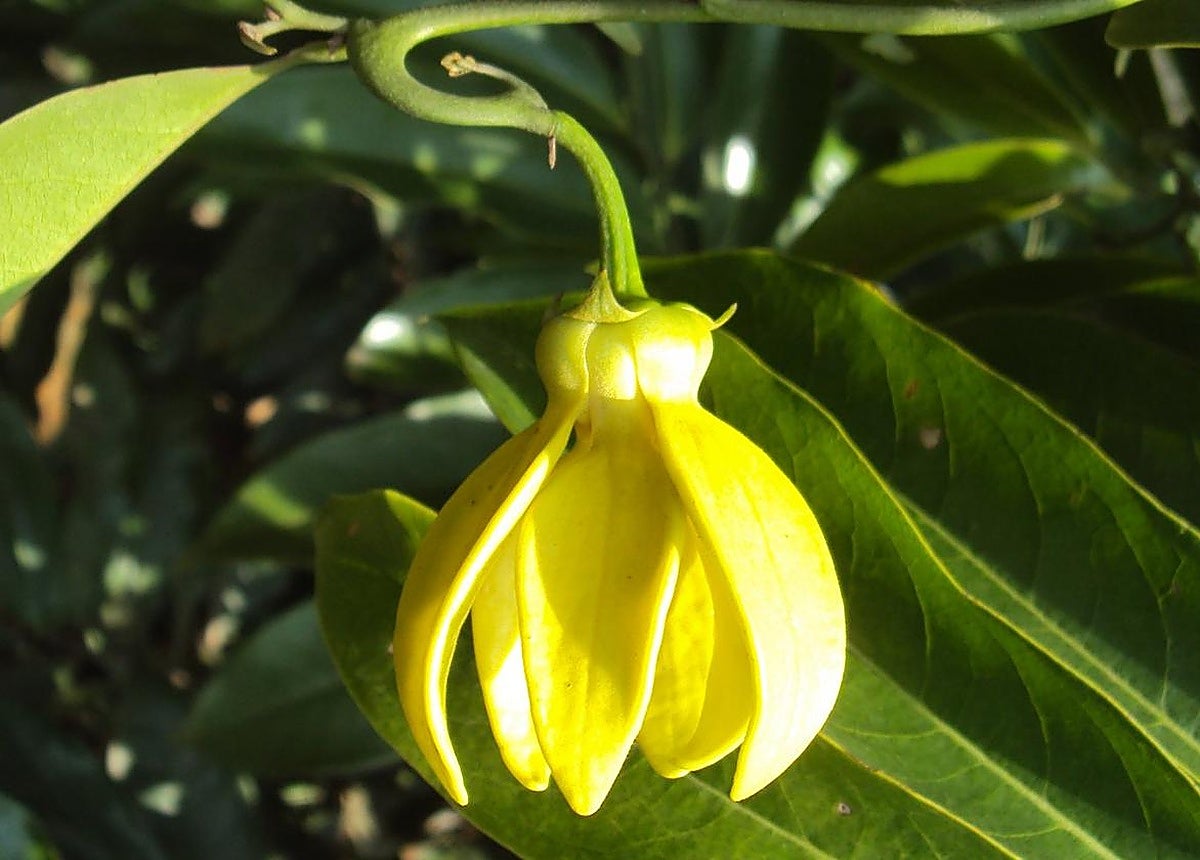
Artabotrys odoratissima, also classified as Artabotrys hexapetalus, is a woody climbing shrub native to the tropical forests of Southern Asia, India, southern China and Sri Lanka. In its natural habitat, it relies on the surrounding forest canopy for support, using hook-like structures developed from its flower stalks to anchor itself and climb toward the sunlight. When mature, this vigorous vine can reach heights of up to ten metres, though it can also be pruned to maintain a more compact, upright shrub.
Commonly called climbing ylang-ylang, it has glossy, lance-shaped leaves that remain green all year. The flowers, which emerge an inconspicuous green, ripen into a vivid yellow. While the flowers themselves are not visually striking, they release an intensely sweet, pungent aroma reminiscent of ripe melons or bananas. After flowering, the vine produces clusters of smooth, berry-like fruits that turn yellow when fully ripe. Propagation can be carried out by either seeds or semi-hardwood cuttings. Seeds from mature fruits, can be cleaned and sown immediately in a warm, compost. Because of a tough outer coat, germination is slow and can take between two and six months. Alternatively, semi-hardwood cuttings taken in late summer and treated with rooting hormone need high humidity and bottom heat to encourage root development.
In traditional Ayurveda, various parts of the plant are used medicinally. Decoctions made from the leaves are traditionally used to alleviate fevers. In some regions, the aromatic volatile oils extracted from the flowers are used to soothe skin irritation.
Modern pharmacological studies have also investigated the plant for its potential antimicrobial, antioxidant and anti-malarial properties, confirming the presence of bioactive compounds in its leaves and stems.
Cultivating this tropical specimen in a Mediterranean climate can present some challenges. The Mediterranean region offers the hot summers that the plant loves, but the dry air and blazing afternoon sun can easily scorch its foliage. It therefore needs a sheltered position in partial shade (especially on the hot afternoons) and consistent, deep irrigation to mimic its humid native environment.
While Artabotrys odoratissima can tolerate the mild winters of coastal areas, it is not frost tolerant and must be grown in containers and moved to a sheltered position in colder areas.
![[]](http://static.vocstatic.com/voc26/latest/assets/images/favicon/surinenglish/apple-touch-icon-57x57.png)