
2 September Day of Ceuta
Ceuta vs Gibraltar: positioned opposite, yet similar
Both Ceuta and Gibraltar are situated directly opposite one another on either side of the Strait. Both are small, heavily fortified political enclaves with a high population density and a distinctive international identity. There are other interesting similarities as well
Alekk M. Saanders
Gibraltar
Since ancient times, Ceuta and Gibraltar have been linked by the mythological Pillars of Hercules — the two headlands flanking the Strait of Gibraltar. According to legend, Hercules parted the two mountains — presumably modern-day Ceuta and Gibraltar.
Ancient connection
Whilst carrying out one of his Twelve Labours, Heracles set off westwards to capture the herd of Geryon. Instead of climbing the enormous mountain, the hero of Greek mythology used his strength to split it in two, creating a passage between the Atlantic Ocean and the Mediterranean Sea. The two halves remaining on either side of the new strait became his legendary pillars.
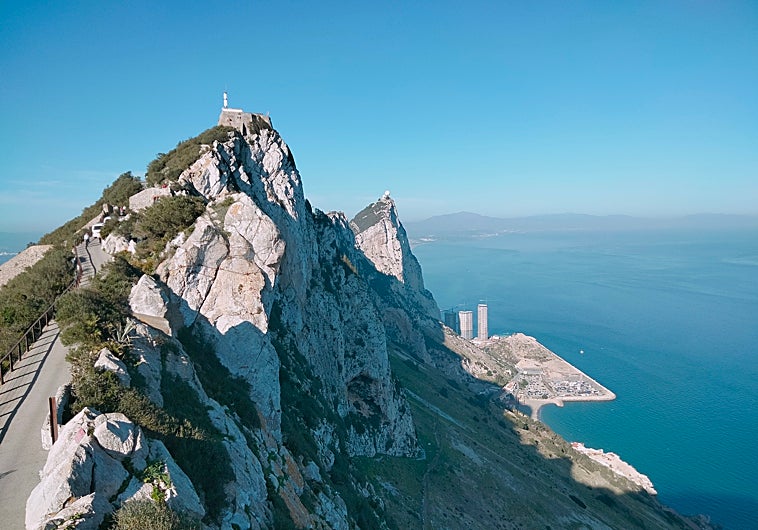
One of them is the Rock of Gibraltar, which was known in ancient times as Mons Calpe, and it forms the European pillar. The African pillar is believed to be in Ceuta. This is the low mountain of Monte Hacho (Mons Abila), which is situated on the Almina Peninsula. (It is worth noting that Mount Jebel Musa, situated next to Ceuta but lying within Moroccan territory, is also recognised as the southern pillar).
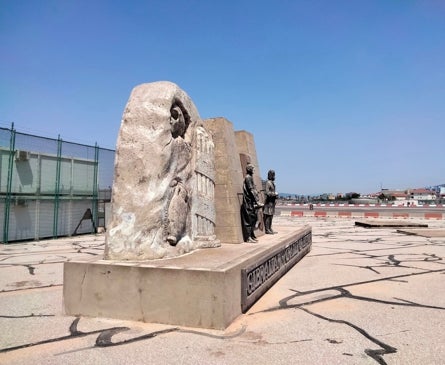
Monte Hacho is topped by the Fortaleza de Hacho fortress which was first built by the Byzantines and, at various points in history, extended by the Arabs, the indigenous people of North Africa (Amazigh), the Portuguese and the Spanish. The Spanish army is currently stationed here. The Chapel ‘Ermita de San Antonio de Padua’ is also located on the slopes of Monte Hacho. Moreover, at the bottom there is Monumento del Llano Amarillo, a 15-metre monument that was moved here from Morocco in 1962 and it is one of the few sculptures left that record Spain's period of Nationalism following the Spanish Civil War.
Both Ceuta and Gibraltar feature monuments dedicated to the mythological Pillars of Hercules
Both Ceuta and Gibraltar feature monuments dedicated to the mythological Pillars of Hercules. The ‘Pillars of Hercules’ viewing platform with a plaque is a must-see for travellers exploring Gibraltar, offering breathtaking panoramic views of the strait. The pillars are also depicted in the monument at the entrance to Gibraltar-city.
The monument to the Pillars of Hercules in Ceuta, named ‘Los Hércules y la Unión del Mundo’, is a massive bronze sculpture. It was created by the sculptor Ginés Serrano-Pagan, a native of Ceuta. The work depicts two enormous bronze pillars being pushed apart by the muscular figure of Hercules, which stands almost 8 metres tall and weighs approximately four tonnes. The monument is situated at the entrance to the port of Ceuta, making it clearly visible to passengers arriving on or departing from the ferries. Incidentally, the official emblem of Andalucia features a young Heracles subduing two lions between the legendary Pillars of Hercules.
Presence of dragons
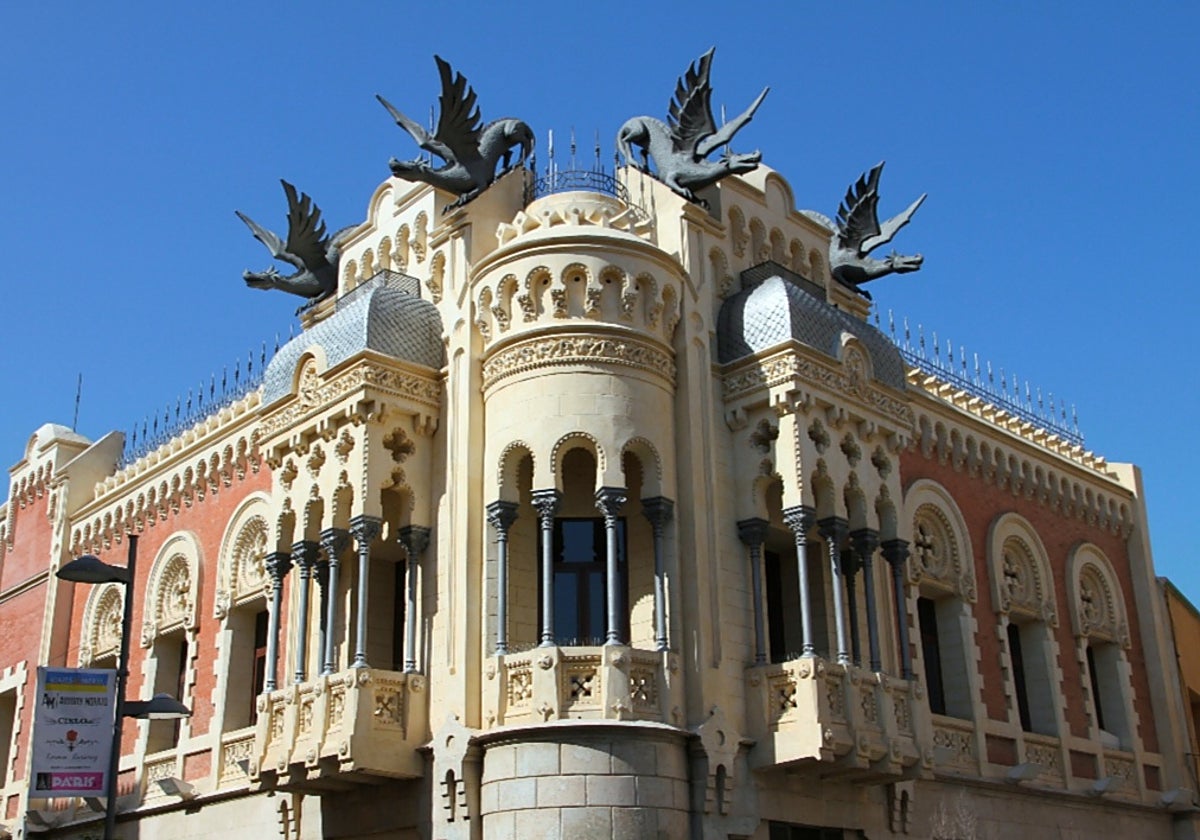
Legendary and mythical creatures – dragons – are also featured in both Ceuta and Gibraltar. The ‘House of Dragons’ (La Casa de los Dragones), situated not far from the Plaza de los Reyes, is rightly considered Ceuta’s most attractive building. This outstanding example of architecture in the eclectic and historicist styles was originally adorned with four cast-bronze dragons. A hundred years ago, they were removed and went missing. In 2006, four new dragons, made almost entirely of resin and fibreglass, were reinstalled on the building’s roof.
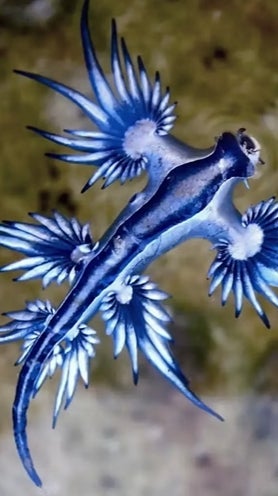
The dragons in Gibraltar are not quite so harmless. The case is that the blue dragon (Glaucus atlanticus) is a small, highly venomous sea slug found along the coast. The creature measures between 3 and 4 centimetres in length and has a distinctive blue colouring. It feeds on poisonous jellyfish, such as the Portuguese man-of-war, and accumulates their toxin for self-defence. The Gibraltar authorities warn swimmers never to touch them, as their sting is dangerous.
In addition, the Gibraltar Botanic Gardens are home to a collection of 45 dragon trees (Dracaena draco). This is the largest group of such specimens in mainland Europe. Incidentally, the trees are named after a dragon because when cut, their sap turns dark red.
Not without controversy
Both territories are small areas that are physically adjacent to or border a much larger neighbouring country: Ceuta borders Morocco, and Gibraltar borders Spain. In both cases, there are international disputes over sovereignty. For example, Queen Elizabeth II’s visit to Gibraltar in May 1954 triggered immediate diplomatic friction with Spain, the introduction of strict border restrictions for cross-border commuters, and a firm reaffirmation of British control over the territory. Meanwhile, King Juan Carlos I’s historic visit to Ceuta in November 2007 caused a serious diplomatic conflict with Morocco, resulting in Rabat recalling its ambassador to Spain and strongly condemning the trip as a provocation against its territorial sovereignty.
![[]](http://static.vocstatic.com/voc26/latest/assets/images/favicon/surinenglish/apple-touch-icon-57x57.png)