
Hollywood celebrity
Benalmádena honours the man who stole the Oscar from Bogart
A council resolution gives the green light to the protection of the grave of Hollywood actor Paul Lukas, who swapped Sunset Boulevard for the Costa del Sol
Paco Griñán
The seduction of the Costa del Sol has endless chapters. One of them features the actor Paul Lukas, a Hollywood star who swapped Palm Springs for Torremolinos in the 50s and 60s. Hungarian-born, he came into the world with the cinema itself (1895) and headed to California to make the most of his leading-man looks.
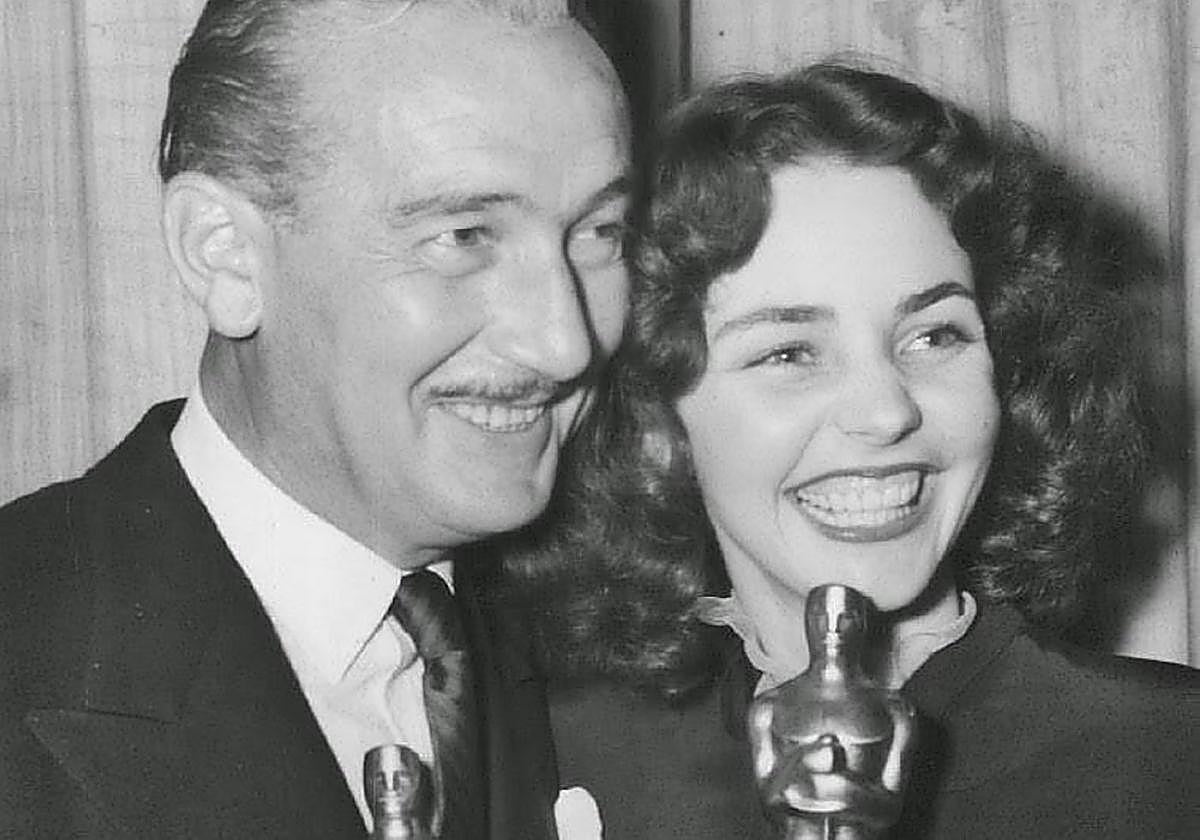
He triumphed and even stole the Oscar from Humphrey Bogart himself in Casablanca in 1944. That night, what rang out was: 'Play it again, Paul'. Nobody knows quite how he ended up in Malaga, but it is clear he made himself very much at home. He even drummed up new recruits for the Costa and signed up the Russian Misha Auer, another European actor who swapped Sunset Boulevard for Calle San Miguel.
One fine day, Lukas came across the Benalmádena International Cemetery and changed his will. "I want to be buried here," he said - or something like that. And so it was in 1971. His grave, forgotten since then and at risk of disappearing, has just been reclaimed by the local town hall itself, which has begun the process of protecting the burial site. And that of his Oscar-winning neighbour too (Misha Auer).
Lukas' Oscar-winning film Watch on the Rhine was not released in Spain: it told the story of an anti-fascist who fought against Franco
"One day he accompanied another Hungarian friend, the businessman Jorge Yacobi, to see the cemetery and also bought a grave, leaving in writing his wish to be buried in Benalmádena. Here he found a large colony of compatriots and was happy," says journalist, playwright and writer Carlos Zamarriego, who four years ago discovered the actor's blackened tombstone, researched its unknown history and began a campaign for its rehabilitation.
The Benalmádena International Film Festival (FICCAB) was quick to echo the story and paid tribute to him three years ago, while the festival's own director, Jaime Noguera, last year promoted a petition on Change.org to preserve the tomb, which was in danger of disappearing with the transfer of the remains to the common ossuary. The rescue of Lukas' memory has just culminated with the council resolution approval to place a plaque and initiate the procedure for the protection of the mausoleum, on the initiative of its environment and health department.
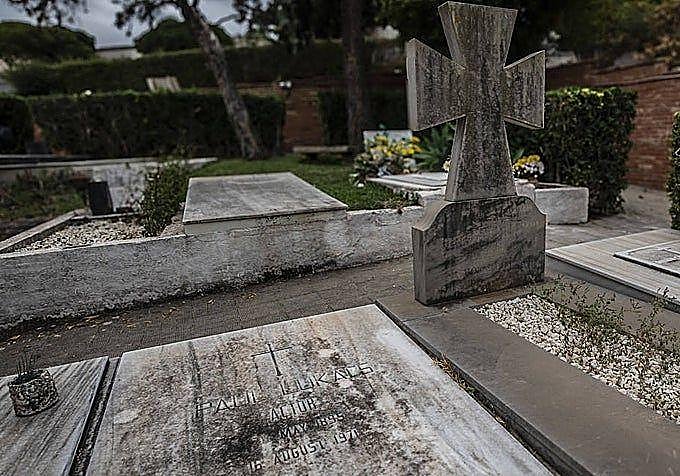
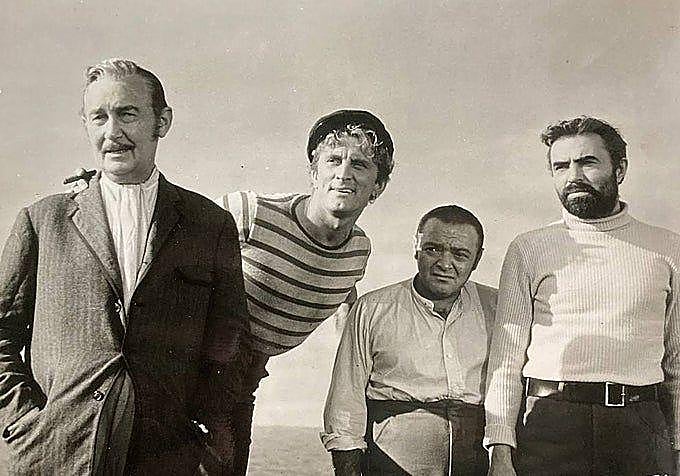
The decision does justice to one of the most singular actors of golden Hollywood, who found in the Torremolinos of the 50s and 60s the paradise in which to live. And in which to die. "He was a leading man in silent films and in the 30s, he won the Oscar and became a luxury supporting actor in the 50s and 60s," sums up Carlos Zamarriego, who set out to research the character and has become the leading specialist in the life of the actor, who arrived in Malaga after giving life to one of his greatest characters: Professor Aronnax in the Disney blockbuster 20,000 Leagues Under the Sea (1954). At that time, his fame preceded him, which is why the legendary Benalmádena Auteur Film Week wanted to pay tribute to Lukas in 1970 with the screening of a film.
The title chosen was Watch on the Rhine (1943), in which the actor shared the credits with Bette Davis and which won him an Oscar and a Golden Globe, beating not only Bogart, but also Gary Cooper (For Whom The Bell Tolls). Despite its success, the film was not released in Spain. The reason lies in its plot, as its protagonist was a German who fought against Nazism and had even fought against Franco.
"The official version is that the film was delayed and that is why it was not screened at the festival, but I think the real explanation is that it was vetoed," argues Zamarriego, whose hypothesis fits in with the legend of Benalmádena Week and its struggle with the dictatorship's censors. Lukas' biographer, who is still looking for a publisher for his unpublished research on the Hollywood actor, recounted that frustrated tribute more than half a century ago to the current heads of the FICCAB, who were quick to make amends. In 2023, Watch on the Rhine was finally shown on the big screen in Benalmádena, followed by a tribute to Oscar-winning resident Paul Lukas.
Zamarriego dismisses what is commonly repeated in reviews about the Hungarian actor's exodus to the US fleeing the rise of the Nazis. "He wasn't running away from anything - he arrived at Paramount in 1927 to try his luck, made it in silent cinema and then learned English in just six months and adapted to the talkies," explains the researcher and writer, who places the earliest records of Lukas on the Costa del Sol in Torremolinos in 1956. On the Costa del Sol, the star of The Four Horsemen of the Apocalypse bonded with his compatriots, among them filmmaker Ladislao Vajda and writer and screenwriter Andrés Lazlo, as well as visiting another fellow countryman, photographer Juan Gyenes, who was equally reluctant to miss his summers in Torremolinos.
At home in Spain
The curious and even contradictory detail is that the Oscar winner for playing an opponent of the coup faction in the Spanish Civil War should have ended up feeling so at home in Franco's Spain. "The fact that he was comfortable in that Spain is a paradox. In reality he was an antifascist and, after the Second World War, a committed anticommunist," explains Zamarriego, who points out that Paul Lukas had genuine star status and worked on screen with Katharine Hepburn, Errol Flynn, James Mason, Peter O'Toole, Ava Gardner and Glenn Ford, and under the direction of George Cukor, John Huston, Vincente Minnelli and Alfred Hitchcock.
His Hollywood fame was such that producer Michael Todd Jr. was determined to cast him in the filming of Scent of Mystery (1960) in Malaga when he heard that Lukas was living on the Costa del Sol. The film was going to make history - and it did, though for the wrong reasons. It was the first film with smells, but proved to be a resounding flop. And was forgotten. Just like Lukas himself. Until now.
![[]](http://static.vocstatic.com/voc26/latest/assets/images/favicon/surinenglish/apple-touch-icon-57x57.png)