
History
The beginnings of language tourism in Malaga
The first course in Spanish language and culture took place in 1948
Víctor Heredia
In the post-war years, it was the Spanish National Research Council (CSIC), founded in 1938, that promoted the organisation of these summer courses aimed ... at students from other countries, an activity which at that time served as an important propaganda tool for the regime. Its main initiative was the Menéndez Pelayo International University, which held its first course in Santander in 1947, although the range of summer courses extended to numerous locations across Spain: Santiago de Compostela, La Rábida, Segovia, La Laguna, San Sebastián, etc.
The city of Malaga had pioneered a course for foreign nationals, which took place between February and March 1933, organised by the National Institute of Secondary Education in collaboration with the University of Granada. Although that initiative was not continued, it marked a fundamental difference compared with other courses aimed at foreign students: it took place during the winter months, thereby reinforcing the city’s tourism promotion centred on its mild climate, which was being promoted simultaneously through the Winter Sports Festivals.
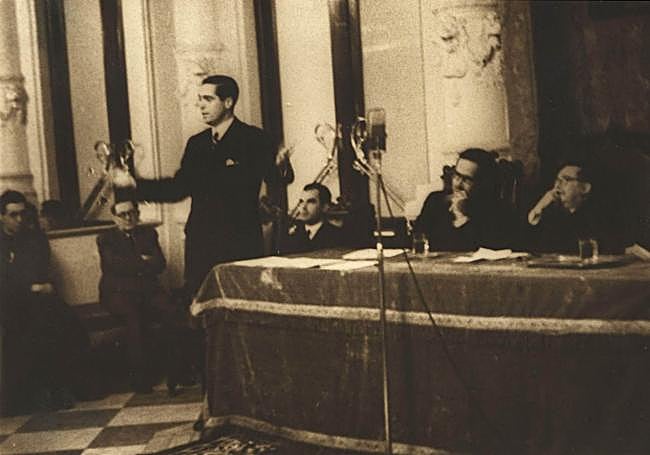
It was against this backdrop that the first Winter Course for Foreigners opened on 15 January 1948, organised by the CSIC in collaboration with the City Hall, the Civil Government and the Provincial Council. The ceremony, held in the Salón de los Espejos, was attended by the civil authorities, the bishop, the course director, Joaquín de Entrambasaguas, a professor at the Complutense University, and the secretary, Rafael Benítez Claros.
Forty people enrolled on that first course, of whom almost half – nineteen - were Spanish nationals. Among the foreign students were Americans, Britons, French, Italians, several from Latin American and European countries, and one Moroccan. The press highlighted the diverse professional backgrounds of the course participants: artists, doctors, lawyers, poets (such as the Brazilian Darcy Damasceno and the Nicaraguan Carlos Martínez Rivas) and even a Georgian prince.
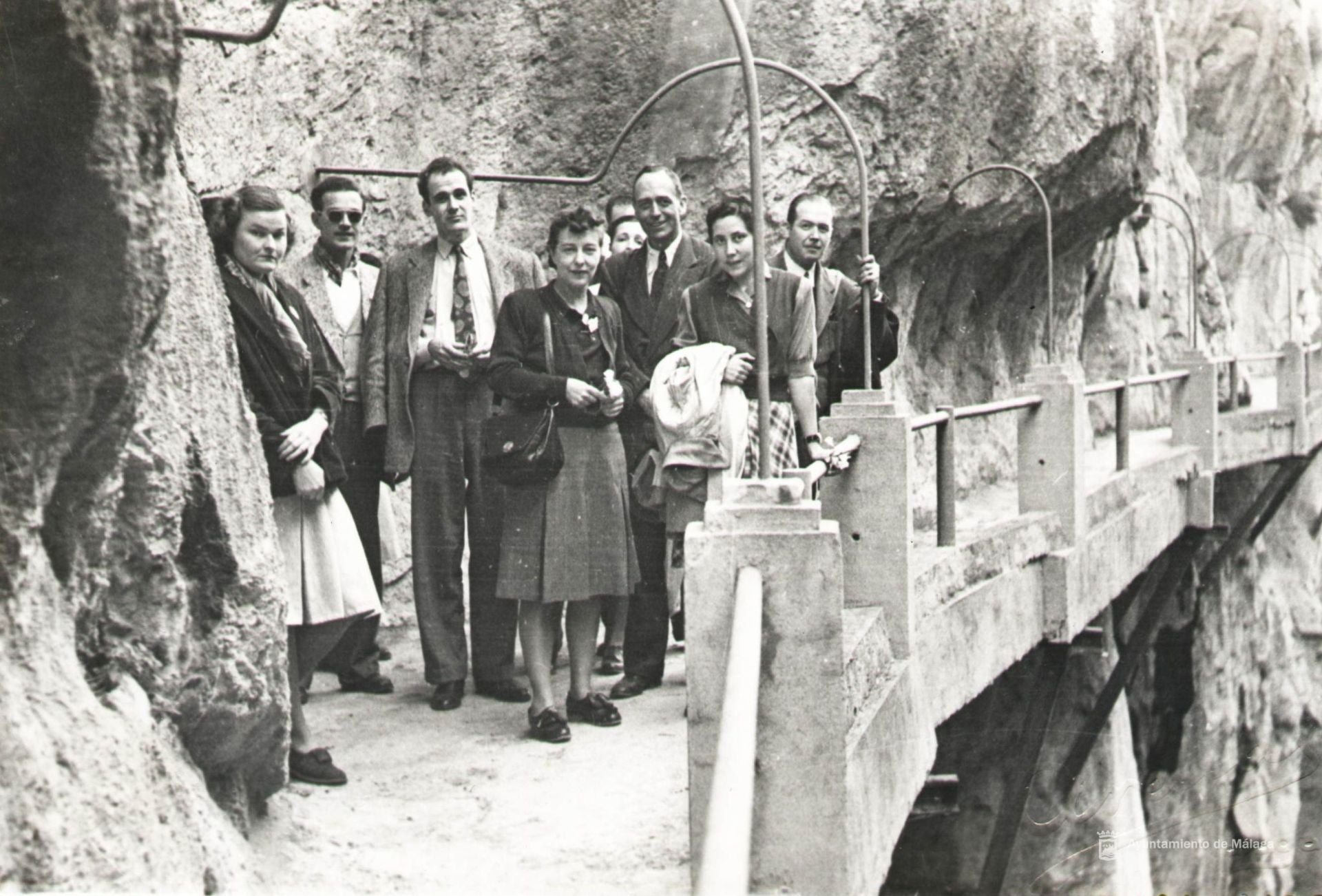
The Spanish language and culture classes were combined with guest lectures, recreational activities and excursions. The group visited the city’s monuments and went on trips to Antequera, Ronda, Nerja, Torrox and the Chorro reservoir. The local institutions went out of their way to support the course participants, organising all manner of events. For example, the Sociedad Económica de Amigos del País organised a recital by González Marín. That first course concluded with a closing ceremony on 20 February.
A brilliant squad
In subsequent years, winter courses for foreign students became increasingly established, with rising enrolment figures and a growing number of students from abroad. The line-up of lecturers was outstanding, featuring prominent figures from the country’s cultural life, such as Professors José Camón Aznar and Rafael de Balbín, the bibliographer José Simón Díaz, the archaeologist Emilio Camps and the writers Carmen Conde and Amanda Junquera, better known by her pen name Isabel de Ambia. Carmen and Amanda were in a romantic relationship, and another of the course participants, Professor Cayetano Alcázar - Amanda’s husband - was, at that time, Director-General of University Education.
Local contributions were also significant, with regular lectures given by leading figures from Malaga’s cultural scene of those years, such as Andrés Oliva, the councillor responsible for Culture; Elena Villamana, a professor at the Instituto Masculino; the journalist Francisco Ruiz de Elvira, the poet José Antonio Muñoz Rojas and the scholars Juan Temboury and Sebastián Souviron.
In 1952, the creation of a Department of University Extension, attached to the University of Granada, was approved; from then on, it took charge of organising courses for foreign students. Years later, the programme was expanded to include summer courses and, from 1973, its management was transferred to the newly established University of Malaga, forming the basis of the current International Centre for Spanish.
These courses helped to establish Malaga as a leading centre for language tourism in Spain. As Andrés Oliva, the driving force behind these courses in their early days, put it: ‘Many people stay in or return to our city to continue studying Spanish on their own, and it would be a shame not to capitalise on and channel this activity.’
Forsyth, the pupil who wanted to be a bullfighter
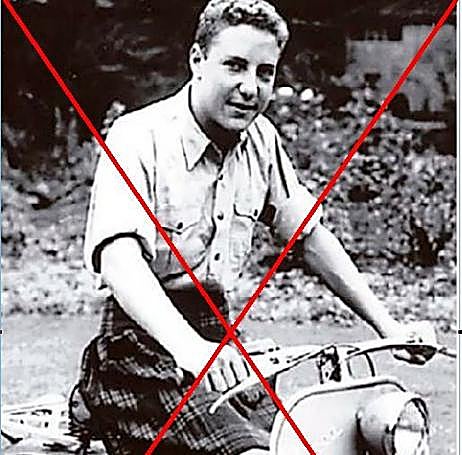
The SUR newspaper published a list of students from the 1956 intake. The list includes an English student named Frederick Forsyth. Indeed, this is the famous writer who died in June 2025. Francisco Griñán then dedicated an article to him, in which he recalled the novelist’s time in Malaga, as recounted in his memoir 'The Intruder: My Life in a Key of Intrigue'. When he was seventeen, he decided to come to Malaga to learn Spanish. He arrived via Gibraltar and introduced himself to Andrés Oliva. ‘He was truly cultured and a genuine gentleman in the traditional sense.’ He stayed at Concha Lamothe’s house in La Malagueta. But the young Englishman divided his time between bullfighting, taverns and a passionate relationship with a German countess. His real aim was to learn the secrets of bullfighting, for which he enrolled at a bullfighting school operating at Malaga’s bullring, although his fear of the bulls’ horns proved stronger than his desire to become a matador. That said, by the end of the course, he was “chattering away in street Spanish with an Andalusian accent”.
![[]](http://static.vocstatic.com/voc26/latest/assets/images/favicon/surinenglish/apple-touch-icon-57x57.png)