
Archaeology
Hidden treasures: Spanish archaeologists discover trove of ancient shipwrecks in Bay of Gibraltar
Researchers identify wrecks at the bottom of the sea from as far back as the fifth century BC, from Europe and beyond
-khhF-U201826665398FJI-1200x840@Diario%20Sur.jpg)
Dilip Kuner
Malaga
Beneath the shadow of the Rock of Gibraltar, where the Mediterranean pushes into the Atlantic at the ancient Pillars of Hercules, a team of archaeologists has spent three years peering through the silt of history.
What they found was a submerged graveyard of empires: 151 archaeological sites scattered across the floor of the bay, including 124 shipwrecks, seven historic anchorages, and 20 isolated findings that create a timeline of human nautical ambition spanning over 2,500 years.
Before this research began in 2019, only four underwater sites were known in the area; today, the Bay of Gibraltar is recognised as one of the densest archaeological deposits in the Mediterranean.
Related story
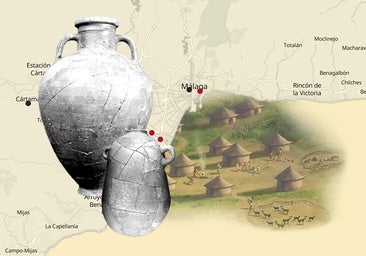
The story begins in the fifth century BC with a Punic vessel, a relic from an era when Carthage vied for control of these narrow straits. As the centuries turned, the bay became a "bottleneck of history", swallowing at least 25 Roman ships laden with the commerce of an empire, followed by rare medieval vessels that once sailed under the flag of Islamic Spain.
By the time the modern era arrived, the seabed had become a multicultural mosaic. Research shows that 81 per cent of the documented shipwrecks were merchant vessels, with British, Spanish, and American ships involved in the majority of the accidents. These waters also hide the remains of Venetian and Dutch traders, as well as the mechanical skeletons of 1930s aeroplanes.
Leading this investigation, dubbed Project Herakles, Professor Felipe Cerezo Andreo of the University of Cádiz discovered that even the most fearsome vessels held personal secrets.
His team excavated the Puente Mayorga IV, an 18th-century Spanish gunboat designed for stealth and ambush against the British. Inside the wreck, they found a curious wooden box carved to look exactly like a book. While Cerezo initially suspected a cache of espionage documents or secret maps, the reality was more human: the "book" was a vanity case containing a pair of wooden combs. Even in the heart of a naval blockade, the Spanish officers were determined to maintain their grooming.
However, this underwater library is currently under siege. To protect the sites, the team uses high-tech monitoring buoys to transmit live video from the seabed and prioritises in situ conservation - leaving the history where it lies rather than disturbing it. Modern threats are proving more destructive than any ancient storm: port dredging, rising sea levels that alter sediment layers, and a suffocating carpet of invasive algae are rapidly eroding the remains.
To save this history before it dissolves, the researchers are using 360-degree VR technology to create "dryland diving" experiences for the public. By digitising everything from fifth-century BC amphorae to WWII propellers, they hope to prove that the Bay of Algeciras is not just a shipping lane - it is a submerged museum that tells the story of how the world first met at the gates to the Mediterranian.
![[]](http://static.vocstatic.com/voc26/latest/assets/images/favicon/surinenglish/apple-touch-icon-57x57.png)