
Nature
Portuguese man o' war spotted off Granada's Costa Tropical
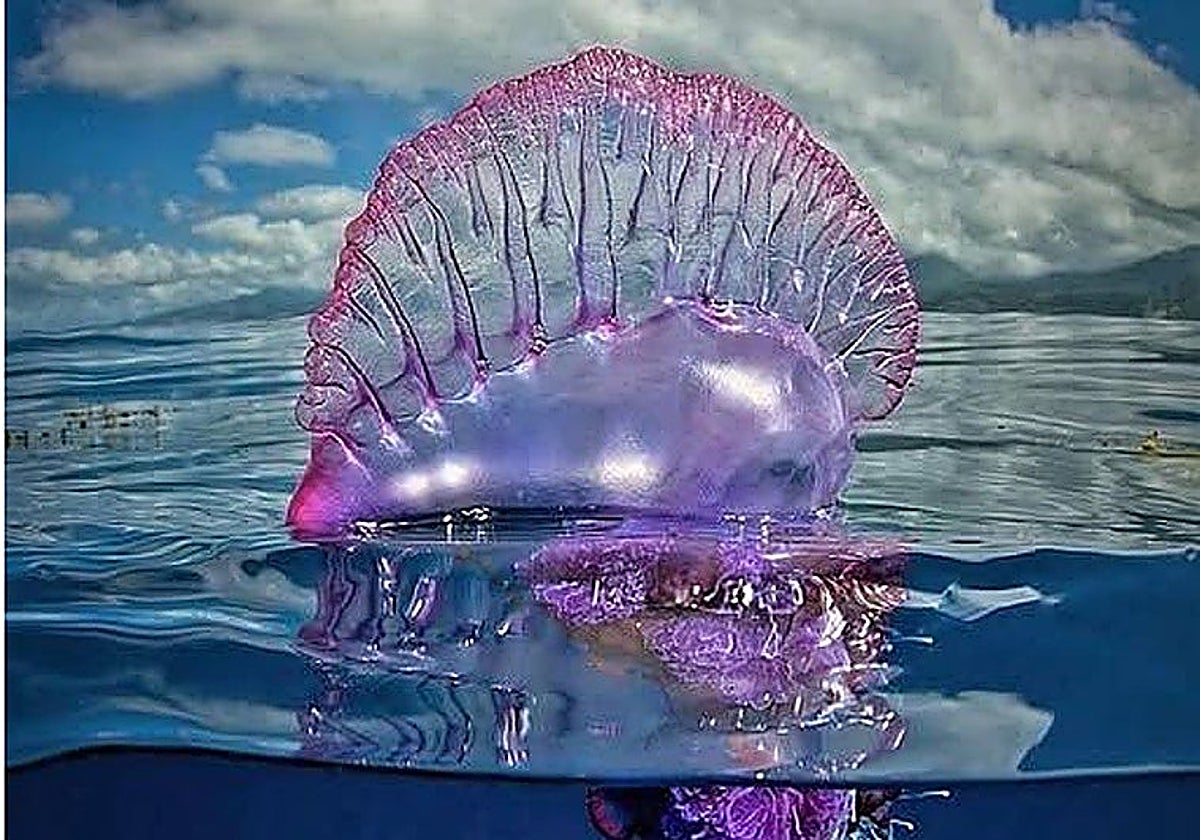
Physalia physalis are often confused with a jellyfish, but are in fact siphonophores, a group of animals that are closely related to jellyfish with a distinctive blue or purplish sail and sac measuring between 15 and 30 centimetres
I. Gallastegui
Granada
Several specimens of Portuguese man o' war have been spotted of the coast of Almuñécar on Granada province's Costa Tropical in recent days. The jellyfish-like Physalia physalis have been sighted around four miles from the coast and near Punta de la Mona. In March last year a specimen was found on the shore of San Cristóbal beach but no injuries to humans were reported.
Physalia physalis are often confused with a jellyfish, but are in fact siphonophores, a group of animals that are closely related to jellyfish with a distinctive blue or purplish sail and sac measuring between 15 and 30 centimetres that facilitates flotation and navigation (pneumatophore), tentacles that detect and capture prey (dactylozoa), digestive apparatus (gastrozoa) and reproduction (gonozoa).
The Portuguese man-of-war is much feared because its stinging tentacles, which can reach up to 40 metres in length, although they normally reach about 10 metres, inject a paralysing poisonous toxin on contact that causes burning and inflammation, with very painful lesions that can cause serious respiratory and heart problems in humans. Its real function is to paralyse the fish on which it feeds.
Red flag
Originally from tropical and subtropical open waters, in recent years there have been more sightings along the Spanish coastline, having been dragged by storms. Specialists attribute this increased presence to climate change, which has increased the temperature of the sea water and to the scarcity of its traditional predators: sunfish and sea turtles such as the leatherback, loggerhead and green turtles, which are in danger of extinction due to fishing, plastic pollution and 'ghost nets'.
The presence of these organisms on the beaches even represents a tourist problem for some coastal towns as it forces them to temporarily close the beaches. Last summer, several municipalities along the Cantabrian coast put up the red flag for this reason.
![[]](http://static.vocstatic.com/voc26/latest/assets/images/favicon/surinenglish/apple-touch-icon-57x57.png)