
Drug-trafficking
GPS hunting and police surveillance: how Costa Tropical drug-trafficking gangs avoided arrest
The leader gave strict instructions on beaches to avoid, encrypted his messages and used vulnerable people to safeguard anonymity

Nerea Escámez
Almería
Searches of the underside of cars to detect GPS signals, counter-surveillance of the Guardia Civil's maritime service and constant 'removals' of operations centres. The criminal gang that allegedly trafficked drugs and people, who were transported in narco-boats, took precautions to avoid detection. IDEAL describes the methods detected by the National Police.
The gangs would deploy several members at surveillance points, such as roundabouts or petrol stations, to control access. If they detected a police patrol, they would alert the others to hide and even use their own vehicles to follow the police car, reporting its direction until they confirmed that it was leaving the area.
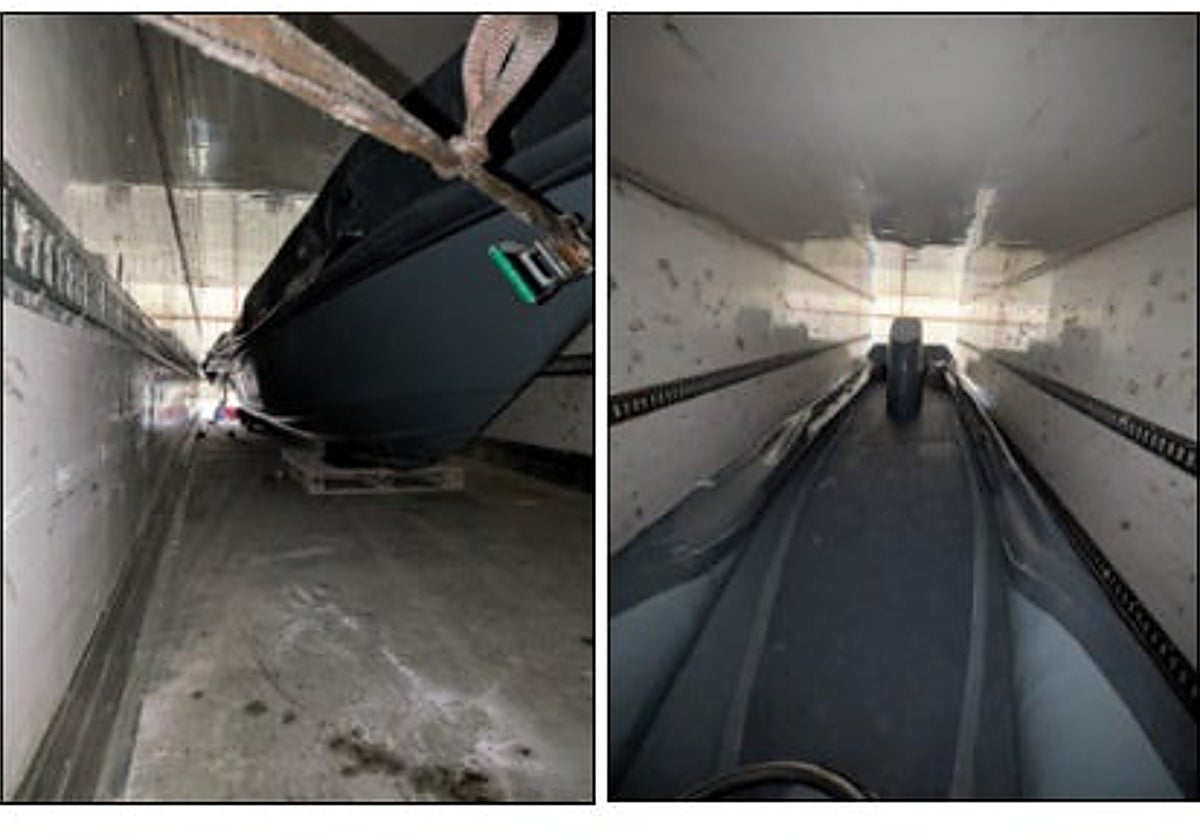
Before moving the boats, they would make sure that there was no one unknown to the criminal network or they would cover with metal sheets any gaps through which light and prying eyes could enter. They periodically changed their logistical bases and operational vessels to throw investigators off the scent and even abandoned the vessels for months so that they would not be discovered.
If there was any suspicion of information leaks or surveillance, the leaders would check the underbody of their vehicles for magnetic geolocation devices. According to police reports, they moved the cars to remote or mountainous locations to inspect them. In addition, they kept an exhaustive and constant control of the positions of customs vessels and the Guardia Civil's maritime service. The leader had given strict instructions as to which beaches to avoid, including Motril, where police surveillance is constant.
They would change direction or quickly reverse out of a one-way street if they had the slightest suspicion that they were being watched. This counter-surveillance became effective; the network identified an Audi Q5 as a secret police vehicle. However, they were not good enough. Investigators have numerous recordings and a multitude of photographs of members of the network alongside the drug traffickers.
Moreover, they employed people, some of them vulnerable, to sign charter contracts for the vessels and to register the boats' insurances. These secondary members even booked hotel rooms for the boats' skippers to preserve their anonymity and would use messaging apps with end-to-end encryption, such as Telegram.
The gangs who boast about their exploits on the coast of Almeria on social media and the National Police used TikTok as a source of information. Through videos and screenshots posted on the App, investigators learned that a boat belonging to the criminal network - which they had previously seen leaving the La Juaida industrial estate on a trailer - had been intercepted and seized in Kristel, a coastal town in the province of Oran. The wiretaps reveal that the members of the organisation themselves used this social media platform to monitor the movements of their own collaborators.
![[]](http://static.vocstatic.com/voc26/latest/assets/images/favicon/surinenglish/apple-touch-icon-57x57.png)