
History
Almeria exhibition looks back over the last 25 years through IDEAL newspaper
An exhibition on display at Parque de la Estación traces the city's milestones through the front pages, news articles and images from the sister paper to Diario SUR
José María Granados
Almería
Almeria city has undergone significant change since the year 2000. In 25 years, its skyline has changed, it has reclaimed neglected areas and it has ... begun to break down some of the historical barriers that had constrained its growth for decades. Where there were once industrial sites, railway lines, derelict area and abandoned buildings, there are now public facilities, green spaces and new areas for socialising.
The transformation has been neither immediate nor straightforward. Nor can it be considered complete. However, looking back over the last quarter of a century, we can see a city that is more open to the sea, more liveable and with a greater awareness of its heritage.
At the same time, ongoing projects such as the underground train, the arrival of the high-speed rail link, the redevelopment of the Paseo de Almería, the Port-City project and the restoration of historic sites herald a new phase of urban, economic and social development.
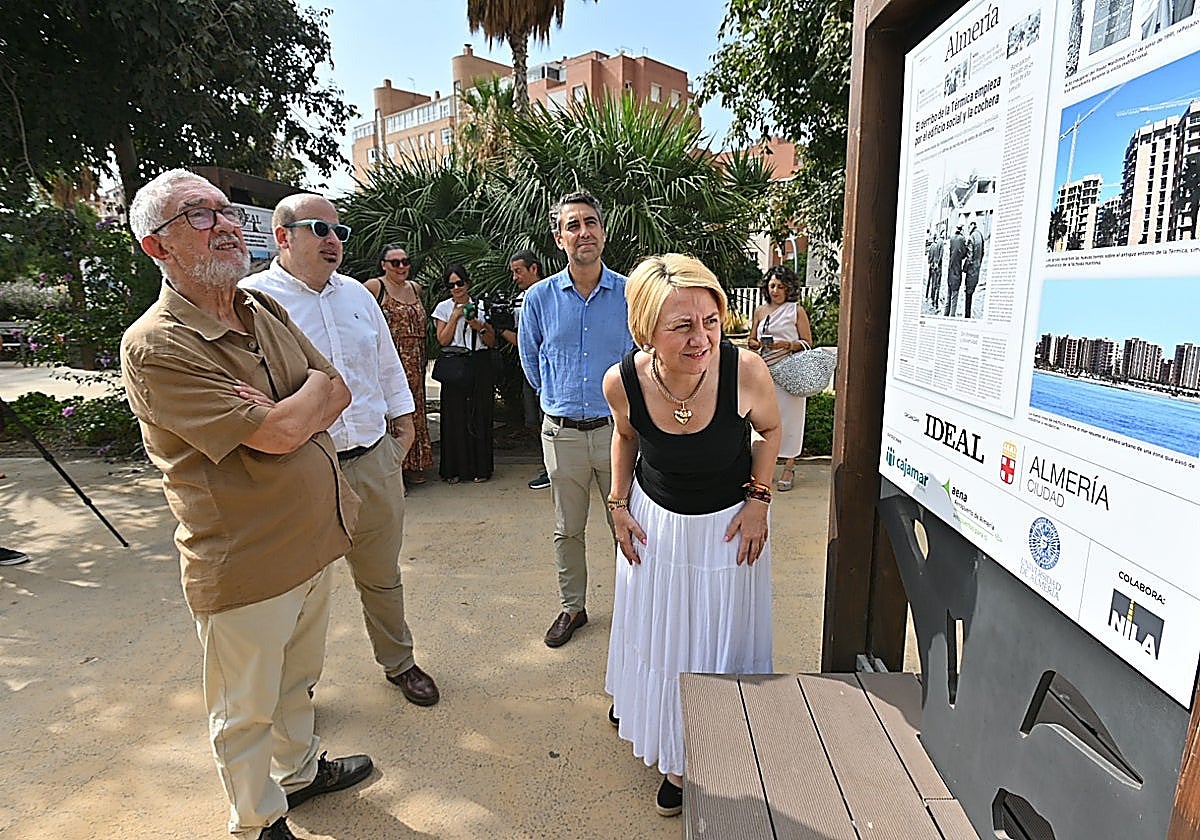
This journey through the city as it once was, as it is now, and as it aspires to be forms the theme of the exhibition ‘Almería, a vibrant urban revolution’, which opened on Thursday 30 July at the Parque de la Estación. Organised by IDEAL newspaper, the exhibition takes visitors on a journey through fourteen major projects that have helped transform Almeria city over the last twenty-five years.
Comprising fifteen display units and thirty panels installed in one of the city’s busiest and most iconic locations, just a short distance from the Cable Inglés, is an invitation to both residents and visitors, who will be able to view it until autumn and learn, through front pages, photographs, news articles and explanatory texts, about the evolution of projects which, in some cases, required years of planning, construction and debate before becoming a reality.
The exhibition demonstrates that urban transformation is not limited to the execution of construction works. Each project alters citizens’ relationship with their surroundings, creates new economic opportunities, improves transport links, restores heritage sites or integrates spaces that were previously inaccessible into everyday life.
The opening ceremony was attended by Eloísa Cabrera, Almeria city’s councillor for urban planning, housing and festivals, and Miguel Cárceles, IDEAL’s representative in Almeria. During the tour, they were accompanied by Joaquín Pérez de la Blanca, the councillor for tourism, communications and city promotion and by the journalist José María Granados, the exhibition’s curator.
Transformation with IDEAL
Eloísa Cabrera thanked IDEAL for organising an exhibition that looks back on the changes Almeria has undergone over the last quarter of a century. “On behalf of Almería city hall, we must thank IDEAL for putting together this exhibition, which looks back at what Almeria has been like over the last twenty-five years and at that vital transformation of the city which is currently taking place," she said.
The councillor emphasised that the city is going through a particularly significant period, characterised by a series of initiatives aimed at shaping a comprehensive urban development project. In her view, the scope of these investments goes beyond the mere physical renovation of streets, squares or infrastructure. “We are experiencing an exciting time in the city, with a comprehensive, transformative project that we need to inspire everyone,” she said. “Almería’s future lies there – not only in the construction work, but in how this transformation helps to create a more prosperous economic fabric, to retain the population, to make people excited about coming to live in the capital, and to be part of this collective dream.”
Cabrera invited the public to visit the exhibition, learn about the process of urban regeneration and play an active part in future projects. The councillor emphasised the need to strengthen the sense of belonging and pride in a city which, despite the difficulties and delays that often accompany major construction projects, has managed to make significant progress. “Almería has many strengths and a very bright future. We can see this in this exhibition, which takes us on a journey through the last twenty-five years and everything that has been achieved,” she said. “But, without a doubt, what is most exciting about the city is everything that is yet to come,” she emphasised.
Fourteen projects
The exhibition takes as its starting point the milestones that marked a turning point around 2005 and focuses on some of the city's most representative urban development projects. Among them is the regeneration of Cerro de San Cristóbal, a site closely linked to the history and landscape of Almeria.
It also recalls the disappearance of the former El Zapillo power station, the demolition of which marked the end of an industrial facility that for years dominated a significant section of the coastline. Another chapter is devoted to the regeneration of the Plaza Vieja, a long-awaited project linked to the revitalisation of the city’s historic centre. The exhibition also showcases more recent projects, such as the one carried out at the former Katiuska cinema in the Pescadería neighbourhood, an example of the reuse of spaces and investment in areas in need of new development opportunities.
The panels also address projects that are still shaping the Almeria of the near future. Among these, the redevelopment of the Paseo de Almería – one of the city’s main commercial and social thoroughfares – features prominently, as does the underground relocation of the railway lines, a project considered crucial for eliminating the urban divide historically caused by the railway and facilitating the arrival of the high-speed rail service.
Almería’s big change
IDEAL’s correspondent in Almería, Miguel Cárceles, explained that the exhibition was conceived with the aim of taking a step back from the daily hustle and bustle of current affairs and taking a collective look at the changes the city has undergone. “The aim has been to look back and see how, over the last quarter of a century, the city has changed radically and become a more liveable Almería, a much better place to live,” he said.
Cárceles pointed out that large-scale projects are often perceived as excessively slow processes whilst they are in the planning or implementation phase. However, looking back over a period of twenty-five years allows us to appreciate their cumulative effect and to understand that the sum of numerous initiatives has ultimately profoundly altered the character and functioning of the city. “All the projects carried out – which may seem slow on a day-to-day basis – have helped to shape a better Almería, not only in urban planning terms, but also economically and socially,” he added.
The story as told by IDEAL
One of the exhibition’s key strengths lies in its use of the newspaper archive as a central theme. The front pages and articles from IDEAL allow us to retrace the moment when each project was first conceived, the difficulties it encountered, the expectations it raised and its subsequent development.
The exhibition’s curator, José María Granados, highlighted precisely this relationship between the passage of time, the work of journalists and the evolution of the city: “Time has passed for all the journalists who have chronicled the history of Almeria over the last twenty-five years, whilst the city, far from ageing, has been rejuvenated,” he reflected.
Granados also recalled the contrast between today’s Almeria and the city that, just a few decades ago, still suffered from serious shortages of basic infrastructure. “Fifty years ago, when the city didn’t even have a sewerage system, it was hard to imagine that in just half a century such progress would be made,” he noted.
![[]](http://static.vocstatic.com/voc26/latest/assets/images/favicon/surinenglish/apple-touch-icon-57x57.png)