
Environment
The catfish, the ‘river monster’ measuring up to 2 metres and weighing 100 kilos, is threatening life in the Iznájar reservoir
This exotic species, which was illegally introduced by fishermen twenty years ago, is wiping out barbel, carp and black bass
Inés Gallastegui
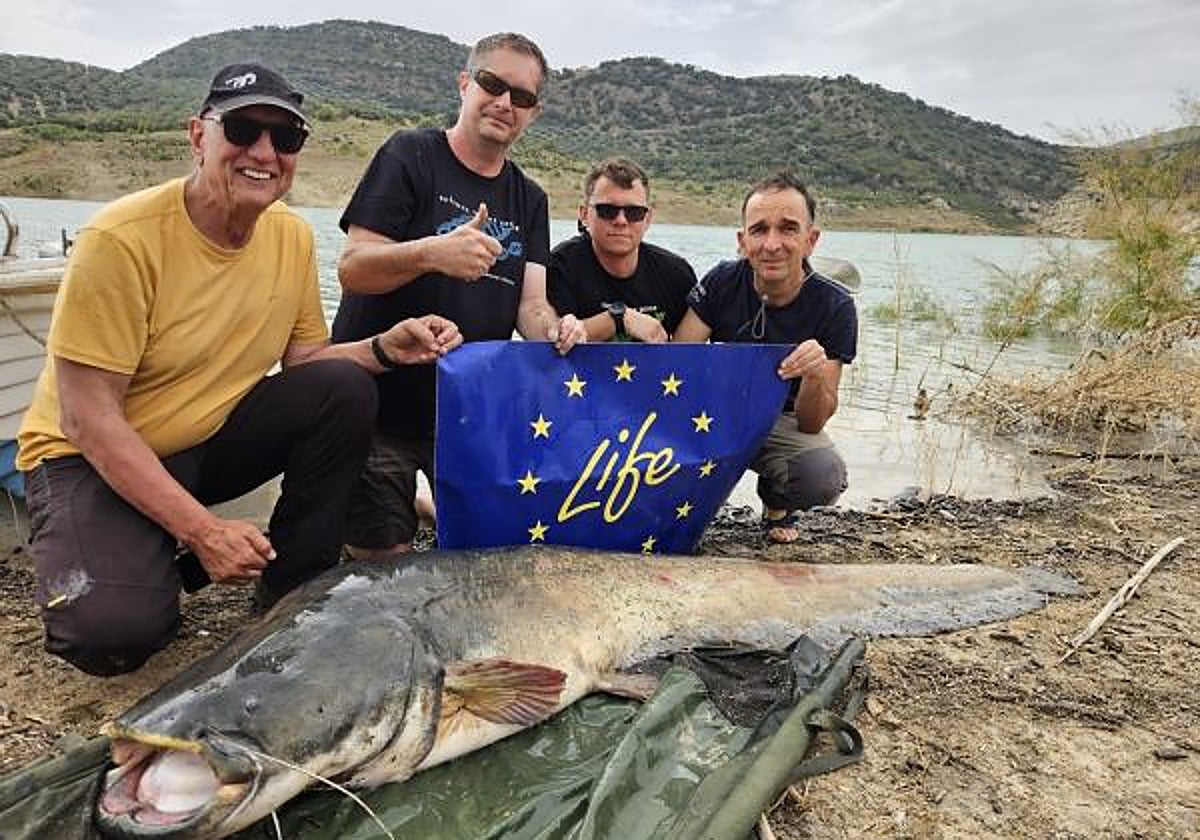
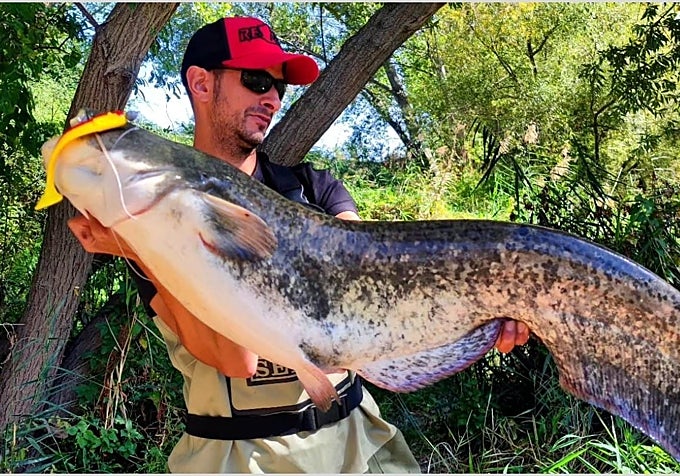
The catfish, a freshwater fish native to Central Europe, has gradually spread throughout Spain’s rivers, lakes and reservoirs, brought there by recreational anglers drawn ... by the challenge of catching the ‘river monster’ - a giant that can exceed two metres in length, weigh over 100 kilos and live for more than 50 years.
However, their voracious appetite and the absence of predators, parasites or diseases in their new environment have turned them into a threat: recent research has found that the population of carp and barbel in the Iznájar reservoir, on the border between the provinces of Granada and Cordoba, has fallen dramatically over the last 20 years due to the presence of this invasive species, which now numbers in the thousands.
“It’s like releasing a pride of lions into the Andalusian countryside,” explains zoologist Carlos Fernández, author of the study. Fishermen, for their part, are calling on the Andalusian Regional Government to allow their catch - which is currently banned - in order to reduce their population in this reservoir. “It’s a short-term fix that will cause problems in the long run, because they eat all the other fish,” argues Francisco López, president of the Riofrío Club de Pesca.
A 76 per cent drop in the number of barbel and carp
Carlos Fernández Delgado, professor emeritus at the University of Cordoba, recently published a study based on the results of 175 official fishing competitions involving 1,877 participants, held between 2008 and 2025 on what is known as the ‘Lake of Andalucía’.
Given that the conditions are identical year after year - one rod per angler, four hours’ fishing, and catches weighed by judges before being returned to the water - the difference is due solely to the availability of fish: from 4.6 kilos per hour of carp and barbel to 1.1 kilos, that is, 76 per cent less. Last year, two out of every five competitors went home without a single fish.
The zoologist is clear about the reason: the explosive proliferation of catfish since they were introduced into Andalucía’s largest reservoir in the early 2000s. “There are now thousands upon thousands; it’s impossible to know exactly how many,” emphasises the scientist, who points out that Iznájar covers an area of 2,500 hectares and has a capacity of almost 1,000 cubic hectometres. Catches by the Asociación Medioambiental de Pesca del Pantano de Iznájar - the only organisation authorised to control the species - totalled 500 fish last year. “It’s a drop in the ocean,” says Fernández.
The first fry
He points out that the first 32 catfish fry arrived in the Ebro basin in 1974 from the Danube, brought by a German biologist who wanted to develop a sport fishery for this species in Spain. Over the years, the epic catch of the ‘river monster’ has become a lucrative tourist industry in that and other river basins on the Iberian Peninsula, attracting anglers from all over Europe.
Another German, this one never identified - “The Civil Guard were looking for him” - repeated the feat thirty years later in Iznájar.
“If I had young children, I wouldn’t let them go swimming in Iznájar. There have been reports in Europe of attacks on people by catfish during their breeding season.”
The zoologist claims that the population explosion of Silurus glanis is now irreversible. On the one hand, the fish themselves tend to colonise new waters and, on the other, those who engage in this illegal fishing continue to wreak havoc by transferring specimens to other reservoirs so they can be caught later: they have already been detected as far as Doñana and the city of Cordoba.
“They’re ignorant and don’t know what they’re doing. It’s madness,” laments Fernández, who also highlights the social impact of traditional fisheries losing their appeal in these villages threatened by depopulation. “If the fishermen get bored here, they’ll look for other places.”
Mice, goats or dogs
Fernández does not believe that the catfish will disappear from Iznájar, because they are learning to hide and are getting bigger and bigger. However, two other invasive fish species that can be caught - the black bass and the bleak - have indeed been eradicated.
The catfish will eat just about anything: it also feeds on insects, rodents, ducks, pigeons, dogs… and other catfish. “We once found goat bones in the stomach of one.” In Central Europe, there have been attacks on swimmers: during the breeding season, the males, which guard the eggs, become very aggressive. “If I had young children, I wouldn’t let them swim in a reservoir with catfish,” he admits.
The zoologist from the UCO led a research project on this species several years ago, but it was not continued. Whilst acknowledging “the serious risks and environmental impacts associated with its introduction into the wild”, the Consejería de Medio Ambiente (the ministry of the environment) is doing nothing to gain a better understanding of its development or to try to eradicate it.
