
Malaga city
Malaga scraps waste collection charge to avoid legal problems: it will not be levied this year
The city council is considering a third calculation method, having ruled out water consumption and the cadastral value as the main indicators
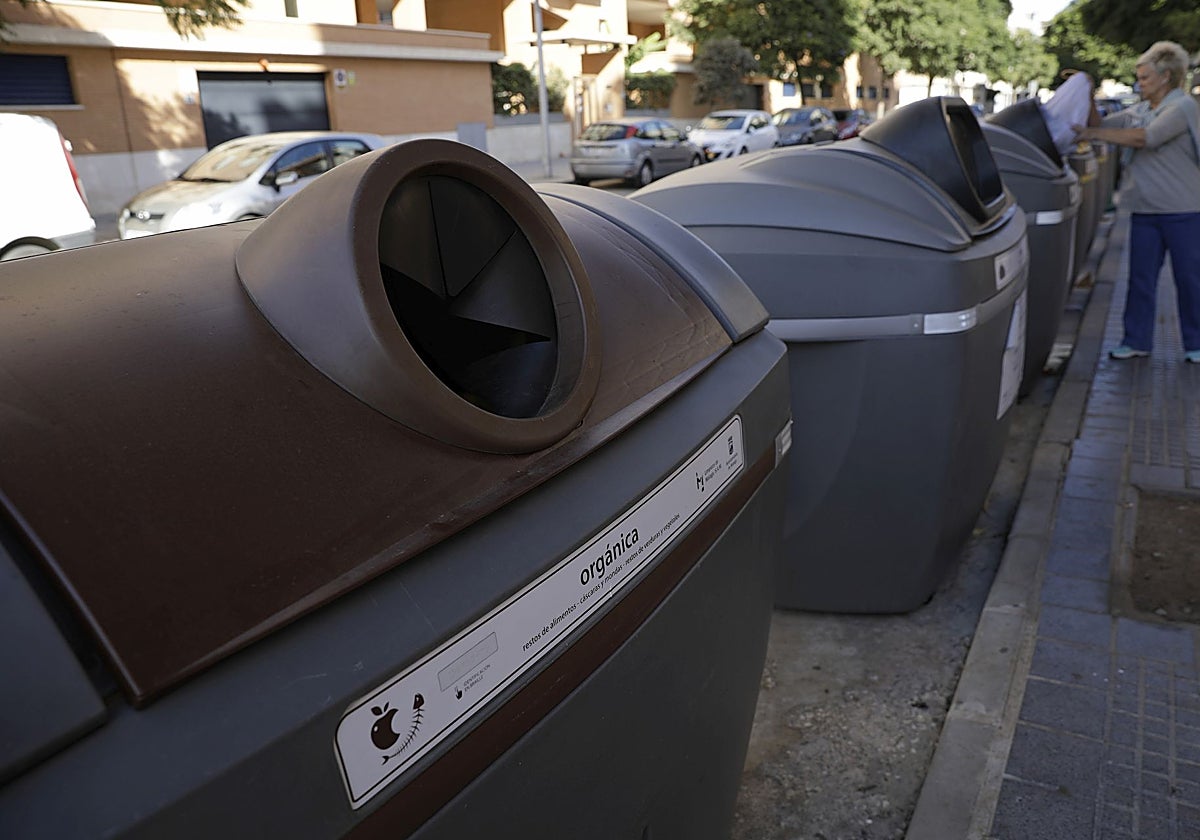

Malaga city residents will not be paying the waste collection charge until at least the end of next year. The city council has effectively scrapped ... this new "tax", imposed by a national law, in an attempt to sidestep the legal problems that are multiplying across the country.
Essentially, the national legislation requires the exact cost of waste treatment and collection services to be passed on to taxpayers, but it does not provide a specific method of calculation, so each local authority is doing what it can or sees fit.
The matter bears a certain resemblance to that of the Low Emission Zone (ZBE), the penalty system of which Malaga city council has just scrapped. Once again, a European directive has been transposed into Spanish law in a somewhat vague manner, resulting in a lack of standardisation.
Passing on the exact cost of waste treatment and collection seems straightforward enough, but how is this done in practice? How is it calculated? This is the crux of the matter.
Does a household with more occupants generate more waste than one with fewer? Logically, it might seem so, but this raises many more questions: Do all residents have the same sense of civic responsibility? Do they recycle to the same extent? Do they consume the same amount? Do they produce the same type of waste? Does the value of the property have anything to do with this?
All the questions that may arise are of great significance.
Third attempt
The cleaning and finance departments are making their third attempt to define the calculation formula, in coordination with the secretariat and the legal services.
Two years ago, a system linked to water consumption was proposed. This was ruled out and a method was chosen that was linked primarily to the cadastral value of properties.
That bylaw entered the processing stage last year. That draft set an average charge in the city of Malaga of 129 euros per property per year (plus IVA at 21 per cent, totalling 153). The range would be from 80 euros (96 including IVA) per year to 232 (248).
The calculation system, as mentioned, was based on the property's assessed value and the number of registered residents. In the case of holiday flats, these would be classified under the 'domestic' category and an occupancy rate of 75 per cent would be applied for the census.
Homes were divided into six bands according to their value (although there were higher bands for special cases) and the number of residents was assigned to five bands. The majority of homes would have annual bills of between 110 and 193 euros.
In the business sector, which is more complex, its implementation would be postponed by a year because they were even offered the option of opting out of the Limasam service and outsourcing it to third parties.
What has happened during this year of administrative procedures? "The city council has continued to process the bylaws to comply with the national regulations set out in law 7/2022. It should be noted that the proposed texts were subjected to the relevant and mandatory procedures of prior consultation and public hearing, following which a request was made for the mandatory report from both the legal advisory service and the general secretariat," municipal sources stated.
More closely linked to the generation of waste
"Following the publication of the aforementioned reports, a number of recommendations and observations have been compiled which must be incorporated into the proposed texts," sources stated, highlighting the fact that this coincides with a period of significant administrative unrest. "This has led to a number of adverse rulings by the administrative courts," they pointed out.
Furthermore, the general secretariat has made its position clear: it is necessary to avoid relying solely on the cadastral value as the sole criterion and to link charges more closely to the volume of waste generated. "For this reason, it has been decided to commission a new economic study, which will allow for the inclusion of the recommendations made by the general secretariat, with a view to avoiding challenges, given the high level of litigation that this issue is currently giving rise to across the board," the aforementioned sources explained.
What stage are we at? We are currently at the stage of recalculation and economic reporting: "Simulations are being carried out, the results of which will help to finalise the criteria for calculating and adjusting the coefficients for the non-tax public financial contribution."
Sources went into more detail and highlight the case of the Spanish capital. There, the High Court of Justice of Madrid declared the bylaw null and void on the grounds of substantial procedural flaws, relating to the insufficient documentation made available during the public consultation process, particularly with regard to the technical and economic justification and the criteria for calculating and allocating the cost of the service.
In September 2026, the Supreme Court accepted for consideration the appeals lodged by Madrid city council, agreeing to give them priority treatment given the legal significance of the issues. "A ruling is therefore pending which could help to clarify the requirements regarding public information and justification for these methods of financing the waste management service," sources said.
Essentially, what Malaga is doing is waiting for the outcome of the Madrid case while pressing ahead with the technical work.
As regards European legislation, it does not explicitly state that individual residents must pay the landfill charge, but it does stipulate that the waste producer is responsible for its management and the associated costs. It's the "polluter pays" principle. In the case of household waste, this responsibility takes the form of local or regional charges that residents pay indirectly.
